
Culture-Led Blind Spots in Top Teams: Key Findings
- Labeling culture as “good” can create blind spots, reminding leaders to reevaluate how they define team health, effectiveness, and alignment.
- “Artificial harmony” is often a warning sign, not a strength, signaling that teams avoiding conflict may be suppressing risk.
- Culture reveals itself under pressure, says Dr. Phillip Meade, former NASA leader and current COO of Gallaher Edge.
Only 32% of leaders succeed in getting employees to adopt change in a healthy way, according to Gartner.
What’s the impediment? Often, it’s culture and leadership behaviors that take things off track.
Culture, while it may sound like a feel-good topic, is actually a make-or-break factor for many companies.
It shapes what people say, what they don’t, and what leaders are able to see.
Former NASA leader, Dr. Phillip Meade, is now COO of Gallaher Edge, a consultancy that applies the science of human behavior to drive performance.
His work reveals how cultures that appear strong (high-performing, aligned, well-liked) can still create blind spots that put teams at risk.
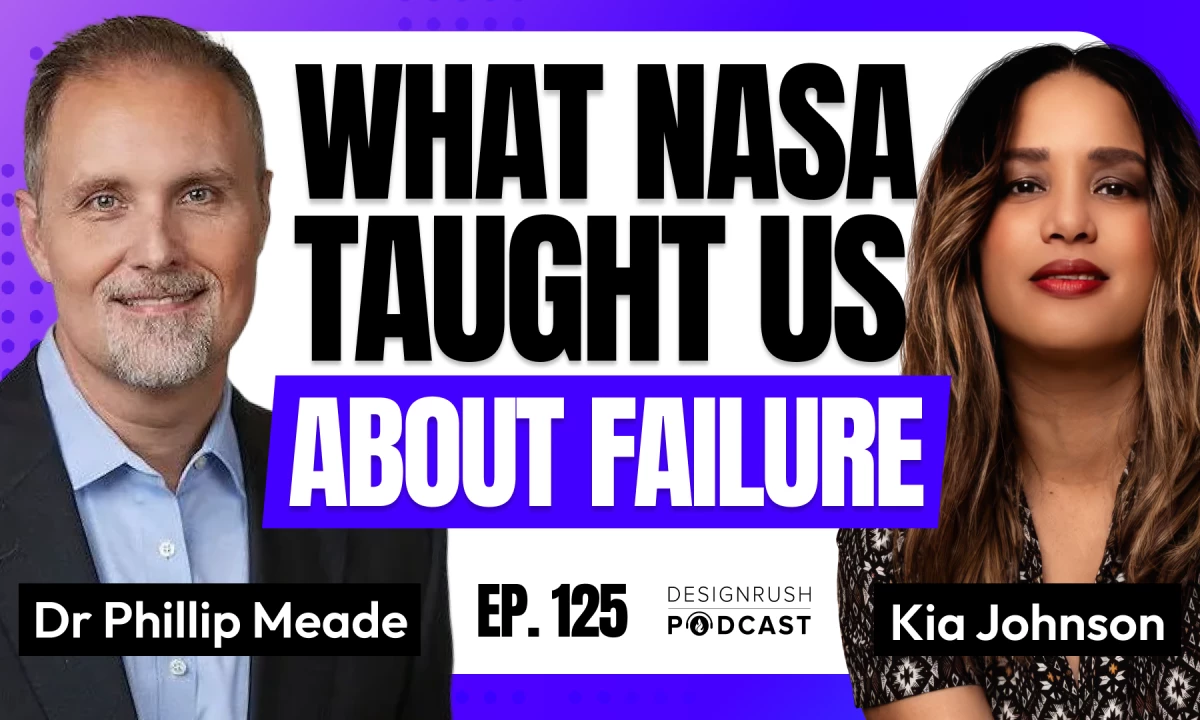
In episode No. 125 of the DesignRush Podcast, Meade explains his approach to helping leadership teams redesign how they think, communicate, and make decisions under pressure.
Here's the full episode on Spotify and YouTube.
“I came to realize that really, it can actually be deceiving and a little dangerous to talk about good culture. Because who really knows what good culture means?” Meade says.
“When I'm working with companies, I like to focus on an effective culture. And an effective culture is specific to that particular organization.”
This discussion between Meade and DesignRush will help you:
- Spot the warning signs of “artificial harmony” before silence becomes risk
- Understand how high performance can hide cultural breakdowns
- Redesign decision-making pathways that scale with growth
- Stress-test your culture by asking how your team behaves on its worst day
Don’t miss the full conversation!
Watch here for the full episode on YouTube, or listen on Spotify now.
When ‘Good Culture’ Isn’t the Whole Story
Meade worked at NASA during the time of the 2003 Columbia disaster.
During this podcast episode, he reflects on how NASA's culture was questioned after the accident.
“Just like most people, when I went into this, I thought that culture was about employee satisfaction,” Meade says.
“And so that's why I was so shocked that culture could have something to do with the accident, because I loved working there.
Everybody I knew loved working there. We were highly engaged.”
He describes NASA’s culture at the time as mission-driven and deeply committed. But it wasn’t structured to surface certain risks.
“It wasn't really driving mission success in the way that we needed it to because it was allowing for these types of safety errors to occur," he says.
That experience changed how Meade thinks about culture.
It’s not a reflection of morale; it’s a system that either reveals or conceals risk.
4 Ways to Get Smart About Company Culture
Meade’s advice doesn’t include feel-good tips.
Instead, his tips are practical and designed to promote honesty in the workplace.
Here are four areas to examine in your organization to stop issues before they escalate.
1. Spot the Warning Signs of Artificial Harmony
High-performing teams often fall into the trap of avoiding conflict.
But as Meade warns, a lack of disagreement usually isn’t a sign of alignment. Often, it’s a sign of silence.
“Artificial harmony is a greater threat to the organization than fistfights in the lunchroom,” Meade says.
When people stop pushing back, it’s quite probable that they feel safe to do so.
So, leaders should treat a lack of tension as a red flag. Upon investigation, you’ll be able to take your colleagues' temperatures and draw conclusions.
2. How High Performance Can Hide Cultural Breakdowns
Results can mask risk.
Why? Strong performance and output can hide breakdowns in the day‑to‑day work, from sloppy handoffs to quiet burnout and rising mistrust.
“There's this tendency to just put your head down and get it done,” Meade says.
This isn’t sustainable, especially as 55% of U.S. workers report feeling burned out, according to 2025 research from Eagle Hill Consulting.
That’s why leaders can’t ignore how the work gets done.
So, in addition to asking about what’s being delivered, you need to ask what it takes to deliver it.
Gallaher Edge CEO and leadership expert Dr. Laura Gallaher notes that protective behaviors can backfire, making teams feel less safe:
3. Redesign Decision-Making Pathways as You Grow
Growth often introduces friction that leaders don’t see coming.
As layers build, the communication loops that once worked begin to fail.
“If I don't stop and think through all of this, then what we see happen is that silos will start to emerge and things will really start to slow down.”
Organizations must actively redesign how decisions get made and how insight flows. If you don’t, bottlenecks and blind spots are inevitable.
4. Stress-Test Your Culture on Its Worst Day
It’s easy to think your culture is strong when things are going well.
Instead, leaders need to dig deep and ask a harder question:
“If you really want to know where your culture’s at,” Meade says, “you want to ask: How do we behave when we’re at our worst?”
When pressure hits, that’s when real culture surfaces.
That’s also when you learn whether your systems support truth or conceal it.
Meade draws parallels between space missions and organizational culture. He points out that shared vision, trust, and leadership systems define what teams can achieve:

About Dr. Phillip Meade
COO, Gallaher Edge Dr. Phillip Meade is a leadership strategist who helps organizations improve performance through culture and systems thinking. With three decades at NASA’s Kennedy Space Center, he now works with executives to uncover how human behavior shapes decision-making in high-pressure environments.
Don’t Let a ‘Good’ Culture Hide What Matters
Meade’s message isn’t really about fixing broken teams. It’s about noticing what strong teams might miss.
After all, when things are running smoothly, it’s easy to assume everything’s fine.
When in doubt, return to Meade’s core principles; use these as your culture checklist:
- Are people still challenging ideas?
- Are strong results masking tension or burnout?
- Has decision-making evolved as your team grows?
- How does your team behave when things go wrong?
These questions can reveal whether teams and projects last or collapse. And they also uncover whether your culture is designed to surface hard truths or push them aside.
Catch the full episode on Spotify or YouTube.
Looking to uncover culture blind spots inside your organization?
Explore our list of top HR consulting firms that help leadership teams redesign decision‑making, improve communication, and build cultures that surface risk early.