
US Dev Partnerships: Key Findings
- The global custom software market hit $43 billion in 2024 and is growing fast. Foreign companies see tailored US web development as key to competitive advantage.
- Six must-do checks ensure you pick an agency with proven tech credentials, 24/7 support, clear project milestones, international experience, built-in compliance, and airtight contracts.
- Following these six steps cuts risk and turns agency selection into a growth driver; reliable, innovative, and ready for seamless cross-border collaboration.
Foreign companies are betting big on tailored web solutions.
The global custom software development market, the engine behind bespoke web builds, topped US$43.16 billion in 2024 and is primed to expand at a 22.6% CAGR from 2025 to 2030, according to Grandview Research.
With hundreds of agencies competing in the US market, choosing the right partner can feel like a high‑stakes gamble.
To make a smart, low-risk choice, focus on the fundamentals. These six steps will help you spot the right partner — and avoid the wrong one.
What to Look for in a U.S. Dev Partner
Here’s your step-by-step guide, based on insights from U.S. agency Bighorn Web Solutions, to help you find a partner with the right expertise, alignment, and compliance from day one.
Editor's Note: This is a sponsored article created in partnership with Bighorn Web Solutions.
1. Verify Platform Credentials
A “certified” badge is no guarantee of real expertise. Before you engage an agency, go to its awards page and verify each claim.
For example, Bighorn Web Solutions displays its “Top Magento Company in Orlando,” "Top User Experience Company," and "Top Shopify Designers and Developers" badges, which only partners that meet strict revenue thresholds and hold required technical certifications can earn.
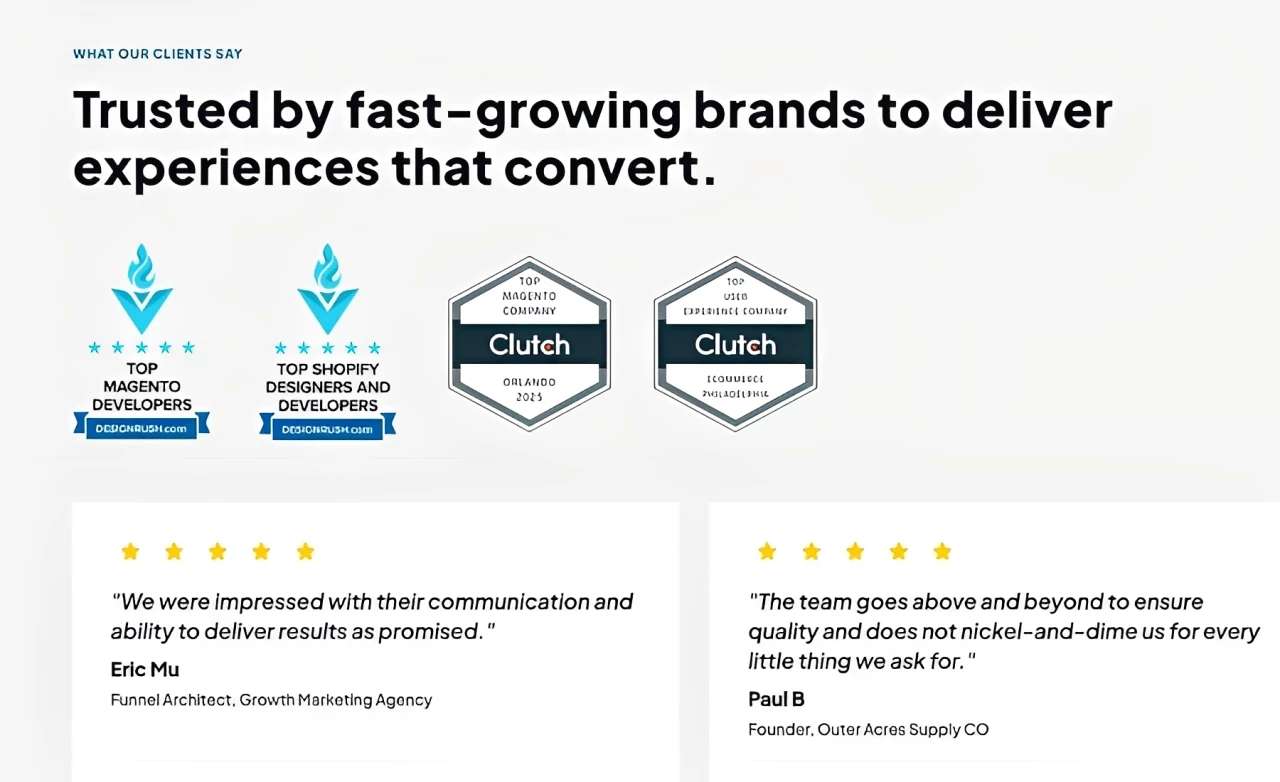
If Magento is part of your tech stack, check that the agency is an official Magento Solution Partner. That status is earned through dedicated training and strict performance targets. The long list of certifications that the Bighorn team earned are a testament to their expertise and dedication to delivering the very best industry solutions.
It proves genuine expertise and often comes with early access to beta features, which give you a head start on rapid iterations or custom requirements.
2. Secure True 24×7 Support
If your storefront goes down at 2 a.m., vague promises won’t cut it.
Look for published Service Level Agreements (SLAs) that clearly outline maximum response times for after‑hours issues, and find out whether the agency runs a follow‑the‑sun model with global coverage or depends on a local team working overnight.
Ask for recent SLA performance reports to see if the agency consistently meets its own standards. Also, check that their escalation paths include phone or chat support for critical outages.
Bighorn Web Solutions shares SLA benchmarks with clients and offers live escalation paths, ensuring international storefronts stay supported around the clock.
“We monitor storefronts in real time and resolve critical issues within SLA windows, no matter the time zone,” said Caleb Bradley, CEO at Bighorn Web Solutions.
Clear, verifiable support like this helps prevent time‑zone gaps from turning into hours of downtime.
3. Demand a Transparent, Phase‑Based Roadmap
Unclear project processes often lead to scope creep and misalignment.
A seasoned web agency should follow a transparent, milestone-driven approach, from discovery and research to planning, execution, and ongoing optimization.
During vendor interviews, ask what specific deliverables mark the end of each phase. This includes things like discovery docs, wireframes, prototypes, performance benchmarks, or user testing summaries.
Make sure there are multiple feedback loops built in, and not just a single review at the end. Insist on milestone dates tied to testable outputs.
Why? Because a clear, phase-based process keeps your project on track and avoids surprise costs.
4. Vet International Case Studies
Success in one market doesn’t guarantee the same results elsewhere.
Ask about the agency’s experience with cross‑border projects, and look for case studies that show how they handled GDPR compliance, multi‑currency checkouts, and localized UX.
Focus on real performance data, like faster load times, stronger conversion rates, and reliable uptime, over general praise.
5. Embed Security, Compliance, and Accessibility
Every line of code carries risk. Your agency should build compliance into the process from day one, not treat it as an afterthought.
So, confirm that they run both automated and manual ADA accessibility audits as part of their workflow.
Ask for proof of security certifications like SSAE 18 or ISO 27001, and don’t stop at the badge. Review recent audit summaries to see how well the agency upholds those standards.
If your website handles personal data, request clear evidence of GDPR and CCPA compliance, such as anonymized data flow diagrams or documented privacy by design practices.
Integrating these measures from day one prevents last‑minute compliance scrambles and shields your brand from fines and litigation.
6. Cement Contractual Clarity
A vague Statement of Work invites scope creep and cost overruns.
Your contract needs to include measurable uptime SLAs, like 99.9% availability, along with clear credits or penalties if those aren’t met.
Bug-fix SLAs should be tiered by severity, with critical issues resolved within eight hours and minor bugs fixed within 48 hours.
- Clearly define the pricing model. Fixed bid offers cost certainty but often include padding for unknowns. Time and materials provide flexibility but require strict time tracking.
- Include exit provisions to protect your interests if the partnership ends early.
- Add source code escrow clauses to safeguard your assets.
And remember, when every term is clear, your contract becomes a tool for accountability rather than confusion.
Final Thoughts: The Real ROI of Getting This Decision Right
Choosing a US web development agency is more than just buying a service. It is a strategic step in your digital plan that will help move your business forward.
The right agency brings more than technical skills. They should also bring reliability, clarity, and long-term support.
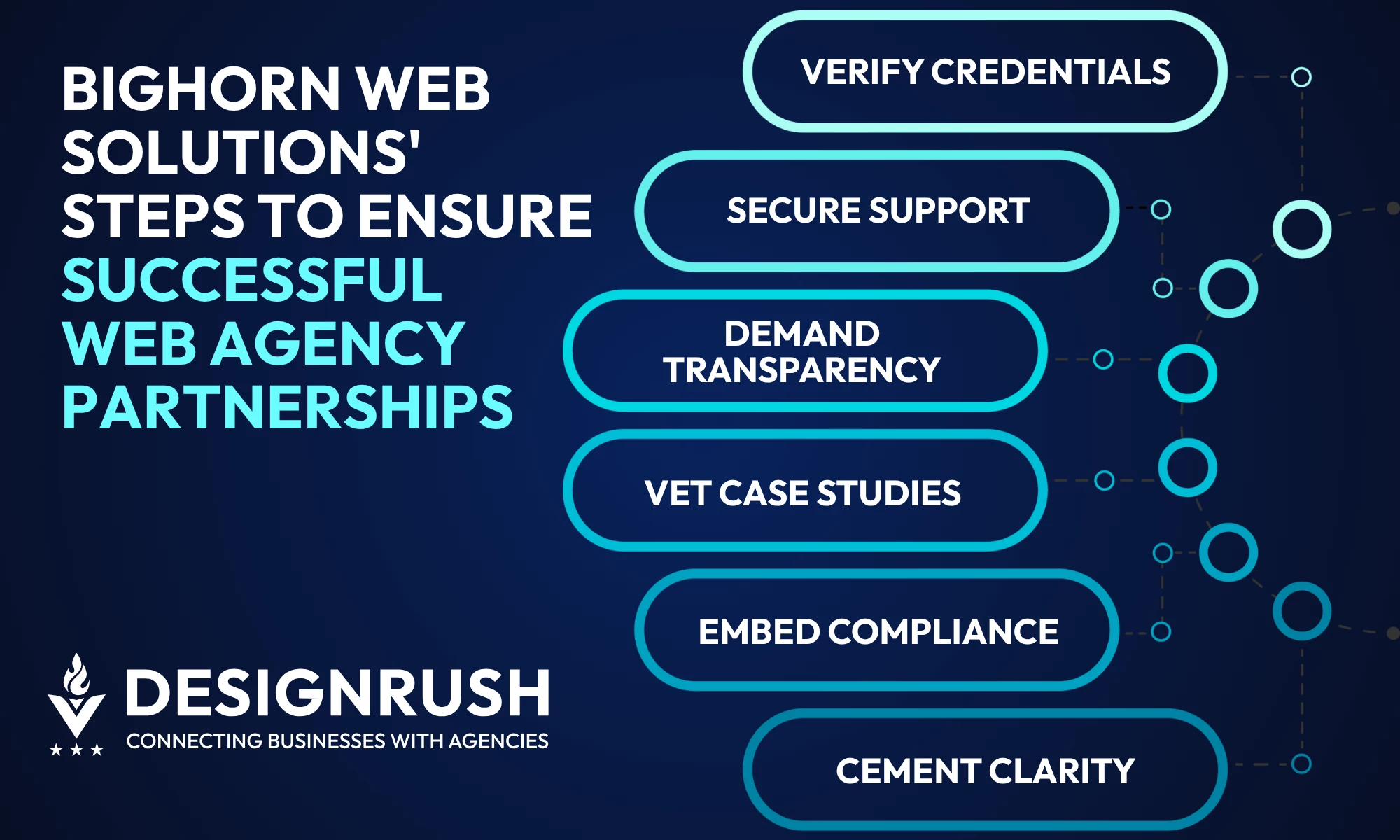
Before you commit, take a moment to gut-check the essentials. A strong web dev partner should bring all of the following:
- Verified platform credentials and certifications
- 24/7 support backed by real SLA performance data
- A clear, phase-based delivery process
- International case studies that show real results
- Security, accessibility, and privacy built into the workflow
- Contracts with protections, SLAs, and exit terms clearly defined
When you get these right, vendor selection stops being a risk, and starts becoming a growth driver. A good agency doesn’t just build your website. It becomes a trusted partner in your global expansion.