
Social media is still often treated as a place for content and campaigns.
But that misses how customers now use these platforms as an extension of sales and customer service.
They ask buying questions, raise service issues, compare options, and wait to see whether the brand responds before they decide what to do next.
That creates a risk many leaders only see after it has already affected sales, retention, or trust.
Case in point, 73% of social users agree they will buy from a competitor if a brand does not respond on social, according to a Sprout Social report.
That makes public replies more than a customer service detail. They can influence whether a customer buys, stays, or leaves.
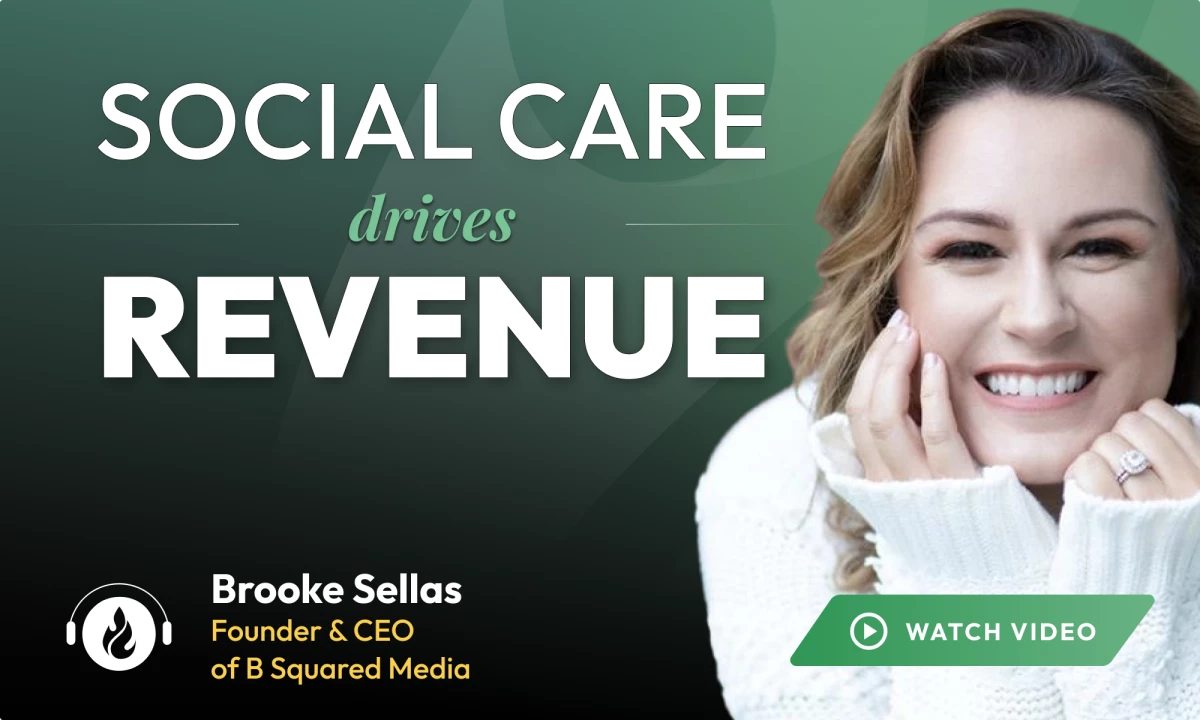
Brooke Sellas is the founder and CEO of B Squared Media, a company that helps brands manage public customer conversations across social channels and turn social care into a business function.
For Sellas, the problem is that many companies still treat social as a place to publish, even as customers use it to ask questions, complain, compare options, and decide whether to stay.
“Brands still use social media like a publishing platform when really the gold and the return on investment live inside of the conversations, not inside of the content itself.”
That makes social care a leadership issue.
In episode No. 140 of the DesignRush Podcast, Sellas explains why social comments should be treated as customer intelligence, not leftover work under the content calendar.
She also looks at why companies need clearer ownership over the public conversations that can affect sales, retention, customer experience, and brand trust.
Watch the full episode now on YouTube or listen on Spotify.

Who Is Brooke Sellas?
Brooke Sellas is the founder and CEO of B Squared Media, author of Conversations That Connect, and a LinkedIn Learning instructor focused on social care, social listening, digital customer experience, and AI for marketing and CX teams. Her work focuses on social care, social listening, digital customer experience, and AI-supported communication that helps brands connect public feedback to retention, trust, and revenue.
The Revenue Risk Behind Public Social Conversations
Sellas’ view of social media came from an early lesson in customer conversation.
Before starting B Squared Media, she worked with the Cystic Fibrosis Foundation in Texas, where she helped build a young professionals effort around a charity pub crawl.
This was before brand pages, paid campaigns, and the tools social teams use today.
“And through all these conversations, again, 100 years ago, there were no ads, there were no pages,” she says.
“We were using a profile like a page, but very long story short, in three months' time, we were able to recruit 7,500 people to attend the pub crawl and made $60,000.”
“First-time events normally make $5,000. So I was like, wait a minute.”
The results came from answering questions, explaining the cause, and giving people a reason to care.
And that experience still guides how Sellas sees brand communication.
“Brands still use social media like a publishing platform when the gold and the return on investment live inside of the conversations, not inside of the content itself,” she says.
In other words, a company may publish often and still miss the comments that show who is ready to buy, who is close to leaving, and which customer problems keep returning.
According to Sellas, companies risk missing three business issues when they treat social media only as a publishing function:
1. Reading Comments as Engagement Instead of Churn Risk
A public complaint does not always mean the customer is gone. Sometimes, it means the customer is still giving the brand a chance to respond.
Sellas says that pattern appears across company sizes.
“What we see happening on social media, and we work with small brands all the way up to billion-dollar global brands.
“And the thing we see for everyone, doesn't matter how small or how big or how medium you are, the same thing that we see is social is a leading indicator of revenue. And what I mean by that is social is a leading indicator of churn.”
Social comments often show three problems leadership needs to see sooner:
- A customer at risk: A public complaint may mean the customer is still giving the brand a chance to fix the issue.
- A buyer before the CRM: A simple question under an ad may come before a website visit, form submission, or sales call.
- A pattern before the report: Repeated comments can reveal product, service, or policy problems before they appear in formal reporting.
If leadership only reviews campaign results, sales reports, and support volume, it may miss the customer risk already visible in public.
DesignRush’s guide to Instagram engagement notes that DMs can help service-driven businesses nurture leads, handle objections, and close sales.
2. Letting Public Replies Affect AI Visibility
Sellas says this risk also reaches AI discovery.
That’s because public social conversations sit across the open web, where AI model training occurs. This can affect how AI learns about a brand, its products, and its customer experience.
“One of the biggest places AI learns from for those AI answers, answering about your brand, your products, your services, is social media because it's open source, right? There's so much conversation and natural language.”
This changes the role of public replies.
A weak response is no longer only a poor customer interaction. If the same response pattern appears again and again, it can affect how customers and AI tools understand the company.
“How are you responding to people? How are you answering questions? Because how you're doing that is going to dictate how AI answers about your brand on your behalf,” Selas says.
For leadership teams, this makes social care a governance issue.
The company needs to know who can answer customer inquiries, which issues must be handled internally, how quickly buying questions should be handled, and which complaints need product, support, legal, or executive review.
Without those rules, public customer experience can form without clear ownership.
DesignRush’s guide to social media management tools explains how management platforms help brands organize posts, track engagement, manage messages, and understand audience behavior.
3. Missing Buying Intent Before It Reaches Sales
Social comments often look small because the questions are simple.
- Does this ship to my country?
- Does this come in another size?
- Can this work for my team?
- What plan should I choose?
These questions reveal a lot about buying intent. Sellas also says these exchanges can directly create revenue.
“Does this come in my size? Do you ship to Canada? These are buying intent questions,” she says.
“If you can answer those questions quickly and with empathy, being very helpful, not too salesy, super helpful, what we found is we are actually closing revenue through these buyer intent questions on social media.”
The problem for leaders is that many of these interactions never reach traditional reporting since these conversations can happen across multiple public touchpoints.
In fact, 56% of shoppers visit three or more sources before buying anything over $500, per Emplifi’s 2026 consumer research.
Throughout that journey, buyers can leave high-intent questions without having to fill out a form. As such, brands miss out on these potential customers because they never formally enter the CRM.
That is the revenue risk many companies fail to account for.
They see ad spend, impressions, clicks, and conversion rate. They may not see the customer who asked to buy and left because no one answered.
“This is how people search and shop on social media. The first brand to respond, even if they're more expensive than the other options, typically wins the deal,” Sellas adds.
For B2B teams, the risk can be harder to trace because the buying path is longer. DesignRush’s guide to B2B social media strategy notes that B2B sales cycles often involve multiple decision-makers, lead generation, and relationship-building.
That makes public questions harder to dismiss.
They may look like simple engagement, but they can be part of how buyers decide which company deserves the next conversation.
As such, customer conversations cannot remain fragmented across inboxes and comment threads.
For Sellas, the value comes when companies classify what customers are saying by purchase intent, retention risk, product issue, complaint type, region, and any other detail leadership can act on.
“When you start tagging and labeling conversations, the amount of data, the voice of customer data that you have then at your fingertips, I can easily tell you with all of our clients, the top three complaints, the top three brands love moments, the top three things that could become like little PR crises, little fires, right?”
That is where social care becomes executive intelligence.
One complaint may be anecdotal. But several complaints with the same theme can point to a service failure.
Likewise, one product question may need a reply. But repeated questions can show where buyers are confused before they exit the buying process.
Sellas says this can also inform decisions outside marketing.
If companies keep treating comments as one-off replies, they may miss what customers are already revealing about demand, friction, trust, and revenue risk.
For example, Sellas’ team once used conversations across a celebrity jewelry brand’s social accounts to identify where the company should open its next physical store.
The store performed well from the start because the decision followed visible customer demand.
What Leaders Should Fix First
If public comments can affect revenue, leaders need a clear view of where those conversations are happening.
Sellas’ first recommendation is an audit.
“Go audit all of your social pages. See where people are talking to you,” she says.
That audit should show where customers ask to buy, where complaints appear, which accounts produce useful feedback, and which accounts no longer justify the time spent on them.
Sellas says leaders can start with three simple labels.
“So audit your social pages, find out where the conversations are happening, do a little bit of tagging, just do gain, retain, love.”
- Gain covers buying questions, product inquiries, pricing questions, and comments that show purchase intent.
- Retain covers complaints, support issues, friction points, and public frustration from customers who may still be saved.
- Love covers praise, advocacy, user-generated content, referrals, and public proof that customers value the brand.
Second, Sellas also points to the use of social listening tools, since many customers talk about a company without tagging the official account.
“You have to be using social listening, which listens proactively around your brand keywords.”
That matters because some of the most useful customer conversations may never reach the inbox.
Her third recommendation is to create content that invites real customer response.
“And third, I want you to think about creating more conversational content to begin with.”
The work is not simply about replying faster.
Companies need ownership, tagging, escalation, reporting, and internal action so public comments are not trapped inside social channels.
Public conversations can show where customers are ready to buy, where they are close to leaving, and where the business needs to act sooner.
A strong social media marketing agency can help brands build the systems needed to manage public conversations, identify buying intent, and protect customer trust across social channels.