
Nvidia's recent launch of RTX Spark brings large language models and AI agents directly to laptops and desktop computers.
And while this gives businesses another way to deploy AI, it's also prompting a different question. Where should AI actually run?
Customer Paradigm is one such company helping businesses to navigate that question.
The company’s founder, Jeff Finkelstein, explains that as AI projects move from experimentation into production, clients are asking different questions than they were even a year ago.
"Companies are becoming more selective about where AI runs," he says.
"When it can process information directly on a device without sacrificing performance, you gain faster response times, stronger privacy, and the ability to support applications where every second matters."
Take a look at how Nvidia's RTX Spark is bringing AI closer to where work happens, and why that could change how businesses think about AI deployment:
Why Businesses Are Looking Beyond Cloud-Only AI
Businesses are becoming more selective about where AI runs.
After all, some AI applications work best on a device, others at the edge, in the cloud, or across a combination of environments, depending on factors such as latency, bandwidth, governance, resilience, and cost.
But Finkelstein says those decisions should start with the problem the business is trying to solve rather than the technology itself.
"Every AI project has different demands. Some need an answer almost immediately, others don't," he says.
"Once you understand what the application is supposed to do, it becomes much easier to decide where it should run."
YouTube channel, Cloud Computing Insider, takes a closer look at why more enterprises are exploring local AI, and how cost, governance, and privacy are reshaping deployment decisions:
How Businesses Are Choosing Where AI Should Run
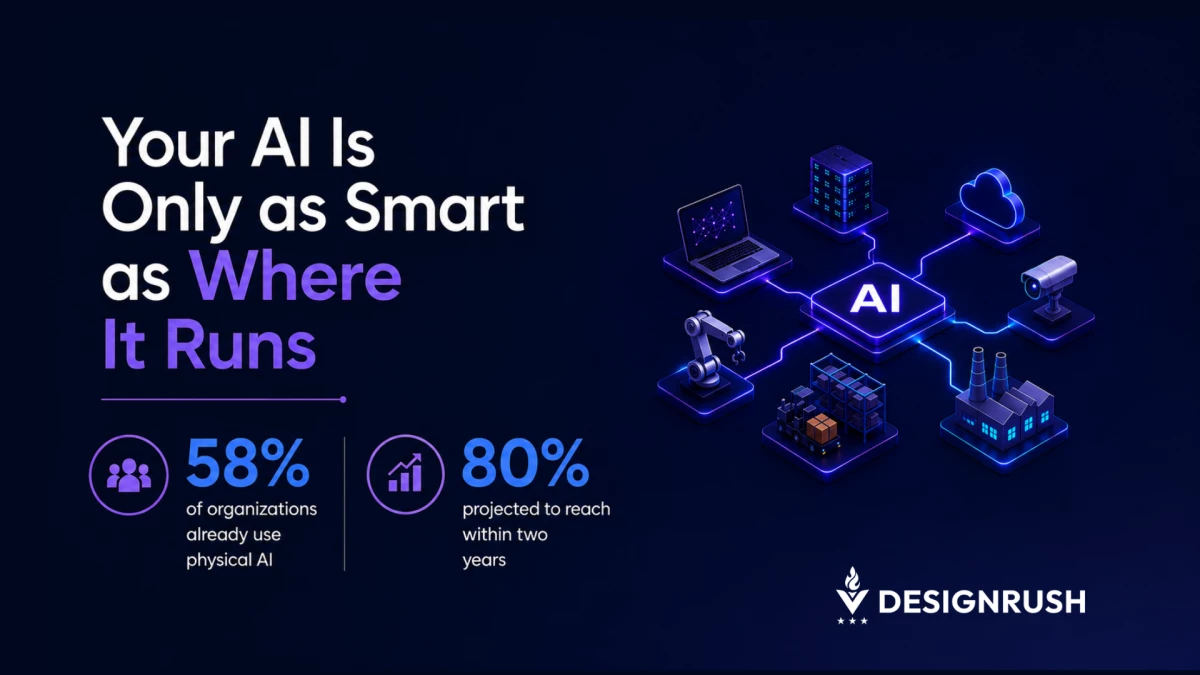
Deloitte's 2026 State of AI in the Enterprise report found that 58% of organizations already use physical AI, with adoption projected to reach 80% by 2028.
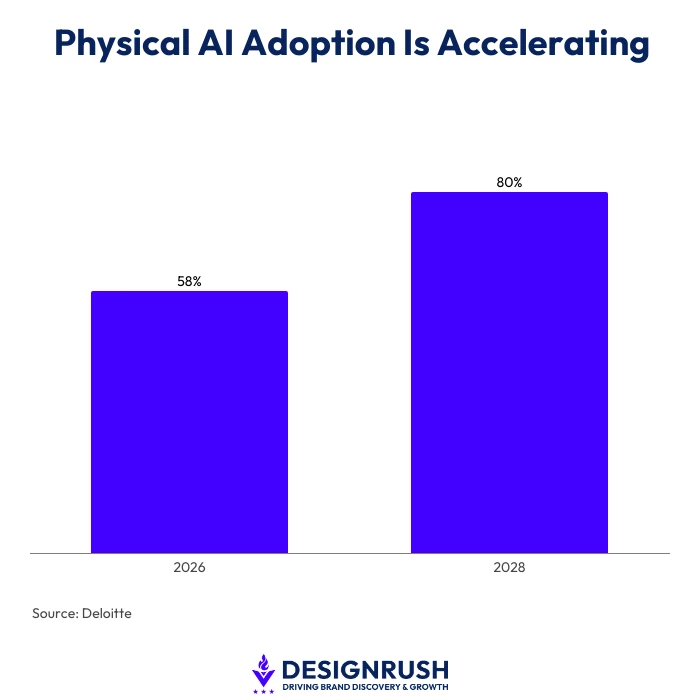
The report highlights growing investment in AI systems that interact directly with cameras, production equipment, robots, sensors, and other connected devices.
Those applications place different demands on infrastructure compared to large language models built for training or analyzing data across multiple locations.
Machine vision, AI-powered video analytics, and business automation are among the applications where Customer Paradigm is seeing that demand.
AI inspecting products on a manufacturing line or monitoring live video feeds often needs to make decisions immediately, while larger language models performing historical analysis or processing data from multiple locations remain better suited to cloud infrastructure.
Finkelstein says businesses can reach better outcomes when they begin with the workflow instead of the infrastructure.
"We don't start by asking whether a solution belongs on a PC or in the cloud. We start by asking what the business needs it to do," he adds.
"And once that's clear, the right architecture usually follows."
Given that different AI applications solve different problems, the deployment model should support the workflow, not dictate it.
YouTuber, Zen van Riel, delves into local AI, cloud AI, and why many enterprises are adopting a hybrid approach to AI deployment:
Why Business Goals Should Drive AI Deployment
Deciding where AI should run is becoming less of a technical discussion and more of a business one.
The technology behind it matters, but it isn't the starting point.
Businesses need to first understand what they're trying to achieve, how quickly AI needs to respond, and what role it will play in day-to-day operations.
The answers to those questions usually make the right deployment model much clearer.
Finkelstein says businesses get better results when they focus on the outcome before the technology.
"While the hardware will keep improving and new models will continue to arrive, what doesn't change is the business problem you're trying to solve," he adds.
"If you understand that first, it's much easier to choose the technology that fits."
So as more businesses define the outcome first and decide where an application should run second, isn't it time to ask yourself which business decisions are too important to wait for the cloud?