
A recent BBC investigation confirmed what many marketers suspected but couldn't yet prove with hard numbers.
Businesses that restructure their content for AI retrieval are seeing measurable gains in both traffic quality and conversion, even as their overall click volume shrinks.
HubSpot lost an estimated 140 million visits in a single year as AI Overviews and algorithm changes cut into click-through rates.
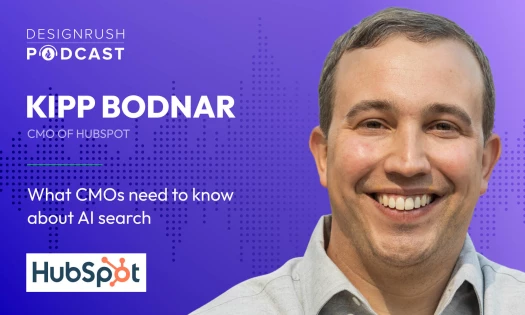
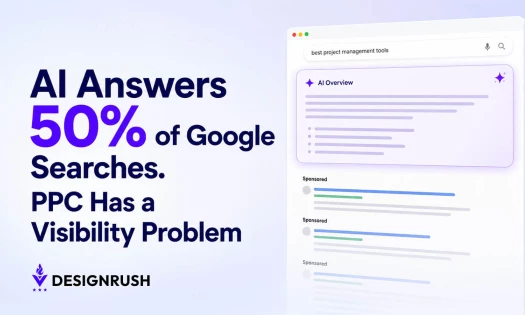
HubSpot CMO Kipp Bodnar told the BBC that searches showing an AI Overview see click-through rates roughly 60% to 70% lower than standard results.
In response, HubSpot broke its long-form product content into smaller, extractable chunks built for AI retrieval, and AI now delivers 7% to 12% of the company's site visitors most months.
MKM Building Supplies saw a similar pattern, though at a smaller scale.
Digital director Andy Pickup told the BBC that AI-referred traffic grew from nearly nothing to a double-digit percentage of total traffic within a year and that those visitors have a higher conversion rate than traditional search traffic.
Wider data from Mersel indicates AI-referred visitors convert at 14.2% compared to 2.8% for organic Google Search.
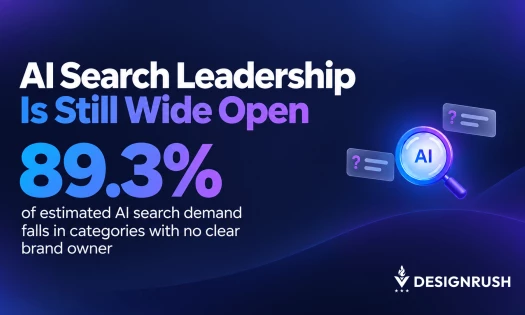
Google's share of information discovery dropped from 89.3% to 57.6% between December 2022 and December 2025 as more research-stage queries went to AI assistants.
Now, 25% of B2B buyers use AI for vendor research, so a brand can be ruled out before traditional marketing even has a chance.
Why most GEO efforts are off track
Many brands treat generative engine optimization (GEO) as a content problem. The instinct is to write more, cover more angles, and add more keywords. But AI systems aren't rewarding volume.
They're rewarding retrievability, which is an entirely different property of a page.
Let’s look at both sides of the coin.
SEO asks whether a page can rank, while AEO asks whether a page can be lifted out of its context and still make sense as a standalone answer.
And a lot of long-form content ranks well on Google. But the answer is buried in paragraph six, dependent on paragraph four, and never stated as a clean, quotable claim on its own.
This is why average query length matters more than most marketers realize.
Bodnar noted that AI search queries run 40 to 60 words compared to four to six words in a traditional Google search.
That's not just a longer version of the same query.
A 40-word prompt typically contains a scenario, a constraint, and an implicit follow-up question, and a page only earns a citation if it addresses all three without forcing the AI system to make inferences.
A 4-question audit for brand visibility
Before investing in a full content overhaul, it's worth running any high-value page through a four-question GEO audit:
1. Can a paragraph on this page stand alone as a complete answer?
If a section requires the paragraph before it to make sense, an AI system will likely skip it rather than reconstruct the context.
2. Does the page make a direct claim, or does it skirt around the topic?
Vague reassurance won’t be cited (e.g., "Security is important to us"), while direct claims are more likely to be cited (e.g., "Our platform completes SOC 2 audits every year").
3. Could a competitor's page answer the same follow-up question better?
AI search favors pages that cover a whole topic area, not just the main query.
4. Is there a trust signal close to the claim, not just somewhere else on the site?
Author credentials, inbound citations, and third-party validation carry more weight when they sit close to the claim they're supporting rather than living on a separate “About” page.
The brands that miss two or more of these questions are the ones that are reflected in the latest invisibility statistics.
A 2026 study of 1,000 enterprise brands found that 62% were invisible to generative AI models even though 94% were investing in traditional SEO.
This shows that strong search performance and AI visibility are now different goals.
The measurement problem
Many attribution models still overlook AI-influenced traffic.
If someone gets their answer from ChatGPT or AI Overviews and then later converts through a branded search or a direct visit, analytics sees those as separate sessions.
For the past two years, measuring your visibility in AI Overviews meant one of two things: pay for a third-party tool, or make educated guesses. That changed yesterday 👀
— Intero Digital (@InteroDigital) June 4, 2026
Here's everything you should know: https://t.co/JndYz77JZmpic.twitter.com/NvjX0E4XXu
This mismatch is why AI visibility often needs to be tracked as a leading indicator rather than a lagging one through:
- Citation frequency in AI-generated answers
- Share of voice in AI-generated answers
- Manual checks or monitoring tools to track AI visibility
- Attribution challenges when conversion events can't be correctly linked back to the AI touchpoint that influenced them
None of this replaces the basics that HubSpot's analysis of SEO trends points to, including structured content, clear authorship, and topical depth. These still matter because AI systems rely on pages that already rank well in search.
The shift isn't moving from SEO to AEO. It's moving from ranking as the finish line to citation as the finish line, with everything a brand already does for search now serving double duty.