
Adapting to AI Search in 2026: Key Findings
- Quality content becomes the differentiator as search platforms filter out generic AI output, rewarding brands that offer useful information built on real expertise.
- Entity and structure take priority over keywords because AI systems rely on clear definitions, schema, and connected content to understand what a brand represents.
- Authority signals across the web influence results, since AI-generated answers often draw from reviews, citations, and third party mentions on top of a brand’s site.
AI-assisted search is starting to move into mainstream use.
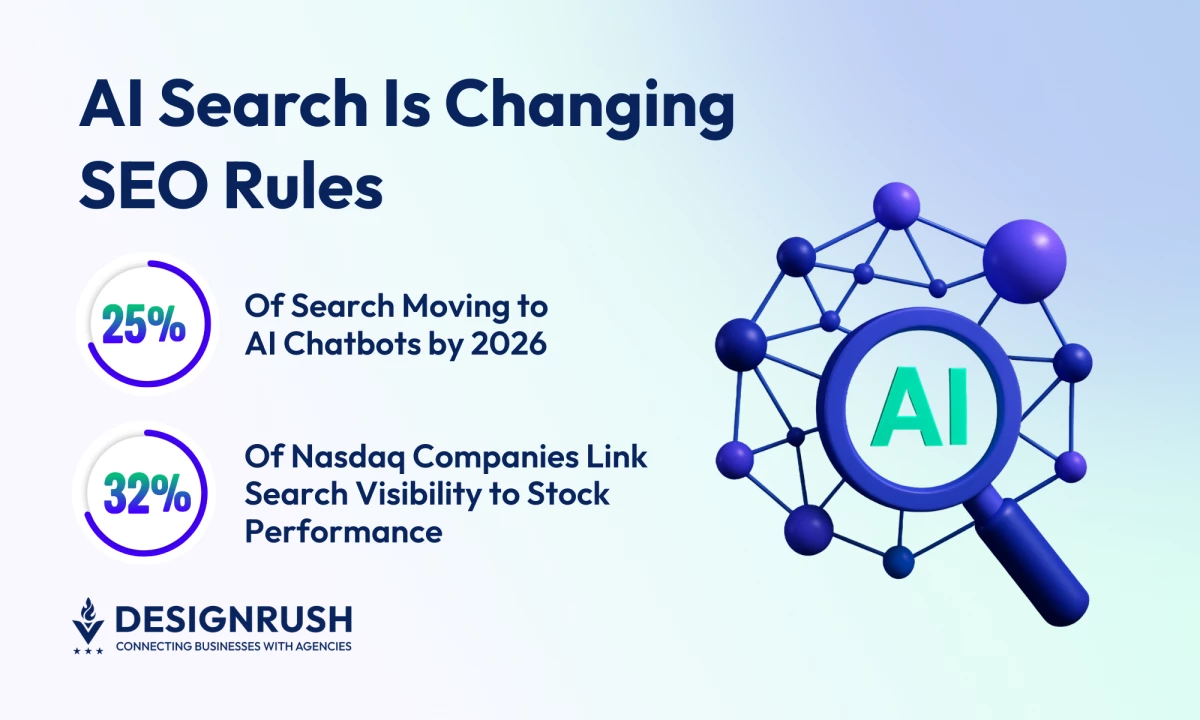
In fact, Gartner expects up to 25% of traditional search volume will shift toward AI chatbots and virtual agents by 2026.
Ahrefs also found that 32% of Nasdaq companies report a clear link between their search visibility and stock performance.
At the same time, consumers are increasingly turning to generative tools to get faster and more direct answers.
And Google has pushed this behavior forward through AI Mode, which gives users instant summaries and guidance without requiring a full search journey.
While it’s all good with users as it’s making it easier for them to search for the information they want, it also introduces new pressure for brands.
Editor's Note: This is a sponsored article created in partnership with eSEOspace.
Visibility now depends on whether AI systems can identify, trust, and cite a brand’s information.
eSEOspace says that adapting early will help companies secure stronger placement in the answers people see first.
“We are watching the biggest change in how people look for information since mobile search took off,” Irina Gedarevich, founder and marketing consultant at eSEOspace, told DesignRush.
“Brands cannot wait for the dust to settle. They need to strengthen their expertise signals, sharpen their content structure, and build authority in places they never had to think about before.”
These are the four strategies that the full-service marketing and SEO firm believes matter most.
1. Content Quality Becomes a Competitive Edge
Generative AI tools have made it easy to publish at scale.
This has led to a wave of content that reads the same, offers little value, and leaves search systems looking for clarity.
Search platforms are signaling that they will reward work that feels specific, accurate, and grounded in human expertise.
eSEOspace notes that this is where Generative Engine Optimization (GEO) becomes important.
GEO strategy focuses on tailoring content to the way AI models read, classify, and reuse information, which makes quality and clarity even more essential for visibility.
Brands need to focus on materials that hold unique insights.
Clear explanations, meaningful data, original observations, and expert commentary help AI distinguish valuable sources from generic text.
Authenticity will also matter as regulators push for transparency around AI-generated material. Expert-written, human-verified content will carry more weight in this environment.
2. Format Needs to Serve Answer Engines
AI answer engines review content differently from humans.
They identify structure, scan for direct responses, and look for information that can be reused without confusion.
Pages perform better when they begin with a clear answer, helping AI understand the point of each section:
- Short paragraphs
- Defined subheads
- Concise lists
FAQ blocks also mirror how people phrase questions and are often surfaced in AI summaries.
Gedarevich says the next challenge is teaching AI where to look, which starts with structuring information in ways that leave no room for misinterpretation.
“AI follows the path you give it. And if this path is clean and deliberate, you have a much better chance of being included in the answer.”
3. Entity Optimization Builds Visibility
AI search models rely on understanding entities, not just keywords.
They help AI interpret who a brand is and when it should be included in an answer. Brands can strengthen entity clarity by:
- Creating dedicated pages for each product or service, with straightforward explanations
- Using schema markup to define what each page represents
- Linking related topics internally so AI can follow the relationships
These components form a private knowledge graph that AI systems can read with confidence.
GEO also places heavy emphasis on this foundation because if AI can’t map a brand’s entities, the information is far less likely to appear in generated answers.
4. Authority Across the Web Matters
AI-generated answers aggregate information from reviews, articles, forums, social platforms, and high authority publications.
This makes off-site reputation a core part of AI visibility.
- High quality backlinks signal trust.
- Positive reviews tell AI systems that people have real experience with the brand.
- Mentions from credible experts or industry outlets reinforce reliability.
Local businesses also need strong directory accuracy, with consistent listings across major platforms helping AI confirm location-based information when users ask for nearby services.
Treat AI Search Optimization as a Core Practice
AI search is quickly becoming a central discovery channel. This is a fact that shouldn’t be ignored.
Brands should monitor how they appear in AI-powered results and track which competitors are being cited.
This requires an approach that combines SEO, content, PR, and reputation management.
The goal is to answer real questions clearly, define entities in a structured way, and maintain authority across the wider web.
“You cannot hide behind broad claims anymore,” Gedarevich shared.
“AI checks everything, so brands need to show their expertise in ways that can be verified instantly.”
A practical next step is to identify the topics where competitors are being cited and build stronger, clearer material that can compete for those same answers.
Early adoption sets the trajectory for who gets cited and who gets sidelined.