

Project Scoping Fixes: Key Findings
- Organizations that invest in power skills see scope creep in only 28% of their projects versus 40% for those that don’t.
- Unclear priorities, undefined roles, or unflagged stakeholder changes are the fastest way for B2B projects to derail.
- Structured discovery and frequent check‑ins turn subtle scope‑creep symptoms into manageable course corrections.
Organizations that invest in power skills experience scope creep in just 28% of projects, compared to 40% for those that don’t, according to a 2024 report from the Project Management Institute (PMI).
That gap shows it isn’t broken processes or lack of talent that derails B2B initiatives. It’s having a slippery scope.
When priorities aren’t crystal‑clear up front, including when client changes, undefined roles, or a sudden stakeholder swap go unflagged, projects stall in endless revisions, blow budgets, and miss deadlines.
The best way to prevent this is by requesting a call and providing honest feedback or communication, according to Jess Borges, web project manager of B2B branding and web design agency Bop Design.
Here’s how expert teams spot trouble early and steer projects back on track before things unravel:
Editor's Note: This is a sponsored article created in partnership with Bop Design.
Scope Creep Doesn’t Start Loud — It Starts Subtle
Evolving requirements. Last-minute requests. Missed meetings.
These are often the first signs that a project is starting to drift off course.
Another, more subtle, red flag? Miscommunication.
To get ahead of the problem, the Bop Design team recommends focusing on structure and ownership during the client onboarding process:
- Provide a detailed project plan
- Monitor for early warning signs, such as missed milestones, extra design revisions, and clients consistently changing direction
- Hold regular check-ins
- Provide honest communication
- Assign a strong project owner to take complete ownership of the project
That proactive approach paid off during a recent website redesign. The client, highly detail-oriented, had extra deliverables folded into the scope from the start. The team included them in the schedule and maintained regular meetings to keep things on track.
The result: no surprises, no chaos, and a smooth path to launch.
“Strong scope definition teaches you that upfront clarity saves later chaos and scope creep. It ensures focused execution, stakeholder alignment, and a website that serves both the business as well as their customers’ needs,” Borges added.
When red flags show up, it’s important to act fast.
“Typically, requesting a call and providing honest feedback or communication is the best way to start this process,” Borges said.
A detailed project plan, a strong project owner, and frequent check-ins lie at the center of the fix. That combination gives teams a structured way to hold the line without stalling progress.
When Clients Don’t Know What They Want Yet
That clear scope and proactive communication made all the difference in Bop Design’s website redesign project. But not every client arrives with well-defined priorities.
When clients aren’t clear on their priorities, the approach needs to adjust. Rather than moving ahead quickly, it’s important to slow down and listen carefully. Facilitating a working session to discuss goals, audience needs, and pain points can help bring clarity.
This process helps clients identify what requires immediate focus and what can be addressed later, creating a clear foundation for the project.
This video outlines four key areas to help teams better understand and articulate how their solution solves client problems:
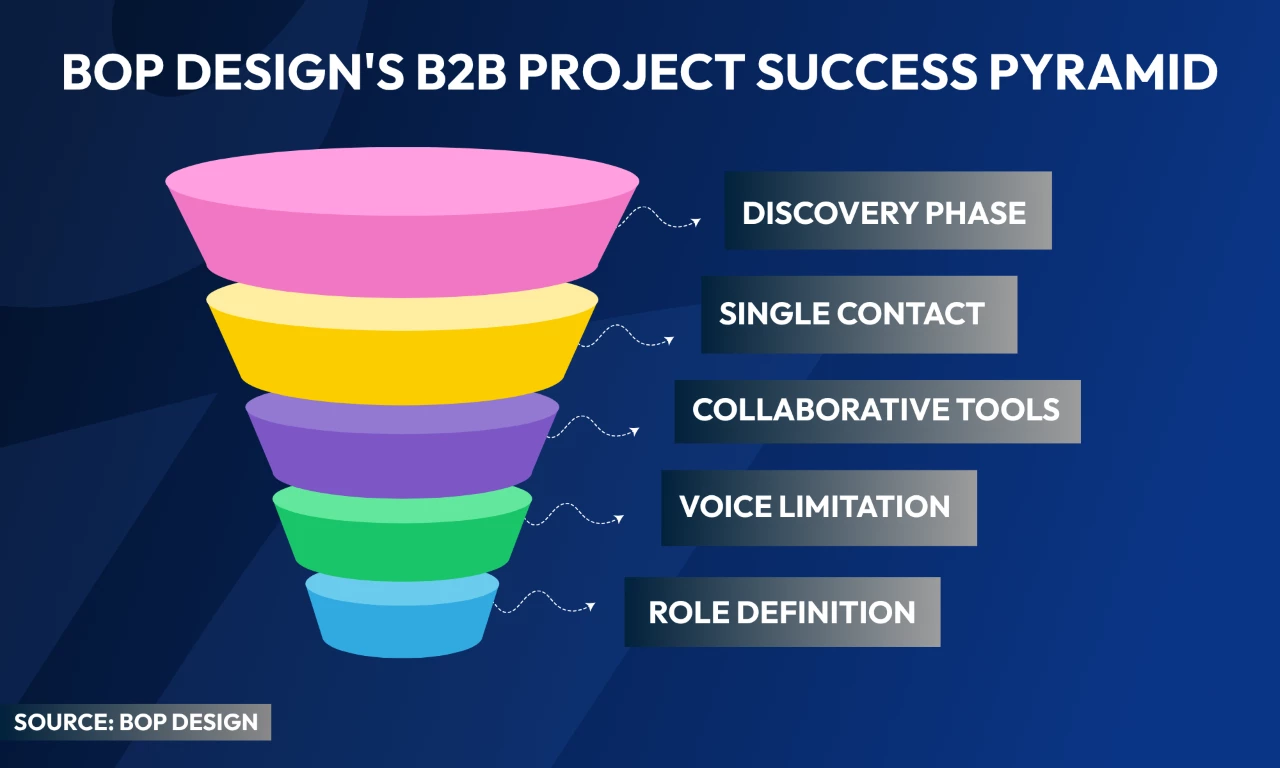
Many B2B projects involve multiple departments, each with its own agenda. To avoid chaos, Bop Design takes a structured approach:
- Define everyone’s role at the start
- Limit the number of voices in key decisions
- Use collaborative tools to streamline feedback
- Assign a single point of contact or project owner
- Run a structured discovery phase before major work begins
According to Dana Adams, Bop Design’s project manager, being clear on the scope at the beginning of the project and ensuring all parties are involved is key.
“If priorities aren’t clear, we always try to start from the beginning, slow down, and listen. A working session to discuss their goals, audience needs, and pain points can help them connect those dots to what’s doable now vs. later,” she said.
Flexible Scope ≠ No Structure
In fast-moving industries like SaaS or AI, priorities shift often. But teams still need structure.
Borges recommends starting with flexible scoping and building the project around Agile or Scrum frameworks. These give teams a way to adapt in real time without constantly rewriting the plan from scratch.
Adaptability also depends on the process. Structured methods for continuously evaluating priorities, paired with frequent, transparent communication, help teams stay aligned even as needs change.
This balance between flexibility and accountability is what keeps complex projects on track when the landscape won’t sit still.