
AI website builders have changed the game when it comes to do-it-yourself web development.
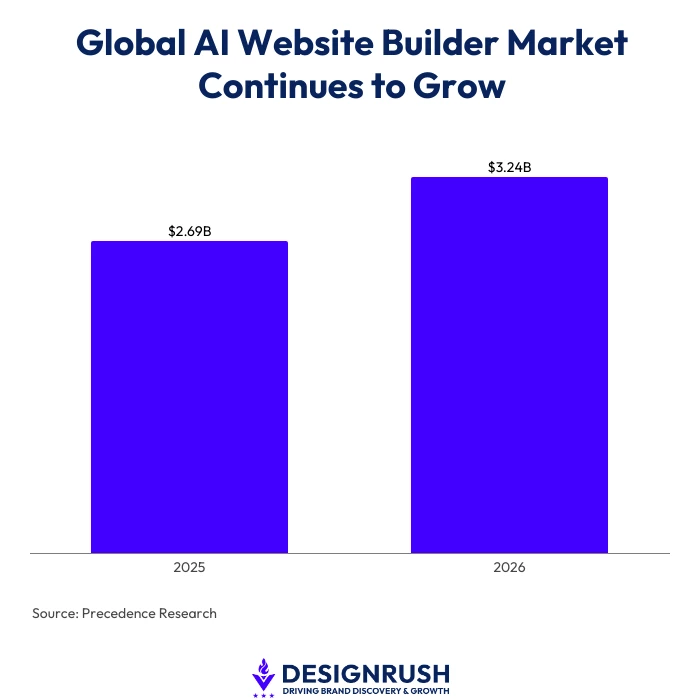
So much so that the global AI website builder market has grown from $2.69 billion in 2025 to $3.24 billion this year, according to Precedence Research.
Apart from being faster and more intuitive, they’re producing better-looking results than the majority of traditional DIY tools.
But they're still DIY. And that distinction matters.
DIY website solutions aren’t new, especially since businesses have been using platforms such as Wix and Squarespace for years.
And while AI has improved what's possible, it hasn’t eliminated the strategic, creative, and technical expertise which agencies bring in building a successful website.
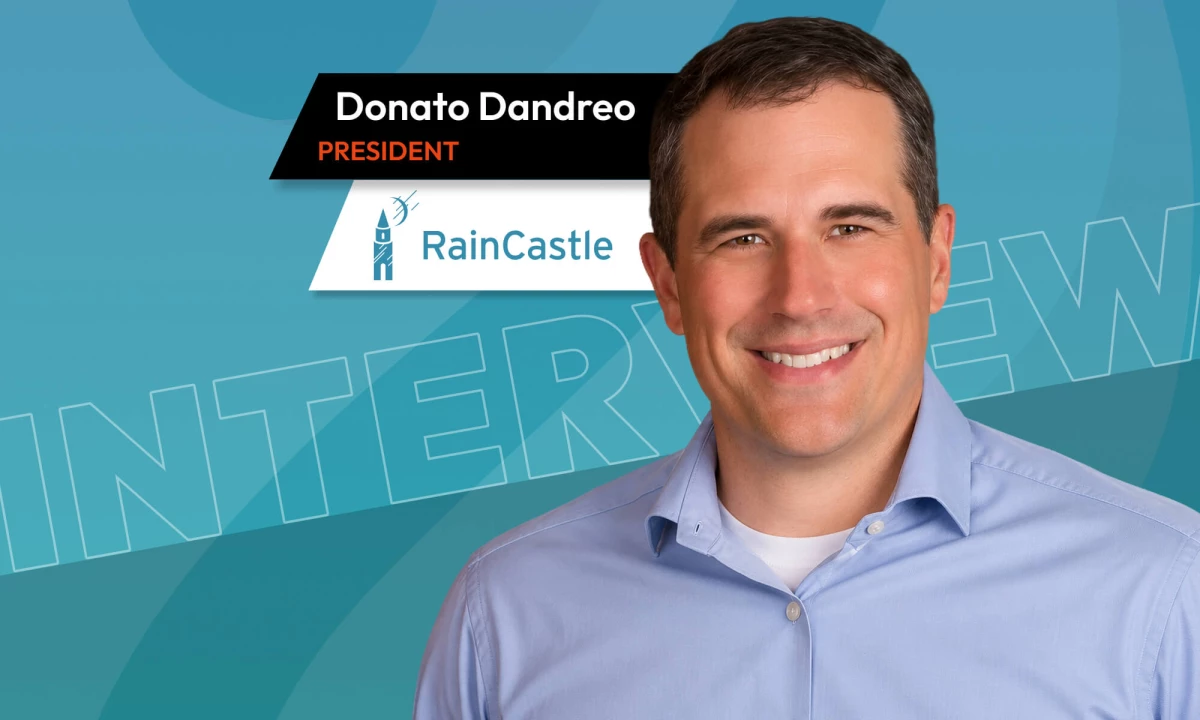
In this DesignRush interview, Donato Dandreo, President and Digital Strategist at RainCastle Communications, explains that small local businesses, solo consultants, or startups with limited budgets, will benefit from AI-generated websites.
"I myself use AI website builders for certain landing pages, wireframing layouts, and experimenting with design concepts and functionality," he says.
"But there's a big difference in generating something that looks like a finished website and creating a website that's positioned to achieve meaningful business results.
"And many of the risks that come with doing it yourself are the same ones that existed long before AI entered the picture."

Who Is Donato Dandreo?
Donato Dandreo is the President of RainCastle Communications, a Boston agency that helps life sciences and professional services companies grow through brand-driven web design and marketing. He also founded Compete Now, a digital firm serving small businesses, nonprofits, and health care providers. With 15+ years of experience, Donato specializes in aligning brand, digital experience, and marketing strategy.
The Biggest Risk Isn't the Design, It's Skipping the Strategy.
Some of the biggest concerns with AI website builders isn't the quality of the websites they produce, but how easy they make it to skip the strategic work that should happen before design begins.
In Dandreo’s experience, the most important decisions in a website project are often made long before anyone starts designing or developing pages.
"In our agency, designing and developing the website has often been the more straightforward part of a project," he adds.
"The challenging work, however, comes earlier, when we're helping an organization determine what its website actually needs to accomplish."
Dandreo explains that the process involves asking seven questions, including:
- Who is the organization today, and where is it heading?
- Who are its most important audiences, and what do those audiences need?
- What makes the organization different from its competitors?
- What content is working on the existing website, and what's missing?
- Should pages be retained, consolidated, expanded, or created?
- How should the website be organized to help visitors find what they need and take meaningful action?
- How can the website support future marketing, search visibility, and business growth?
The answers to these will help inform the direction of the website, including brand messaging and content strategy, to the sitemap, navigation, and eventual design.
And while using AI can help with discovery, research, and planning when it's given the right context and direction, having a tool capable of generating a website doesn't mean that the person using it knows which questions to ask or which opportunities to look for.
Dandreo adds that there’s also a downside to using AI to generate the website’s content and design.
"If the starting point is generic messaging, it's easy to refine what's already on the screen rather than develop a distinctive message from the beginning," he says.
"And while the result may look polished, it could fail to communicate what makes the business valuable."
The DIY Website Risks That Haven't Changed
Many of the risks associated with building your own website existed long before AI. These include aspects such as:
Search Engine Optimization and Protecting Existing Rankings
This is one of the biggest areas where a DIY website project can go wrong, particularly when replacing an established website.
"A website redesign should account for keyword research, content strategy, on-page optimization, technical SEO, as well as the search visibility the existing website has already earned," Dandreo adds.
The latter is important, especially when someone uses AI to replace a 30-page website with a beautiful five-page version and not realize that some of the original website pages were generating valuable organic traffic.
Without properly evaluating the existing content, preserving important URLs, and implementing appropriate 301 redirects, the business could lose rankings and traffic that took years to establish.
The same applies to optimizing new content to address both traditional search engines as well as AI-driven discovery.
Credibility and Attention to Detail
A website doesn't need to win design awards to be effective.
But small details such as uneven spacing, poorly cropped images, generic stock photos, inconsistent fonts, unclear messaging, or a mobile layout that doesn't work properly can leave a bad impression and affect credibility.
Accessibility, Usability, and Quality Assurance
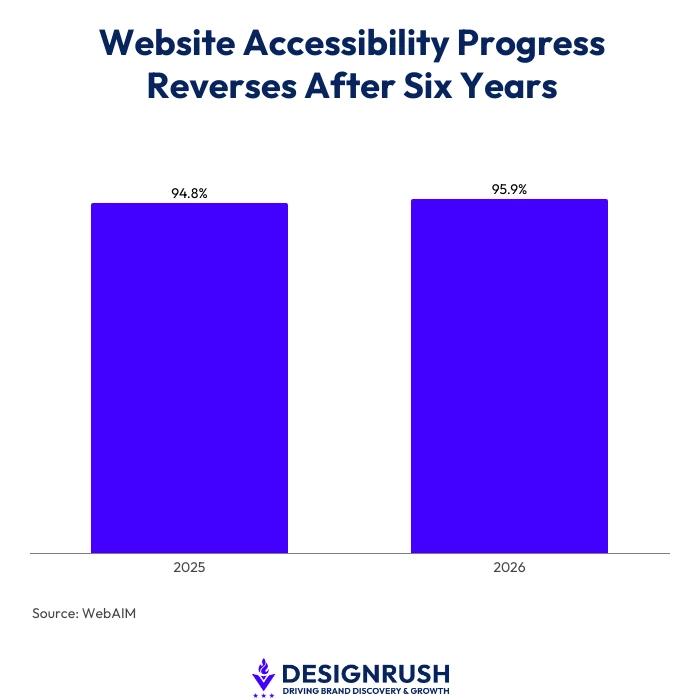
Web accessibility has become a major talking point amongst those in the industry, with WebAIM's 2026 analysis finding that detectable accessibility failures rose from 94.8% in 2025 to 95.9% this year, effectively ending six years of gradual improvement.
"To ensure that websites can be accessed by all visitors, they need to be tested across browsers, devices, and screen sizes," Dandreo adds.
"A website might look fine on the computer it was built on, but behave differently on another device or be difficult for someone with a disability to use."
Someone building their own website may not know what to test for, especially when the problems aren't immediately visible.
Privacy, Security, and Compliance Considerations
Depending on the business, a website may also need privacy policies, cookie consent tools, secure forms, or other safeguards.
An experienced agency can help identify what's needed and when to involve a legal or compliance specialist.
Conversion Tracking and Ongoing Measurement
Once a website goes live, the business needs to know whether it's actually achieving what it was built to do.
"This includes tracking calls to action, form submissions, analytics, conversions, and how visitors move through the website," Dandreo says.
"These are easy to overlook when the primary goal is simply getting something online."
Google Search Central examines the SEO risks of website migrations, including redirects and changes to existing URLs:
A Working Website Isn't the Same as a Finished Website
AI can generate the first draft of a website quickly, but there's still plenty to do before it's ready to launch.
The content needs reviewing, images need selecting, and someone has to test the site to make sure everything works as intended and meets the business's goals.
For larger organizations, there's also feedback to collect, stakeholders to consult, and approvals to manage.
"The speed of AI can create a false sense of progress, especially when a website can appear nearly finished visually while much of the most important work remains incomplete," Dandreo says.
What an Experienced Partner Brings to the Process
Dandreo recently spoke with a business owner who had considered using an AI website builder to update his company's website.
Even though the business had evolved through the years, its website didn't reflect what it offered or attract the customers it wanted to reach.
The discussion revolved around how to better communicate the company's value, reorganize its content around what prospective customers were looking for, showcase the expertise of its team, search visibility, ongoing content marketing, and how the site could support future growth.
"I think that meeting these criteria often gets lost in the AI website debate," Dandreo adds.
"While the value of an experienced agency has never been limited to its ability to design and develop a website, it's the experience, perspective, and collaboration that the agency brings that help a business determine what it should build in the first place."
When Does Building Your Own AI Website Make Sense?
Despite these considerations, Dandreo believes that AI website builders have their place in the market.
"If the website is relatively small, the business owner is the primary decision-maker, and the required functionality is straightforward, an AI website builder could be a practical and cost-effective solution," he says.
The same applies to temporary campaign pages, early-stage business concepts, and simple informational websites.
For those considering if DIY is the right approach, Dandreo suggests answering a few questions related to these five factors:
1. Complexity
Is the website relatively small and straightforward, or does it require extensive content, integrations, or specialized functionality?
2. Stakeholders
Can one person make the necessary decisions, or does the project require input and approval from multiple departments?
3. Internal Expertise
Does someone have the time and knowledge to guide the AI, evaluate its output, and address issues?
4. Business Importance
Is the website primarily an online business card, or is it central to lead generation, sales, recruiting, or other critical objectives?
5. Long-Term Plans
Will the website remain relatively static, or does it need to support substantial growth and ongoing marketing?
"Not every business needs a fully custom website built by an agency, but even those well suited to DIY should consider professional help with SEO, analytics, and technical setup," Dandreo adds.
"The goal should focus on choosing the approach that makes the most sense for the organization's needs, resources, and objectives."
YouTuber, Travis Marziani, examines the features and limitations of AI website builders that businesses should consider before choosing a platform:
The Future Isn't AI Versus Agencies
Dandreo expects more businesses to use AI to build and maintain their own websites, while agencies will also be using these tools more often.
"For businesses who work with agencies, routine design, development, and content production could take less time and cost less," he says.
"Internal marketing teams may also find it easier to make updates themselves without calling a developer every time."
This could also make experienced, full-service agencies more affordable for businesses that previously couldn't justify the cost, while giving agencies more time to work with clients on strategy, creative decisions, and results.
But the relationship doesn't have to end when the website launches.
An agency that already understands a company's business, customers, and goals can continue helping with SEO, AI search optimization, paid advertising, content strategy, and website improvements.
And because it helped develop the original strategy, there's less need to start from scratch every time the business wants to try something new.
But the fundamental questions haven't changed.
"Businesses still need to know who they are trying to reach, what they want website visitors to know, what actions they want them to take, and how they’ll know if their website was successful or not," Dandreo adds.
"Those are the questions worth answering before anyone, human or AI, starts building."