
One in four customers now name AI-powered platforms like ChatGPT as their top research tool.
That puts the AI giant ahead of brand websites and reviews, per Adobe's 2026 AI and Digital Trends Consumer Report.
That means a growing share of research now happens before a customer ever opens your website.
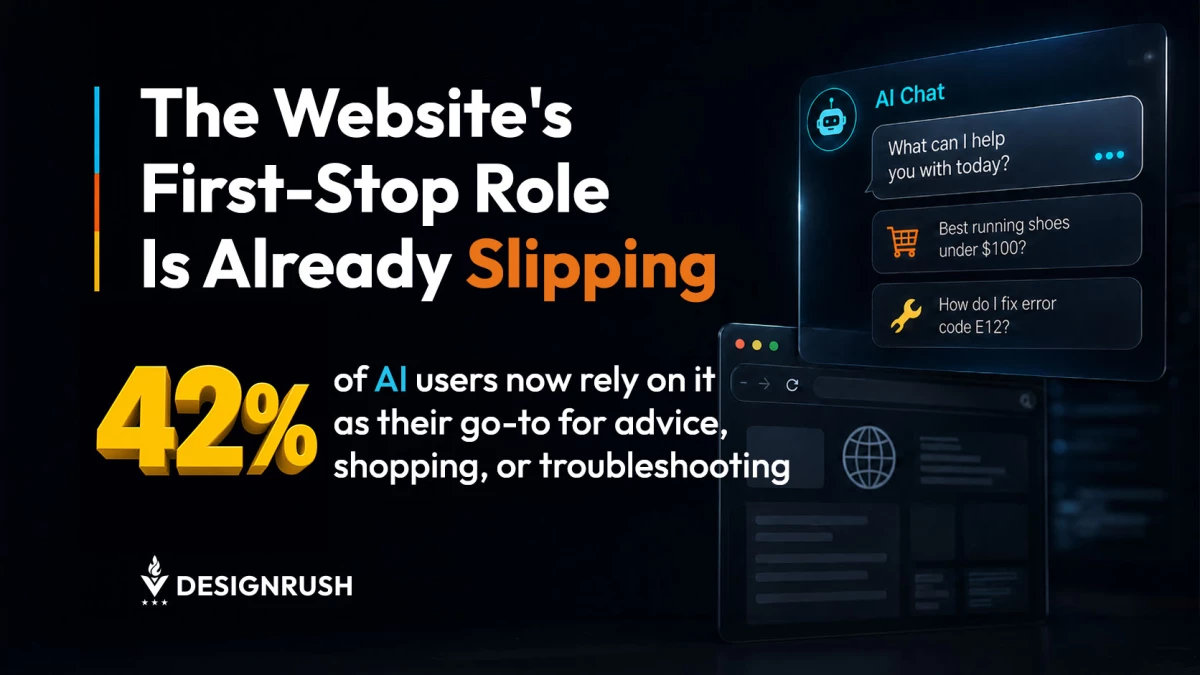
Among customers who already use AI platforms this way, 42% say they "always" or "frequently" rely on them as their primary source for advice, shopping, or troubleshooting.
For a meaningful share of your audience, that's already the default.
Your Website Is No Longer the First Stop
For the better part of two decades, a brand’s website was the starting point. Someone had a problem, they searched, they landed on your page, and that's where the journey began.
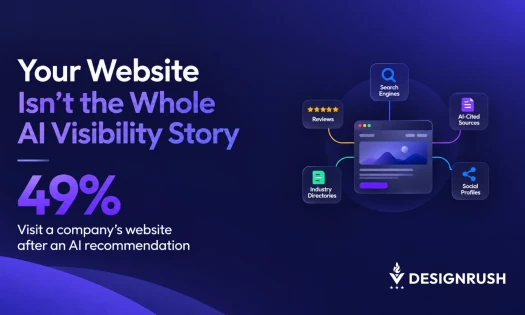
But AI-powered search has quietly taken over the research phase of the customer journey.
People are asking questions conversationally and getting summarized answers back before they ever click on anything.
By the time a potential customer visits your website, they've already formed an impression.
They know roughly what you do, how you compare to alternatives, and what others have said about you.
That changes the job of the website. It now has to confirm what a visitor already believes, not introduce the business from scratch.
What Businesses Are Getting Wrong Right Now
Most websites are still built like it's 2018.
That means they are heavy on information, long on explanation, and built for a visitor starting from zero. But that visitor doesn't exist the way they used to.
At Doodle N Dash, we talk to business owners who are proud of how comprehensive their website is.
Detailed service pages, thorough FAQs, lots of content. That level of detail used to set a business apart online. On its own, it rarely does anymore.
If AI is already answering the informational questions, your website needs to answer the questions AI can't.
That means explaining why you specifically, what it's like to work with you, and what to do next.
Trust Signals Are Doing More Work Than Ever
When a customer lands on your site already primed with information, the thing they're scanning for is reassurance.
Does this place look legitimate? Have real people worked with them? Is there any proof behind the claims?
The businesses struggling most right now are the ones with polished design but thin proof.
Great fonts, beautiful layouts, and not a single real client story or piece of specific work visible anywhere. Customers see through it faster than people expect.
What builds trust now is specificity. Named clients, real project outcomes, testimonials that sound like a person wrote them, team members with actual faces.
Generic signals don't register the way they once did.
Every Page Needs Its Own Path to Conversion
One of the most common mistakes we at Doodle N Dash see is treating conversion as the last section of the website.
A contact form at the bottom of the page, a phone number buried in the footer. The thinking is to give them information first, then ask for the action.
But a visitor who arrived already knowing what they need isn't looking for more information.
They're looking for the easiest possible path to move forward. If that path isn't obvious within the first few seconds, most of them won't find it.
Every page of a website needs to answer two questions at once
- What does a visitor need to know?
- What should they do next?
Split those across separate sections, an FAQ here, a contact form three scrolls away, and most visitors won't bother connecting them.
What Designing for This Moment Really Entails
It entails leading with proof instead of promises. It also entails making the "what next" obvious without being pushy.
Concretely, your website's job in 2026 is to convert visitors who already have enough context to make a decision.
The brands doing this well aren't necessarily the ones with the biggest budgets or the most sophisticated tech.
They're the ones who understand that customers now arrive already informed and design the experience around that.
AI changed the research layer. The website still owns the decision layer. The question is whether your site is built for that role or the one it had five years ago.