
When a campaign underperforms, companies often respond by spending more. But if the creative or audience strategy is the problem, that only makes the mistake more expensive.
That becomes harder to sustain as marketing budgets tighten and the pressure is already showing up in 2026 budgets.
In fact, 56% of CMOs report that their marketing organizations do not have enough budget to execute their 2026 strategy, according to Gartner, which surveyed 401 CMOs and senior marketing leaders.
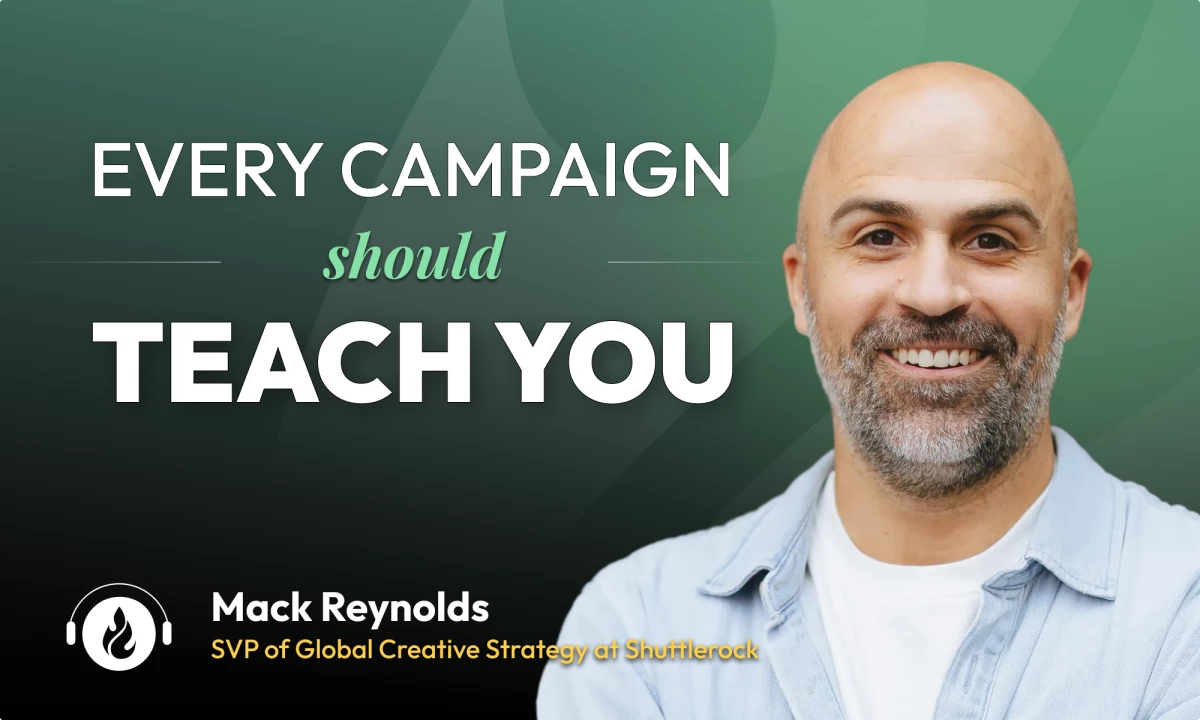
In the latest DesignRush Podcast, I spoke with Shuttlerock SVP of Global Creative Strategy Mack Reynolds about what companies get wrong when advertising spend rises without producing the expected return.
Reynolds recently joined Shuttlerock after about 8.5 years at Meta’s Creative Shop, where he worked with brands including Nike, P&G, and Mars. He says he oversaw approximately $1 billion in advertising investment during that time.
“I think advertisers are maybe over-controlled,” Reynolds tells DesignRush.
He discusses three decisions for marketing leaders: identify what is limiting a campaign, give platforms enough useful creative to learn, and keep the brand recognizable as content output grows.
Watch the full episode now on YouTube or listen on Spotify

Who is Mack Reynolds?
Mack Reynolds is SVP of Global Creative Strategy at Shuttlerock, where he leads its newly established Global Creative team. He recently joined the company after about 8.5 years at Meta’s Creative Shop. Earlier, he held senior strategy roles at Ogilvy and Cramer-Krasselt.
1. Find the problem before adding spend
Reynolds says brands can restrict performance through tightly controlled messaging and narrow audience strategies.
“There’s too much focus on maybe brand-only messaging with too little diversification in the amount of content that they’re making,” Reynolds says.
He also points to brands focusing so closely on a specific customer profile or product claim that they miss other reasons people enter the category.
For executives approving media budgets, this affects whether additional spend addresses the underlying problem
If leadership has not identified what is limiting performance, additional spend can leave the original problem untouched.
DesignRush recently examined the same issue in its report on creative strategy and media buying, which looks at why creative carries more weight as platforms automate targeting, bidding, and placement.
Reynolds says brands often stick with one headline because it feels safe, even when other expressions could give platforms useful information.
“With the way these algorithms have been engineered, it’s better to give the feeds more tries,” Reynolds adds.
The executive question is whether the team has enough creative range to test what works while keeping the brand clear.
2. Give platforms enough creative to learn
At Meta, Reynolds worked around the principle that “creative is the new targeting.”
Social platforms select content based on what they expect each user to respond to. Reynolds says that makes the ad itself part of how the platform finds an audience.
Different messages and formats across feeds, Reels, Stories, and other placements give the system additional options when matching content with users.
DesignRush also examined this issue in its report on structured creative testing, which looks at why volume, variety, and faster learning loops matter for paid social performance.
Reynolds also expects campaign performance to guide what comes next.
“Every campaign should be telling you something that informs the next,” he adds.
He recommends three steps:
- Testing specific variables
- Reviewing the response
- Using that information in future campaigns instead of waiting several months to judge the work as a whole
The question is whether each campaign produces information the team uses in the next one.
3. Keep the brand recognizable at scale
Higher content volume introduces another risk: sameness.
Reynolds says creator-led and UGC-style work has become important for brands, but much of it can start to look alike.
“A lot of it is looking the same,” Reynolds says.
AI adds pressure because lower production costs make it easier to produce large amounts of content. Reynolds warns that heavy reliance on generated work can weaken originality.
His answer starts with brand clarity.
“It’s really important to still be very singular about who you are and what you represent,” Reynolds adds.
Shuttlerock’s Hilton campaign covered more than 700 properties and used image-to-video technology to create social content for individual locations.
Hilton bookings increased 13% as a result.
Case in point: content volume should stay tied to a specific business objective and produce feedback that informs future spending.
The full episode also covers how Glade’s Museum of Feelings addressed a category problem, how Reynolds approaches authenticity when brands use AI, and the first change he believes CMOs should make to improve marketing returns.
Companies reviewing outside creative support can compare digital marketing agencies on DesignRush