
Forty-eight percent of consumers now click "accept all" on cookie banners less often than they did three years ago.
Only 23% click it more, according to Usercentrics' 2026 State of Digital Trust Report, based on a survey of 11,000 consumers across seven markets.
That two-to-one shift shows up in every market surveyed, and it quietly changes the data every downstream marketing decision runs on.
Consumer Trust in AI Continues to Decline
Those who trust AI less than humans with their data rose from 48% to 52%, the largest single-year shift anywhere in the study.
Tilman Harmeling, Strategy & Market Intelligence at Usercentrics, says that a 4-point jump means consumers are outpacing brands.
"A jump like that in a single year means consumers are updating their risk assessment faster than most brands are updating their practices," he says.
That reassessment is already showing up in revenue. Sixty percent say they are uncomfortable with their data being used to train AI models at all.
And 47% have gone further, canceling, switching brands, or cutting spending over it. For a brand watching quarterly numbers, that's churn on one side and spend that quietly shrinks without a clear explanation on the other.
Data Comprehension Gap Unchanged at 46%
Forty-six percent of consumers still say they do not have a good understanding of how their data gets collected and used, identical to last year's figure.
A typical internet user would need a full working week each month to read the privacy policies of every site they visit, according to NordVPN research cited in the report.
Forrester's privacy research reaches a similar conclusion. Faced with a wall of choices, most people's rational response is to skip through rather than read.
That volume of text forces most consumers to skip straight to a decision, and that decision increasingly defaults to rejection.
Clearer explanations, stronger security, and more control over what gets shared top the list of what consumers want from brands before they'll engage differently.
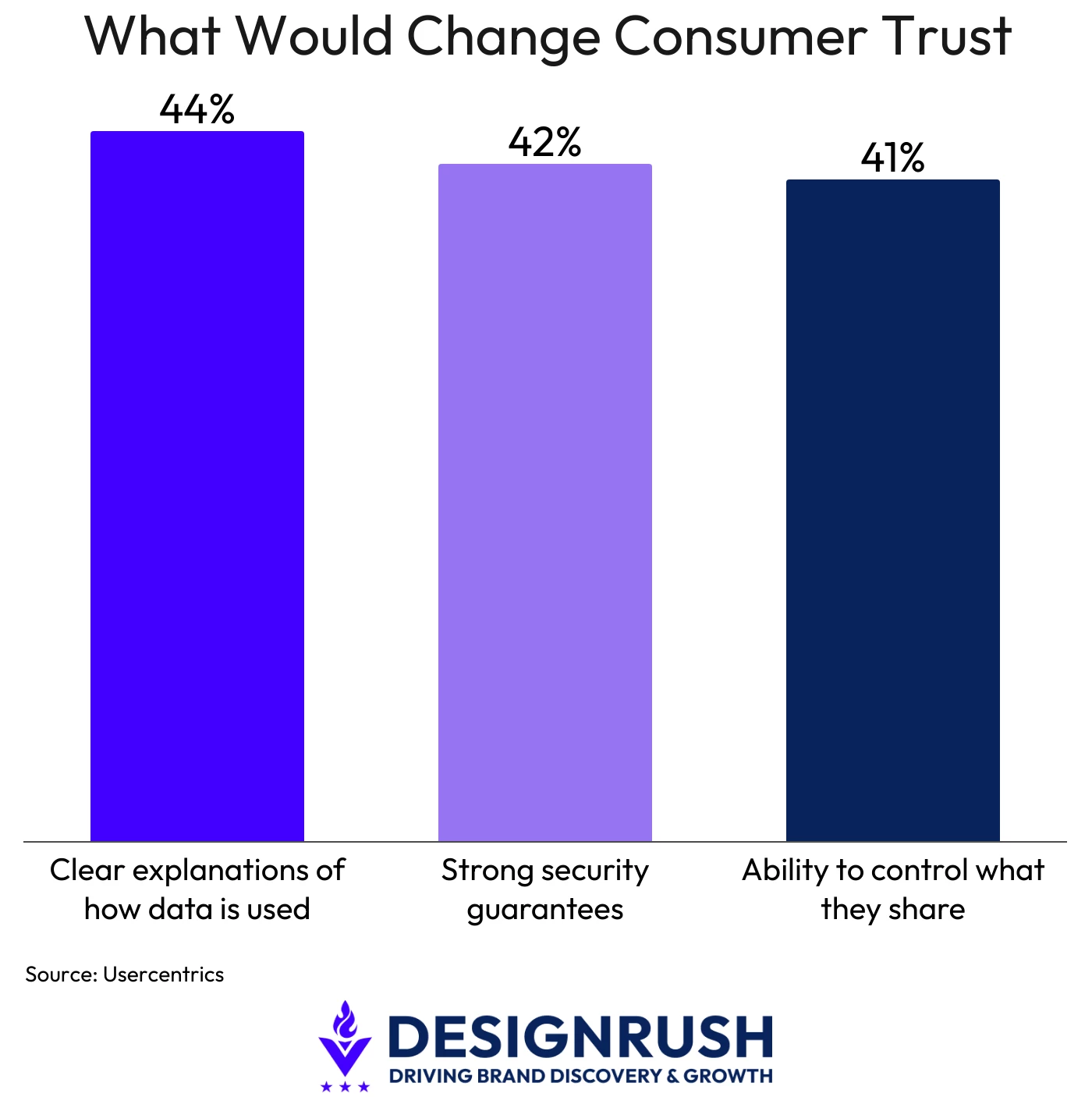 None of those three figures have moved in two years, the same two years the 46% comprehension figure has been stuck.
The Gap Between Aware and Unaware Consumers
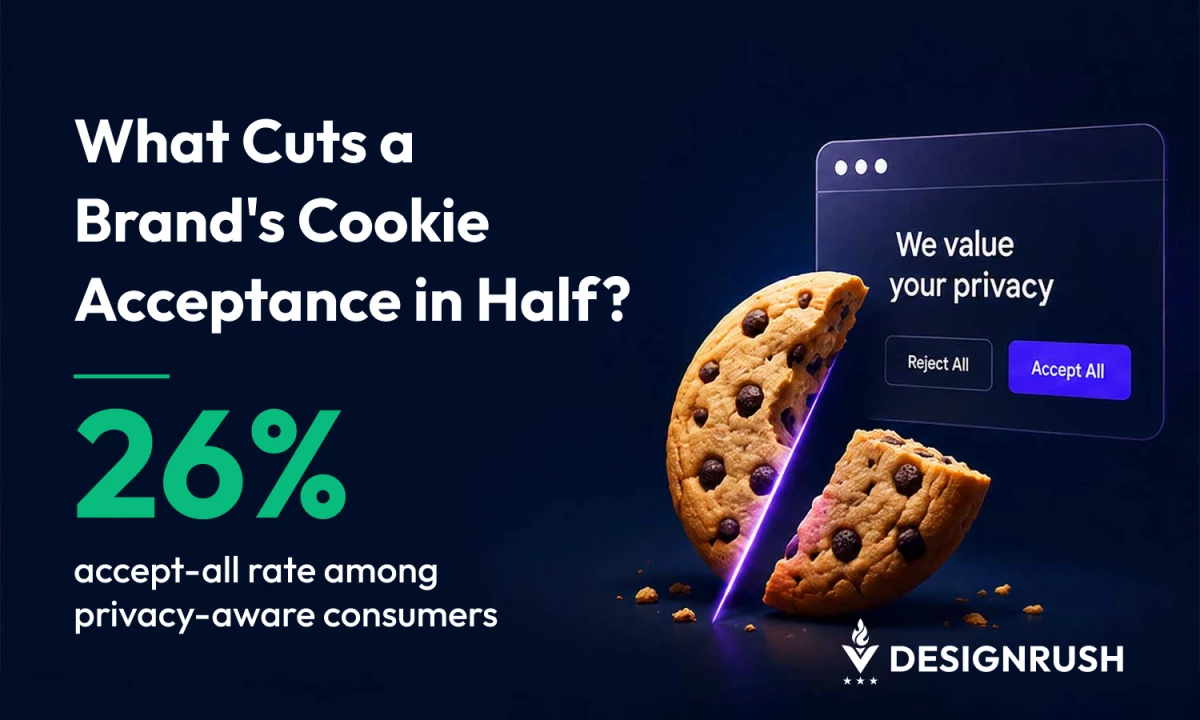
Consumers who understand their data rights accept all cookies 26% of the time. Those who don't understand their rights accept all cookies 57% of the time.
Each new data breach, AI controversy, or state privacy law moves them from the uninformed group into the informed one.
As a result, the 57% baseline many brands still plan around is shrinking. In fact, that same divide shows up beyond consent rates.
"Privacy-aware consumers are nearly three times more comfortable with personalization than privacy-unaware ones," Harmeling says.
AI Access Trust Varies by Data Type
Forty-nine percent are comfortable with an AI assistant accessing their work tools, the highest of any category tested.
That figure drops to 37% for financial accounts, the lowest. Only 8% are comfortable with AI access carrying no conditions at all.
Comfort drops further for high-stakes human interactions.
- 65% still prefer a human for healthcare conversations.
- 61% prefer a human for financial advice and for handling complaints.
"A calendar integration and a bank account connection carry different weight in a consumer's mind, even when a brand's consent flow treats every request the same way," Harmeling explains.
| Market | Will Pay More for AI Transparency | Don't Understand Data Collection |
| Germany | 73% | 53% |
| United States | 50% | 41% |
| United Kingdom | 50% | 41% |
| Spain | 49% | 42% |
| Italy | 42% | 44% |
| Sweden | 42% | 56% |
| Netherlands | 35% | 48% |
| Global average | 52% | 46% |
Germany pays the highest premium for transparency. Yet it also has one of the largest comprehension gaps in the study.
The report calls this a paradox brands can use. Case in point, explaining clearly pays off more in Germany than almost anywhere else.
Meanwhile, the UK improved the most on rights awareness this year. Unawareness dropped from 50% to 43%, the largest single-market movement in the study.
"That drop shows the comprehension gap can close fast, once a market's coverage and enforcement reach a tipping point," Harmeling says.
Germany and the U.S. are still approaching that point from further behind.
Consent Fatigue vs. Privacy Awakening
Not every rejection has the same cause. Consent fatigue and privacy awareness both push the same number down, but they call for different fixes.
Take a brand that treats every rejection as fatigue and smooths the banner design. That wins back the fatigued group.
"Still, it does nothing for the aware group, since they read the fine print regardless of how the interface looks," Harmeling says.
"That aware group is growing, and its behavior looks nothing like passive acceptance."
In fact, over half of consumers now selectively manage their cookie preferences instead of clicking straight through.
Of those, 39% limit themselves to necessary cookies only, while another 16% go further and customize every setting individually.
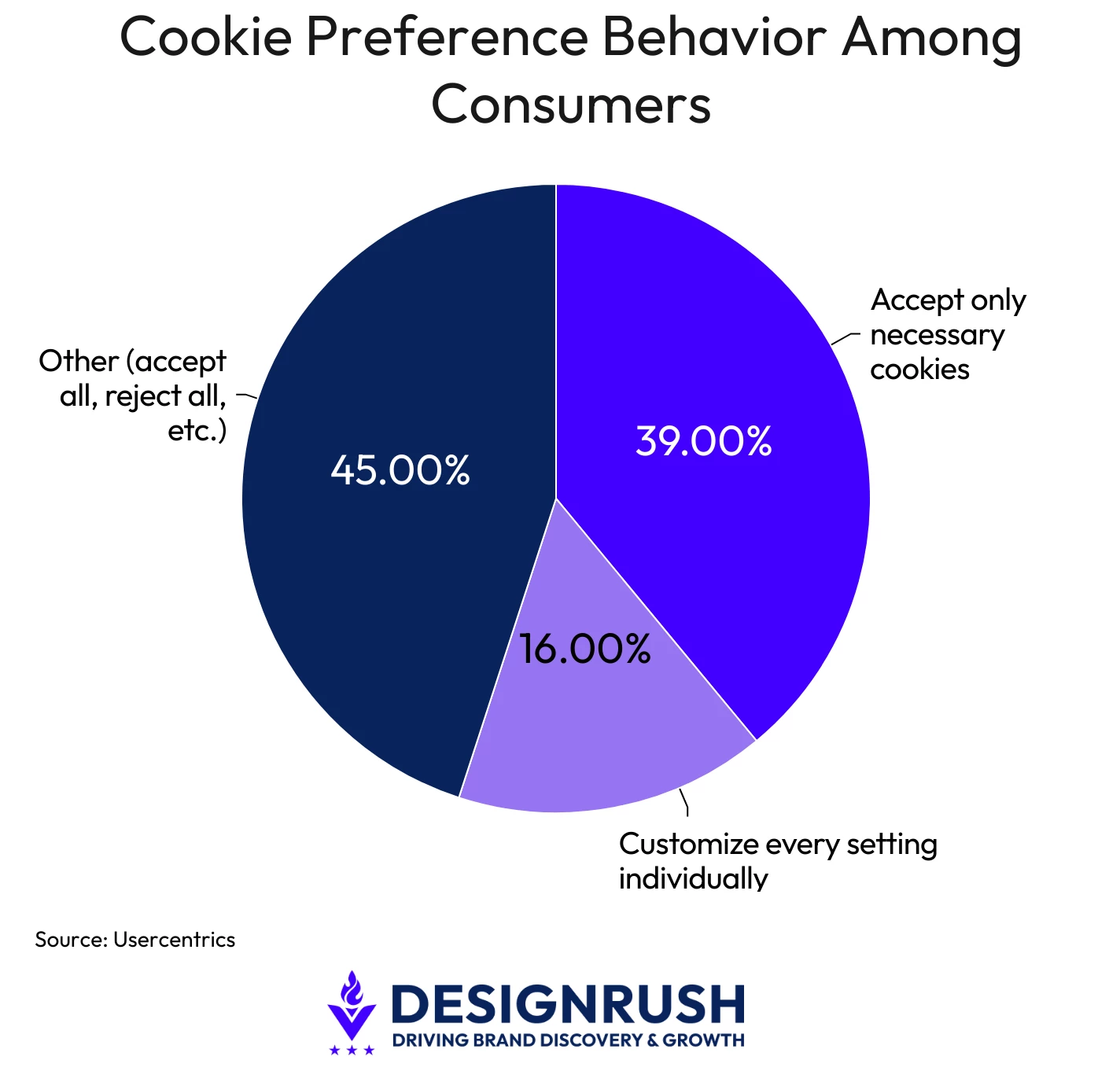 In other words, that distinction determines where a brand should actually spend its next redesign budget.
A UX fix helps one segment. A clearer explanation of data use is what moves the other.
The T.R.U.S.T. Framework for Closing the Gap
Recognizing fatigue from awakening is only useful if it leads to action.
The report's T.R.U.S.T. framework lays out a five-step sequence for closing the distance between where a brand sits today and what the data says will earn the premium.
- Translate. Fix the consent moment itself. Clear language, equal visual weight for accept, decline, and customize.
- Remove. Audit the banner for dark patterns. Make every control reachable within two clicks.
- Unify. Make the banner, preference center, and data request process feel like the same brand.
- Secure. Extend governance into AI tools before deployment, so they never become an ungoverned data processor.
- Track. Measure what happens after opt-in. Retention and churn matter more than the opt-in number itself.
A brand that doesn't know its current consent rate, hasn't audited its banner for dark patterns, or has no governance plan for AI agent access is likely still working through the earliest steps.
The U.S. Has a Trust Vacuum No Institution Is Filling
Only 39% of American consumers trust government services with their data, the lowest figure of any market in the study.
Yet half of U.S. consumers say they would still pay more for a brand that is transparent about how it uses their data with AI, in line with the global average.
In Europe, GDPR gives consumers a framework to stand on. In the U.S., that regulatory floor sits lower, and the public trust in whoever set it sits lower still.
That means every point of trust a brand earns there, it earns entirely on its own terms, with no regulation or institution making the case for it first.