
If your paid social account has plateaued in the last 18 months, the problem probably isn't your strategy. It's your creative pipeline.
Most marketing teams I talk to are stuck in the same place. Their cost per acquisition is climbing, their ROAS is slipping, and their creative team is shipping the same number of ads per quarter they were shipping in 2021.
They've added new audiences, tested new objectives, tried Advantage+ campaigns, swapped agencies. Nothing has worked.
And the reason is almost always the same. The operating model for producing creative hasn't kept up with how the platforms now work.
Modern paid social algorithms are built to learn from what you give them. Starve them, and they stay in the learning phase indefinitely.
But feed them, and they find buyers your old targeting infrastructure couldn't reach.
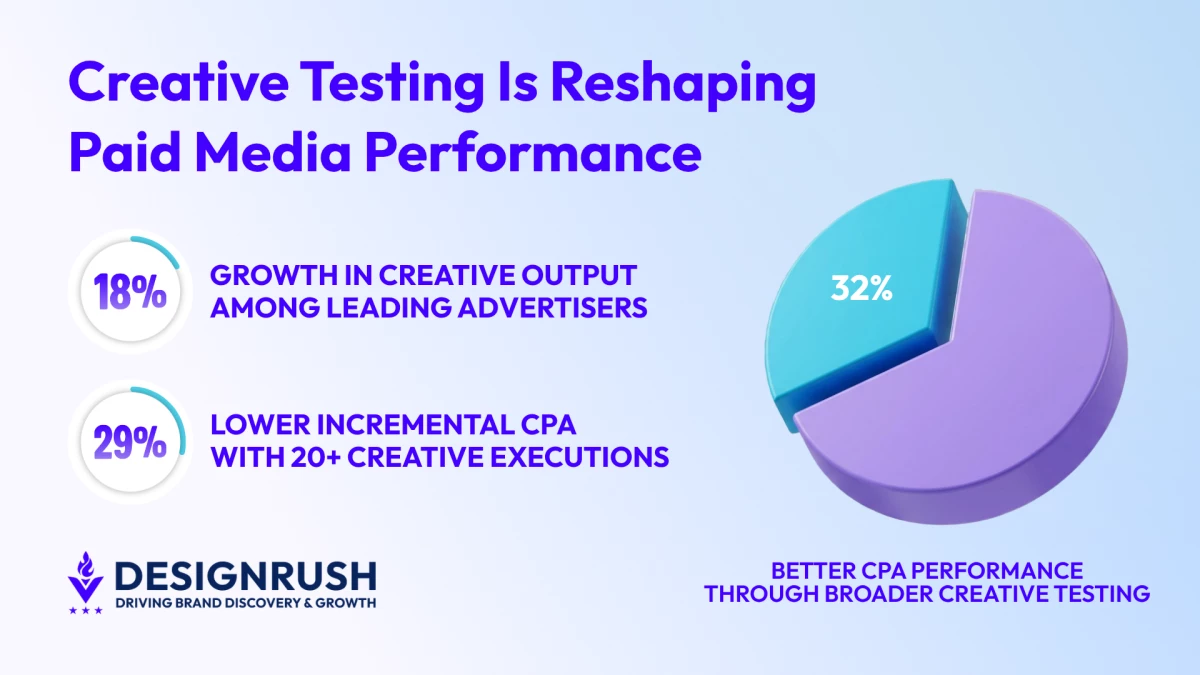
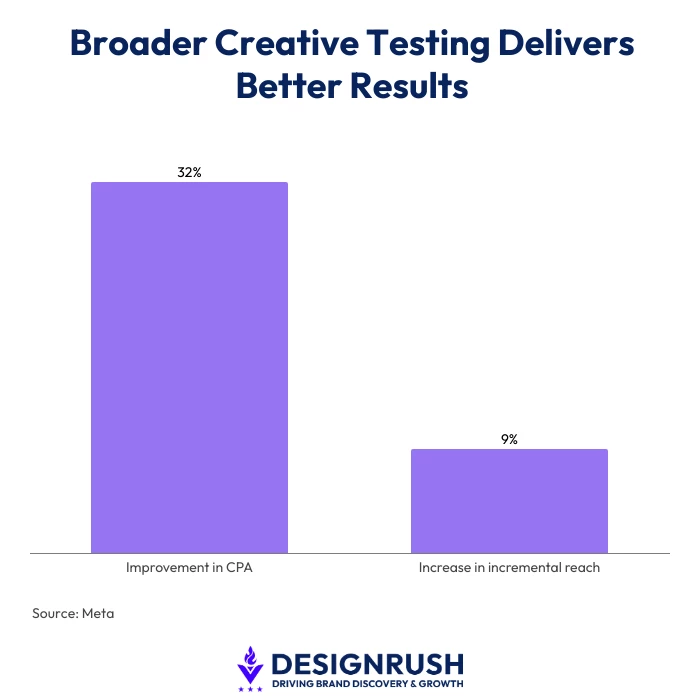
Meta’s insights prove this, with the platform stating that campaigns using a broader mix of creative formats and messaging approaches saw up to a 32% improvement in CPA and a 9% increase in incremental reach.
The brands compounding gains right now aren't running better ads. They're running a structured creative system built on three things:
- How much they produce
- How different the variants are
- How fast they turn learnings into the next round
Volume: The Algorithm Runs On Inventory
Most paid social accounts aren't producing enough creative for the algorithm to test and learn from.
Meanwhile, brands generating real performance lift are producing eight to ten new variants every week.
The advertisers producing the most creative are producing more of it every year. The same Meta report adds that high-spending non-gaming advertisers increased creative production by 18% year over year.
That's not happening by accident.
Another Meta report published by MarketingWeek found that campaigns using 20 or more creative executions achieved a 29% lower incremental CPA than campaigns using fewer than 20 executions.
Brands producing a broader range of creative assets are often better positioned to maintain efficiency at scale.
Without consistent new creative entering the auction, the algorithm settles into a narrow set of winners and stops exploring. Frequency climbs, fatigue sets in, and the same audiences see the same ads until performance erodes.
The fix isn't more budget or a bigger creative team. Most brands that hit weekly volume targets have done it by overhauling how creative gets made.
This includes shorter approval cycles, AI tools handling variant generation, freelance support for production, and internal designers focused on concept work instead of every execution.
In other words, volume is an operational problem, not a budget problem.
Variety: The Platform Can't Learn From Sameness
Ten new ads a week isn't a system if they're all variations of a theme.
The most common version of fake variety I see is ten ads with the same image, the same body copy, the same offer, and ten different headlines.
That's a hook test. It tells you which words to use in the first three seconds. It doesn't teach the platform anything about what kind of buyer your product is for.
Real variety means each variant tests something genuinely different such as a different angle on the problem, a different format, a different message, a different buyer in mind, or a different point in the purchase journey.
A static image speaking to a first-time buyer hits the algorithm differently than a UGC video speaking to someone comparing brands.
When the variants span those differences, the data starts to show patterns the platform can act on. When they don't, the data tells you which headline wins within a slice too narrow to scale.
This is the hardest part of structured testing for most teams, because real variety requires the creative brief to start somewhere other than "here's the offer, make ten versions."
It requires understanding the actual range of buyers, the actual range of stages they're in, and the actual range of objections they have.
Unfortunately, that takes time the average creative team hasn't been given.
Velocity: Insight Has A Shelf Life
Producing volume and variety still isn't enough if the data they generate sits in a deck for six weeks before the next brief reflects it.
Velocity is what turns a creative test into a creative system (the speed at which performance signals become the next round of inputs).
Creative fatigue can set in faster than many teams expect.
Industry benchmarks suggest that Meta ad creatives can begin showing signs of fatigue within seven to 14 days, which leaves a small window to turn performance signals into the next round of testing.
The teams running the tightest operations look at performance weekly, identify what's pulling ahead, and write the next week's brief against what they just learned.
Wins get extended into new variants. Losses get cut. Insight from Monday's review shows up in Friday's production.
That cycle is what compounds, and it's the cycle most marketing organizations aren't structured to support, because media, creative, and analytics report into different teams with different priorities and different timelines.
Solving velocity isn't a software problem or a process diagram problem.
It's a question of whether the right people are in the same meeting every week, looking at the same numbers, and agreeing on what gets built next.
The Compounding Effect
Volume on its own produces fatigue without learning. Variety without velocity produces interesting tests with no follow-through. Velocity without volume or variety produces fast iteration on a base too narrow to matter.
The three together produce something different.
A system where every week's output is informed by every prior week's learnings, where patterns emerge that no single test could have surfaced, and where the brand gets meaningfully better at paid social over time instead of marginally faster at producing the same ads.
The brands building that system are pulling ahead in their categories. The brands still running creative on a monthly cadence are watching the gap widen and looking for an explanation that has nothing to do with the operating model that's actually causing it.
If your paid social performance is stalling, look there first.