
Fashion has a language problem, and Duolingo wants to teach it.
The language-learning platform is bringing "The Phonetic Collection" to New York Fashion Week.
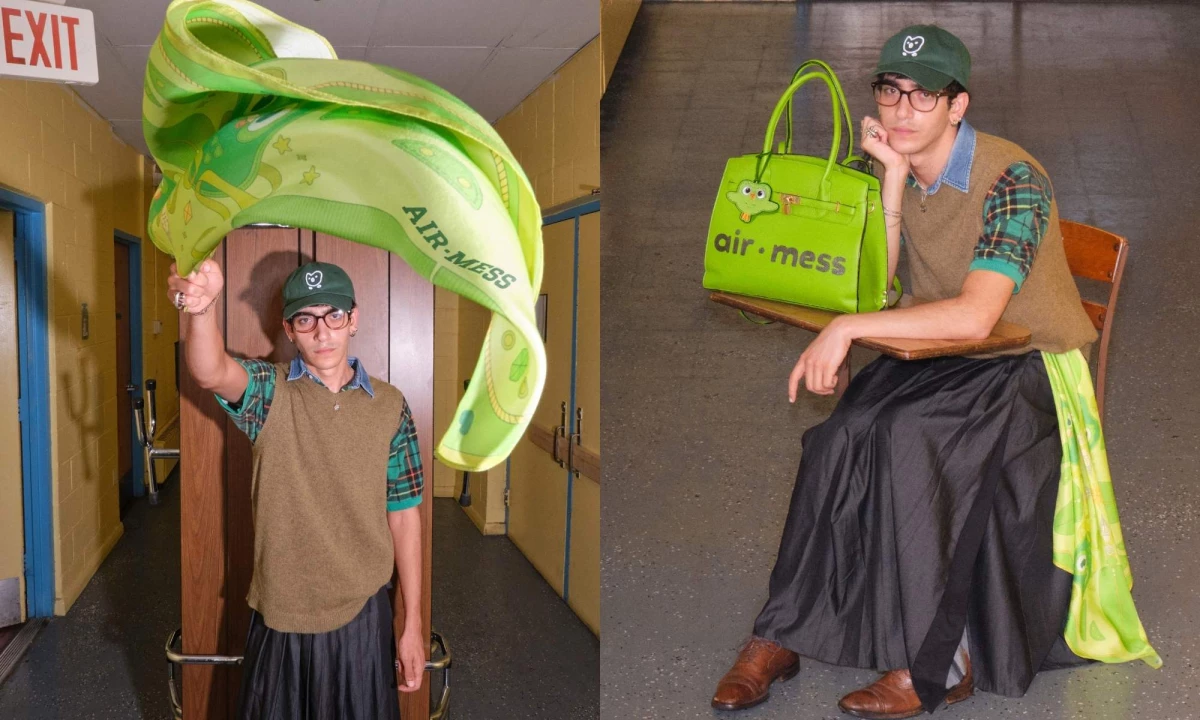
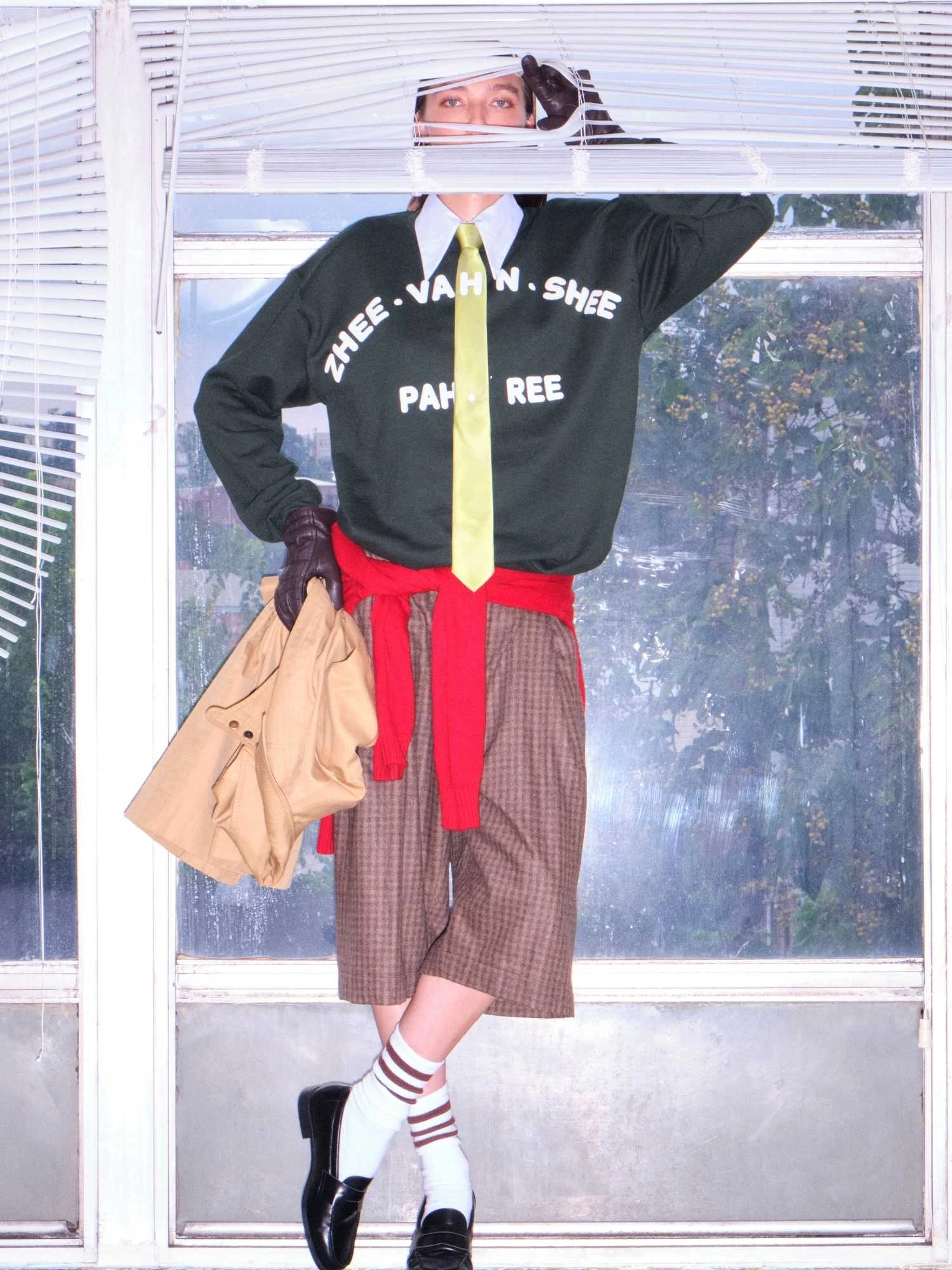
Designer and "Next in Fashion" alum Megan O'Cain transforms difficult designer names into wearable pieces.
The campaign uses phonetic spellings and exaggerated silhouettes to make fashion's pronunciation gap visible.
Duolingo's fashion capsule will also be on display through OOH, social content, and a two-day NYC pop-up.
The idea comes from the app's new research with YouGov.
It found that 62% of Americans are confident in pronouncing Hermès, but only 15% select the correct French pronunciation.
This gap gives Duolingo a real problem to solve and a credible reason to show up at fashion week.
O'Cain said the collection started by reinterpreting recognizable signatures from fashion houses in Duolingo's own brand voice.
"The idea was to create pieces that draw you in first, then make you look closer, decode the phonetic spellings, and engage with familiar fashion in a new way."
"The process felt a lot like learning a new language: taking something familiar and suddenly seeing or understanding it differently," the designer told DesignRush.
The campaign makes a language lesson something people can see, wear, and talk about.
Duolingo is treating fashion week as a classroom, and experiential marketing is the delivery system.
Every piece of the campaign sends people back to the app with a word they now want to say correctly.
Phonetic Spellings Take Over the NYFW Line-Up
"The Phonetic Collection" translates fashion references into clothes and accessories designed around pronunciation.
O'Cain uses phonetic spellings of designer names alongside exaggerated proportions and curved silhouettes.
The collection covers tailoring, sportswear, and accessories with a mostly monochrome palette.
Every piece names a house without using its logo, which keeps the joke legible and the legal exposure low.
The campaign launches on September 8, two days before NYFW opens, with imagery and OOH placements across the city.
One activation places Duo on Canal Street, a fitting location given the street's mix of fashion, designer goods, and lookalikes.
The collection will then appear at Null Object on September 9 and 10.
Visitors can bid their Duolingo streaks instead of money for the chance to take pieces home.
The mechanic runs on the one currency Duolingo already owns. Keeping a streak alive can now buy a jacket.
This approach also follows a pattern seen in Duolingo's recent marketing.
Its "Bad Bunny 101" campaign gave people a reason to open the app before Super Bowl LX's halftime show.
The same logic applies at NYFW, where the app picks up attention and a use case in the same week.
Education Raises Confidence, Not Accuracy
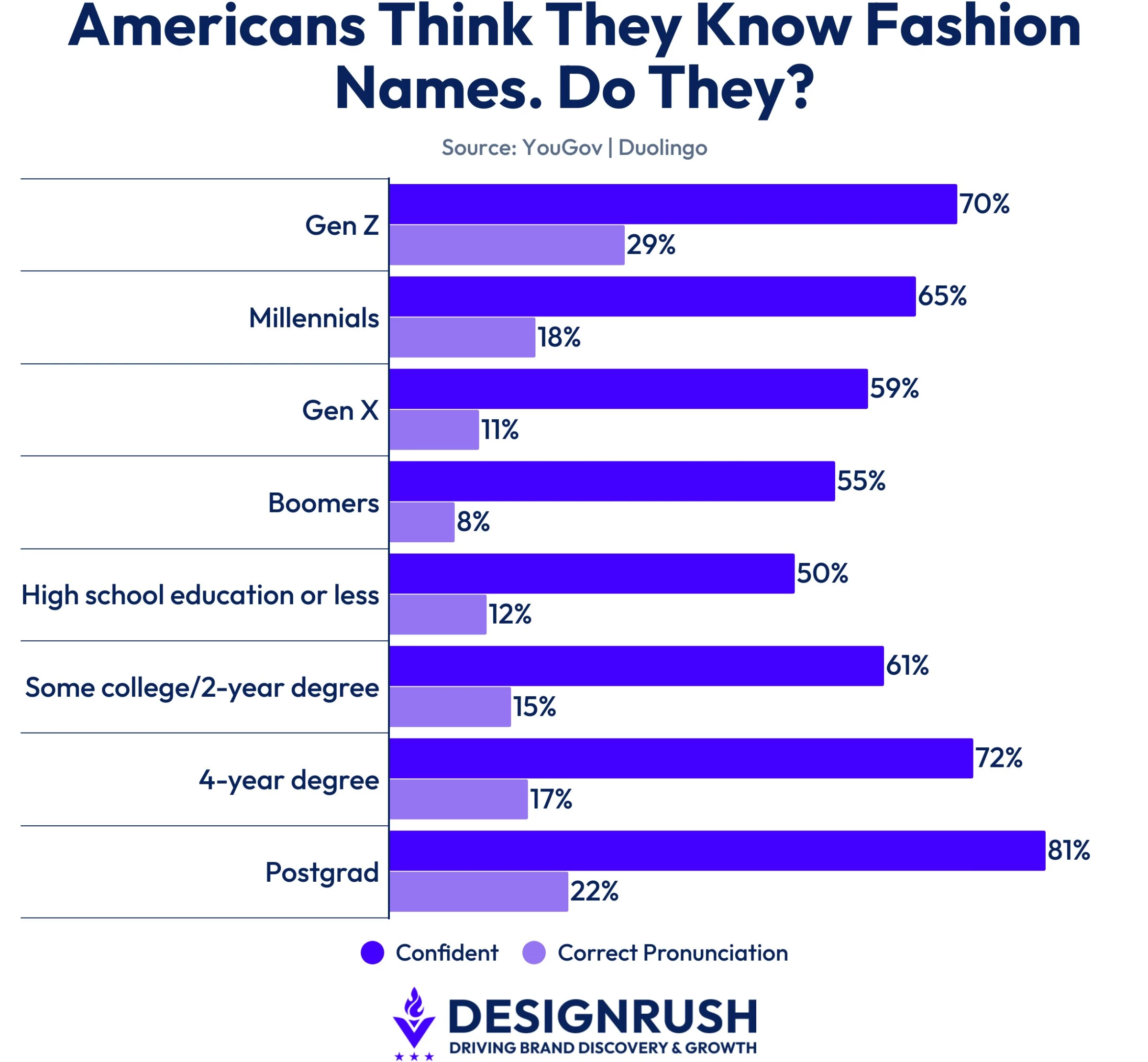
Duolingo's YouGov research shared with DesignRush shows Americans misreading fashion names with full confidence.
Jacquemus tops the list at 62% not confident, followed by Issey Miyake at 60%, Comme des Garçons at 58%, and Loewe at 55%.
Hermès produces the widest gap, with 46% of Americans thinking the name starts with a spoken H.
Gen Z gets Hermès right 29% of the time, against 8% of Boomers, while 81% of postgraduates feel confident, but only 22% are correct.
The gap holds in every group, which is why Duolingo's capsule collection can speak to all of these demographics at once.
Duolingo's pronunciation data points to three lessons marketers can apply outside fashion:
- Confidence can hide a knowledge gap. Brands should test what audiences actually know to create campaigns around genuine friction and earn attention.
- Cultural fluency still requires learning. Marketers should identify the language audiences encounter to make unfamiliar subjects easier to understand.
- A strong insight can support multiple formats. Teams should design one audience problem across executions to extend its usefulness.
Most brand collabs at fashion week need a celebrity to explain why they exist, but this one only needed a survey question.
Our Take: Can Fashion Vocab Make Duolingo Feel Native?
The phonetic treatment gives Duolingo a visual language it can own without copying a luxury house outright.
O'Cain's involvement also gives the pieces a designer perspective that gives the capsule collection credibility.
We think the fashion vocabulary does make Duolingo read as native here.
The streak bidding is what makes it work, since visitors have to spend something they already protect.
Duolingo has now run this same structure at the Super Bowl, on TikTok, and at fashion week.
This strategy tells us that the target is every category rather than just one of them.
No fashion house can copy the mechanic, because none of them has millions of people guarding a daily streak.
Duolingo keeps finding brand stories inside ordinary product interactions.
Its reply to a hospitalized 10-year-old who lost a 301-day streak drew more than 15 million views.
Looking to turn a research insight into a physical experience?
Explore these top creative agencies who can connect strategy, design, and execution.