
B2B Trust-Building Habits: Key Findings
- 17 Touchpoints to Trust: B2B buyers now require an average of 17 meaningful interactions before committing to a vendor.
- Cadence Builds Confidence: Embedding weekly or monthly check‑ins ensures those interactions reinforce alignment, surface risks, and keep priorities on track.
- Proactivity and Rapport Cement Partnerships: Asking “why,” offering strategic ideas, and fostering personal rapport lower friction, turning routine updates into lasting trust.
For C‑suite leaders steering complex B2B deals, the data is clear: buyers demand 17 meaningful interactions before they’ll sign on the dotted line, according to LinkedIn’s 2024 B2B Marketing Benchmark.
That means structured engagement is crucial: status updates, priority alignments, and pipeline previews need to happen alongside your core deliverables.
Market leaders know this and build regular review rhythms into their process.
Take Bop Design for example: the agency schedules weekly or monthly check-ins, turning every one of those 17 touchpoints into chances to confirm alignment, identify risks early, and build trust that lasts.
Editor's Note: This is a sponsored article created in partnership with Bop Design.
Forget Checklists — Ask Why, Not Just What
To move beyond surface-level client relationships, agencies need to be proactive.
Bop Design Project Manager Dana Adams explained that regular calls, anywhere from weekly to monthly, keep everyone aligned on deadlines, action items, and upcoming tasks.
But it’s not enough to just do the work. Understanding the reasons behind requests is also crucial.
That mindset encourages bringing new ideas forward and staying ready to pivot when client needs or teams change.
Trust is built through transparency and early wins. Regular meetings create space for honest conversations, which helps avoid surprises and keeps projects on track.
“Build trust through early wins and being transparent. It is also helpful to have meetings on a regular cadence so we can have an open and honest dialogue on a regular basis,” said Jess Borges, web project manager at Bop Design.
Personal connection also plays a key role.
That’s why Adams ensures clients feel comfortable raising concerns and questions at any point, fostering transparency and strengthening collaboration throughout the project.
This isn't about being overly casual. It’s about lowering the friction between feedback and progress, especially when timelines are tight or multiple stakeholders are involved.
For example, one of Bop Design’s projects put the entire process to the test: a website redesign with a hard deadline and zero room for error.
For this to work, the team focused on practicing these four habits to foster a strong relationship with the client and deliver the project:
- A fast response time
- Strong communication
- Weekly meetings with specific agendas
- Providing updates regularly
The result? The client hit their launch window and later referred the agency for another project.
That referral wasn’t just a result of meeting the deadline.
It was the outcome of consistent trust-building throughout the project, highlighting the benefits of prioritizing client relationships alongside execution.
Manage Multiple Stakeholders Without Losing Focus
Most B2B projects involve more than one voice, and often more than one goal. Borges outlined Bop Design’s approach to navigating those complexities:
- Identify key stakeholders early
- Align business objectives across departments
- Develop a clear communication plan
- Get buy-in and manage feedback strategically
- Show value consistently and not just at milestones
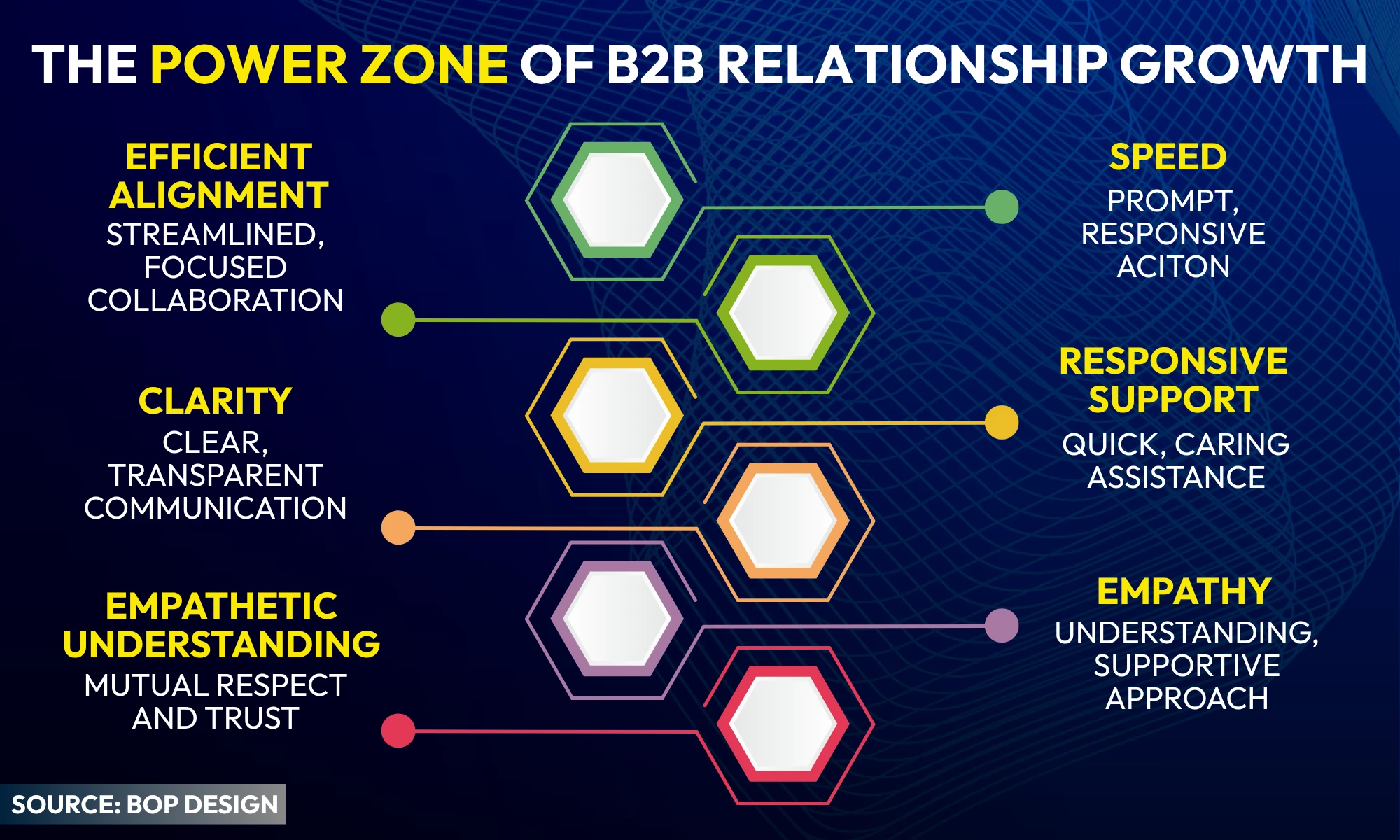
That last point is crucial. Relationships don’t grow in quarterly updates.
They grow in the in-between, where clarity, speed, and empathy live.
Another practice to avoid is nickel-and-diming clients.
“If a client only has a specified number of hours in a month, but their project needs a bit more time, we will do what needs to be done (within reason) to ensure the work is done correctly and efficiently,” Adams said.
That mindset matters.
Long-term B2B success rarely comes from one campaign or one clean handoff.
It comes from consistent execution, honest collaboration, and partners who prioritize trust over shortcuts.
And in a space where 17 touchpoints now stand between interest and commitment, every one of those moments counts.