
If your agency’s clients have seen a steady drop in organic traffic, even after following keyword strategies and technical fixes, they’re not imagining things.
Google is changing, and so is user behavior. The old "search, click, visit" path is quickly evolving.
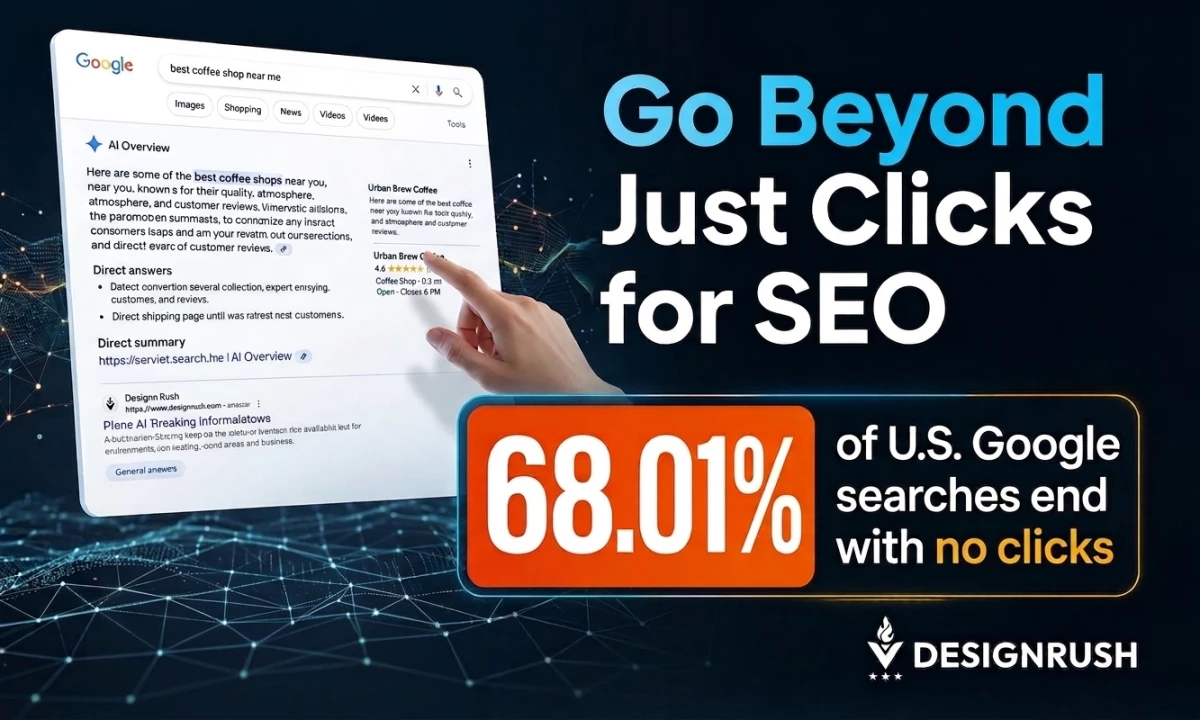
Rand Fishkin of SparkToro analyzed Similarweb clickstream data and found that 68.01% of U.S. Google searches end with no clicks, while only 27.6% send users to a website outside Google.
These numbers might seem worrying for small and medium businesses and the agencies that manage their online presence. Does this mean SEO is no longer a good investment?
The short answer? No.
Fishkin explains that SEO isn’t dead. In fact, it’s just as important, or even more so, than before. But it won’t bring traffic the same way it used to.
"Invest in marketing on platforms you don’t own or control. Free yourself from the goal of directly driving traffic back to your website,” Fishkin said.
“Promote your brand (subtly). Mention your product (when relevant). But don’t obsess over link inclusion. The people who are truly interested will seek you out."
To succeed in a zero-click world, agencies and small businesses need to change their approach. Instead of chasing lots of clicks, focus on brand visibility, local strength, and high-intent conversions.
Why Google Searches Aren't Sending Traffic (And Where Search Is Actually Going)
The move to zero-click search results is happening because search engines are changing how they show information:
- AI-Generated Direct Answers: Google uses AI Overviews, featured snippets, knowledge panels, and direct answer boxes to answer user questions right on the SERP.
- Real Estate Crowding: Google Ads, local map listings, product carousels, and Google’s own features now take up the best spots on both mobile and desktop screens.
- Instant Gratification: People want answers right away. If an AI summary gives them what they need, they have no reason to click on another website.
Recent research shows that search volume isn’t disappearing. Rather, it’s just moving around.
A big study from Search Engine Land looked at over a million popular keywords and found that while broad informational searches dropped by about 29%, total search volume is steady or even growing as people change how they search.
This clearly shows that traffic from broad, top-of-funnel informational searches is simply relocating.
Where the Clicks Are Still Going
While informational searches like "how long to boil an egg" or "what is local SEO" are losing clicks to zero-click answers, some types of searches still get plenty of clicks.
Google still reliably sends traffic to external websites:
- Branded Queries: When people search for a specific business (e.g., "Boostability" or "[Client Business Name] reviews"), they almost always click through to that brand's site.
- Local & Direct Service Queries: People searching for local or in-person services, like "plumber near me" or "best web design agency in Austin," trust map packs and organic business listings.ans online" or wanting to "hire an SEO agency" continue onto product and conversion pages.
Small Businesses Are Less Affected by AI Overviews
This is important for SMBs: Local and small business searches are much less affected by AI Overviews.
Data from Semrush’s AI Overviews study shows that AI summaries mostly show up for broad topics like Computers, Science, and Health, but much less for very local or service-based searches.
Since AI can’t replace real-world reputation and local trust, local searches remain a strong source of valuable organic clicks.
Targeting broad, high-volume informational keywords to boost site traffic is no longer an effective strategy for small businesses. Instead, agencies should shift client campaigns to prioritize On-SERP impressions and capture high-intent users.
Through our Be Found Framework (BFF) at Boostability, we recommend four key pivots:
1. Turn your attention to SERP visibility ("On-SERP SEO")
With nearly 70% of searches not leading to a website click, On-SERP SEO helps you build brand trust right on Google, even if users don’t visit your site right away.
To optimize AI Overviews and Snippets, teams should use clear formats, short answers, bullet points, and schema markup, so AI tools recognize your brand as the main authority. Keep social profiles verified, active, and unified.
2. Double down on Local SEO and Google Business Profile (GBP)
Even as AI Overviews change search, traditional search is still key for local discovery. For local service providers and brick-and-mortar businesses, having a Google Business Profile is as important as having a homepage.
Local search success depends on two main things:
- Keeping business hours, listed services, and media consistently updated.
- Actively collect and respond to customer reviews to build trust and encourage conversions right from the search results page.
3. Build brand affinity to drive branded search
Because branded searches convert at a very high rate, marketing across channels like social media, email, and local PR should support your search strategy.
When people know your brand, they search for your business by name, not just a general service.
4. High-intent, long-tail queries
Instead of broad keywords that often lead to zero clicks, focus on specific searches that show someone is ready to buy.
- Shift away from: "Web design ideas" (High zero-click risk)
- Focus on: "Affordable web design agency for local healthcare practices" (High conversion intent).
Why SEO Strategy Remains Worth the Investment
If you only measure SEO success by website visits, you miss how search has changed.
SEO now means building authority, capturing local searches, and getting high-intent conversions.
When a small business shows up in top spots on Google, like in an AI summary, the local map pack, or a high-intent listing, it earns instant trust.
When someone is ready to buy or call, the business that stands out on the search page gets the customer.
Navigating the AI Search Shift with the Be Found Framework (BFF)
Dealing with AI summaries, zero-click search results, and changing algorithms takes time, ongoing analysis, and scalable action. Many growing digital agencies face these challenges.
We enable agencies, publishers, and media companies to offer their small-business clients technology solutions through our proprietary Be Found Framework (BFF) and our White-Label SEO Partner Program.
The BFF combines scalable fulfillment with human-led expertise, so small-business campaigns can focus on what actually drives revenue: local dominance, high-intent targeting, and multi-layered SERP visibility.
By using our White-Label SEO Content Writing Services to expand your fulfillment or improve client retention through clear reporting, working with Boostability ensures your agency stays ahead of major Google shifts.