
YouTube AI Crackdown Takeaways:
- New guidelines take effect July 15, 2025, tightening definitions of “original and authentic” within the YouTube Partner Program.
- Content that appears automated or heavily recycled will be more closely reviewed for monetization.
- YouTube reinforces support for transformative content that adds context, creative editing, or commentary.
Quick listen: YouTube’s AI crackdown and what it means for monetized content — in under 2 minutes.
Starting July 15, creators who cut corners on content could lose their paycheck.
YouTube is tightening its monetization rules to limit revenue for uploads that don’t show clear creative effort.
The recent update targets formats built on reused footage, automated scripts, or repetitive templates.
Channels relying on these methods may no longer qualify for the YouTube Partner Program (YPP).
What content types are at risk:
- AI-generated commentary with minimal human input
- Compilation clips that reuse existing media without transformation
- Reaction videos that lack commentary or creative editing
- Videos built on automation or recycled templates
Rene Ritchie, YouTube’s Head of Editorial & Creator Liaison, emphasized that the July 15 update is more of a clarification than a shake-up:
Creators in the YPP must meet the platform’s standard for “original and authentic” content.
While this requirement isn't new, the July 15 update sharpens how originality is judged, especially when automation or minimal editing is involved.
Channels publishing near-identical videos or reusing others’ work without adding substance could be fully removed from the program.
Why the Policy Update Now?
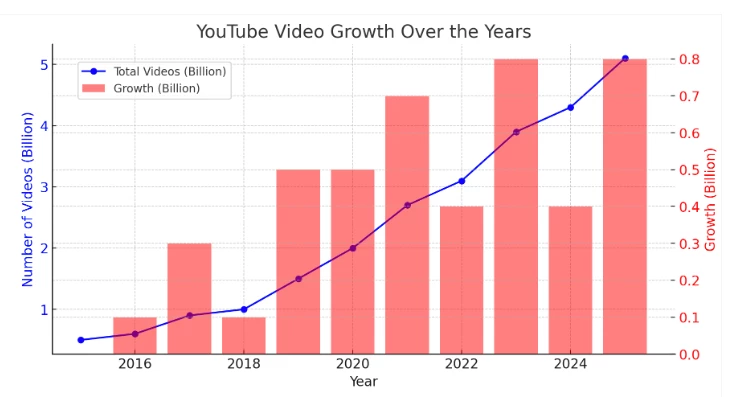
Automated content is rapidly multiplying across YouTube.
The platform now hosts more than 5.1 billion videos, with 360 hours of new footage added every minute, according to SEO.ai.
Many of the most-followed channels already incorporate autogenerated elements into their content, a trend highlighted by Vox.
Meanwhile, AI-driven uploads are becoming the norm in Shorts and advertisements, with one study finding that 58% of YouTube video ads now use AI tools.
Broader projections from Maestra.ai estimate that by the end of 2025, as much as 70% of online content could be AI-assisted.
This rise in volume, automation, and repetition has pushed YouTube to take a firmer stance, aiming to protect both audience experience and advertiser confidence.
Authenticity Under Review
YouTube says monetization eligibility will now be reviewed at the channel level.
This includes evaluating recent and high-performing uploads to determine if the content consistently adds value.
Reacting to a clip without commentary or original input won’t pass.
What creators should do now:
- Ensure content adds personal insight or analysis
- Use editing to clearly distinguish reused media from original work
- Avoid publishing near-identical videos across uploads
- Focus on storytelling, education, or in-depth commentary
Smaller creators have voiced concern over how consistently these rules will be enforced.
Some worry larger channels may be given more leniency.
YouTube says more detailed guidance will arrive after the policy goes live, but creators are already being urged to adjust formats now to avoid risk.
Our Take: Is This Just About Spam, or Something Bigger?
I think YouTube’s policy isn’t just about cutting spam.
It’s a signal that the platform is drawing a line between creative work and scalable, synthetic output.
As AI tools flood the content space, YouTube has to protect the perception of quality, not just the content itself.
Youtube just demonetized AI content 🎉 Human creativity is saved... for now 👌 pic.twitter.com/K9Dgs8YHju
— SSG Lethamyr (@Lethamyr_RL) July 9, 2025
If it fails to do that, brands and advertisers start questioning what they're funding.
From a business standpoint, this move isn’t just moderation but market positioning.
YouTube is choosing to reward creators who bring point of view, depth, and editorial judgment.
That’s what keeps audiences coming back and what keeps advertisers spending.
To see how AI tools are already changing the ethics of virality on YouTube, explore how brands are using MrBeast’s likeness to go viral in this DesignRush investigation.
Build smarter products, faster workflows, and better outcomes with AI.