
Agency-Client Relationship Strategy: Key Findings
- The first 30 to 60 days reveal whether strategy, ownership, and decision rights can hold up under real commercial pressure.
- Agency relationships break down when teams are treated like production lines instead of strategic partners.
- AI-powered marketing only scales when creative, media, and measurement operate as a single, accountable system.
Winning the account is one thing. Building a lasting agency-client partnership is another.
In the first 30 to 60 days, brands learn whether strategy, ownership, and execution are aligned. The early stages set the tone for everything that follows.
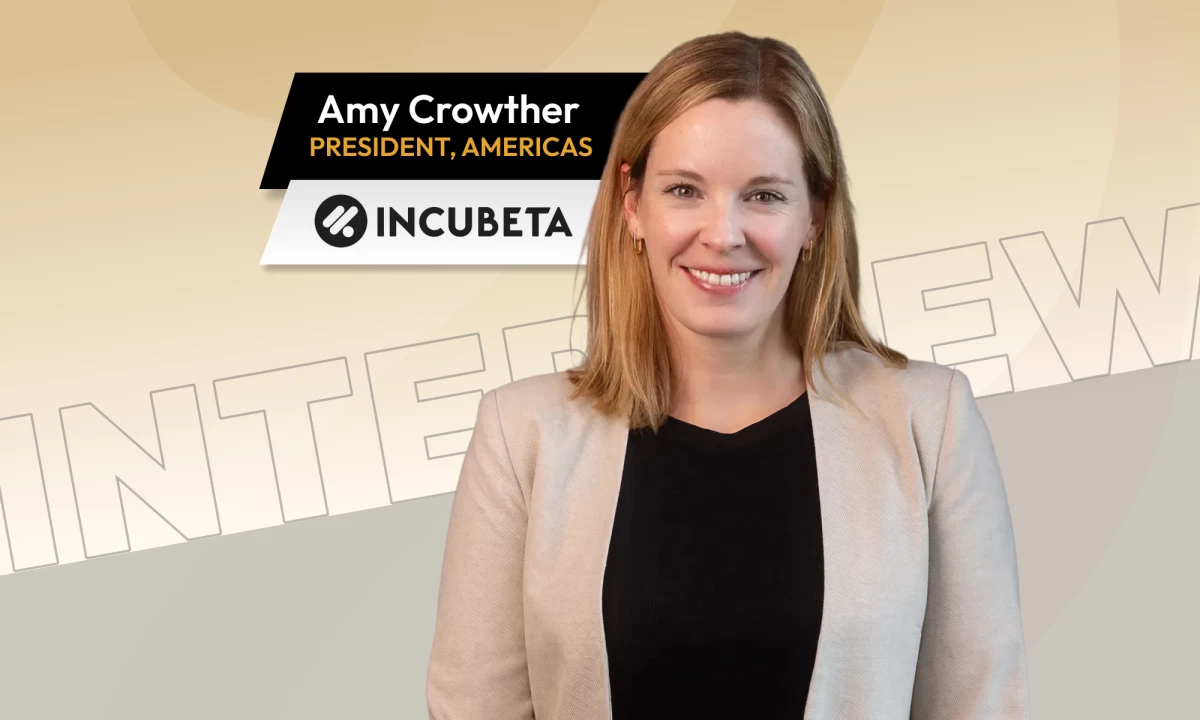
Amy Crowther, President of the Americas at Incubeta, says partnerships are tested long before results plateau.
“When we evaluate a potential client, we’re looking beyond the brief,” Crowther says.
“We’re assessing whether an agency–client partnership can actually succeed in the real world, under real pressure.”
In an exclusive interview with DesignRush, Crowther explains how shared ambition, operational clarity, and disciplined execution turn early momentum into long-term partnerships.
3 Indicators of a Successful Agency-Client Partnership
Before work begins, Crowther looks for alignment that goes deeper than revenue targets.
1. Shared Ambition and Clear Definition of Outcomes
“First is shared ambition and a clear definition of outcomes," Crowther says.
She adds that it goes beyond topline growth:
"Not just in terms of ‘grow revenue,’ but also agreement on what success looks like, how we’ll measure progress, and what trade-offs we’re willing to make to get there.”
The point is, big issues can arise if the agency and the client have not agreed upfront on what matters most.
That misalignment leads to unpredictable expectations and reactive decisions. And it can unravel quickly.
And shared goals only matter when ownership and decision rights are clearly defined.
2. Decision-Making Clarity and Defined Ownership
“Second is decision-making clarity. We move quickly as an independent agency, but speed requires structure," Crowther says.
"When ownership is clear, decision rights are defined, and timelines are realistic, we can deliver at a higher level, faster.”
Speed without ownership rarely works in the long run.
When this happens, teams stall waiting for approval or move ahead without alignment.
3. Openness to Solve Challenges Together
On the other hand, the third indicator is more subtle.
“Third is openness to solve challenges together," Crowther says.
"The best clients don’t want an order-taker and they don’t hold their feedback when it’s constructive to the long-term partnership.""They want a partner who will bring perspective, call out what isn’t working, and help make better decisions together.”
That openness determines whether hard conversations strengthen or erode the relationship.
Crowther also watches for an early warning sign.
“The early red flag is when the agency is treated like a production line,” she says.
“If the relationship starts there, it usually limits impact, burns out teams, and ultimately undermines results.”
Transactional client relations may feel efficient at first. Over time, they drain strategic value.
Sometimes the clearest proof is how consumers respond:
Why The First 30 to 60 Days Matter Most
Crowther does not view the pitch as the decisive moment.
“We find long-term clients are rarely won by a single pitch moment," Crowther says.
"They’re won over and over again by how the agency shows up in every interaction before and after the contract is signed.”
The period immediately after client onboarding is where credibility becomes apparent.
“It’s easy to focus on early delivery, in the first 30 to 60 days is where the relationship is tested, we demonstrate quick, meaningful impact and clients learn whether your agency is consistent and can be trusted," she adds.
Early traction matters. But it does not guarantee a sustainable partnership.
“However, this must have tight linkage to long-term strategy. A shared vision of what we are working towards must be a thread through every action and interaction," Crowther says.
Establishing this continuity requires understanding how the client’s organization actually works.
“We spend time understanding the commercial realities behind the marketing asks, the internal constraints, and where the friction points actually sit," Crowther says.
"Then we roadmap towards the future we want, bringing a clear point of view, shared accountability and commitment. This is what converts a prospect into a long-term partner."
Building client trust, in other words, is operational. And it's not optional.
Why AI Marketing Requires Integration
As AI capabilities expand, many brands focus on tools before integration.
“One universal truth for every brand is that the promise of A.I powered marketing cannot be realized without first setting strong, connected foundations,” Crowther says.
“If media, creative and measurement operate independently it’s hard to get out of the starting gate to explore what’s possible.”
Disconnected systems limit experimentation. Integration creates leverage.
That same thinking is reflected in how Incubeta approaches enterprise AI:
To demonstrate that principle, Incubeta built Coastal Ridge, a fictional apparel brand, from scratch in seven days.
Crowther explains how quickly the team moved:
“Starting with no logo, no assets, and no existing infrastructure, we moved from concept to a fully branded e-commerce experience, complete with performance-ready creative.”
The goal was not speed for optics.
"It was to demonstrate the foundational requirements to build an A.I powered creative and media operating system, not a one-off experiment," Crowther says.
After all, value becomes tangible when it is measurable.
“We make this value visible early by showing clients the measurable impact, before we talk about outputs. That means being explicit about how decisions will be informed by data, and how the system adapts as conditions change.”
As Crowther explains it, this shows what's possible when creative isn't handled as a "downstream deliverable." And what happens when it's seen as a full-fledged driver of marketing performance.
Clarity as a Competitive Advantage
Experience has reshaped how Incubeta approaches new business.
“One lesson that reshaped how we approach pitching is that clarity and confidence is a competitive edge,” Crowther says.
In competitive reviews, over-customization can backfire.
“It’s easy to over-customize early or over-promise in a competitive process," Crowther says.
"What clients really need is confidence that the agency has a repeatable way of delivering, one that is proven to deliver and one that can flex without becoming chaotic.”
A repeatable framework creates stability once work begins.
“We’re also very disciplined about separating what’s proven today from what’s emerging," she says.
"We can absolutely be ambitious in the vision, but we stay precise about maturity, timelines, and what it will take to deliver profitably.”
The main takeaway? This discipline reduces issues down the line.

Who Is Amy Crowther?
Amy Crowther is President of the Americas at Incubeta, where she oversees strategy, operations, and client partnerships across the region.
Formerly Chief Client Officer, she has led the company’s push toward stronger operational discipline and AI-driven marketing integration. Crowther previously held leadership roles at Jellyfish, IPG (Reprise), and Dentsu, building multinational strategy and client delivery teams.
The Discipline That Builds Trust
Trust rarely hinges on a single presentation or milestone.
“The simplest practice is consistent candor paired with consistent cadence,” Crowther says.
“We’re upfront when something isn’t working, direct when trade-offs are required, and transparent when priorities shift.”
What prevents friction from building beneath the surface?
Consistent communication with the client, Crowther explains, is essential.
“Regular check-ins that focus on decisions, not just status.
Clear documentation of what changed and why. And a shared understanding of what we’re optimizing for," she says.
Over time, those habits are what matter most.
“Those small habits compound into alignment, and that’s what turns an agency relationship into a true partnership.”
At the end of the day, the first 60 days won’t determine how successful the final outcome will be. But it will definitely reveal whether a partnership is built on solid ground.
Looking for an agency that can deliver beyond the first 60 days?
Explore our list of the Top Marketing Agencies on DesignRush.