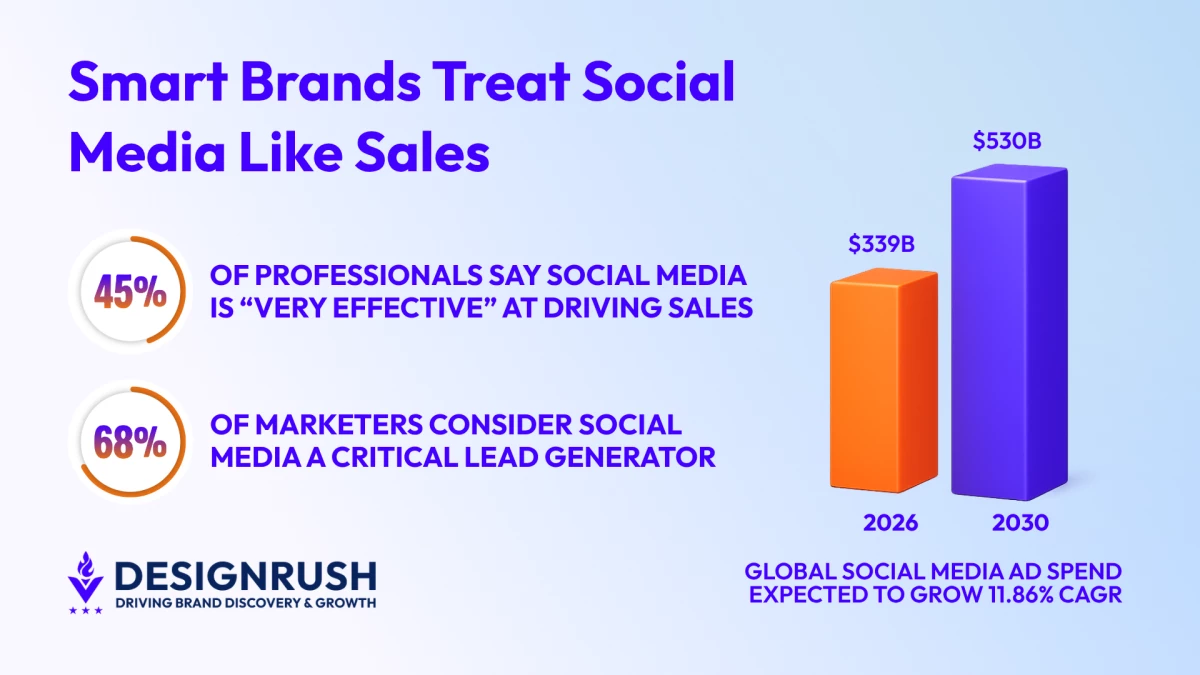

Data shows 45% of sales professionals rate social media as “very effective” at driving sales, according to HubSpot’s 2025 State of Sales Report.
That places social media ahead of in-person meetings at 44% and video calls at 35%.
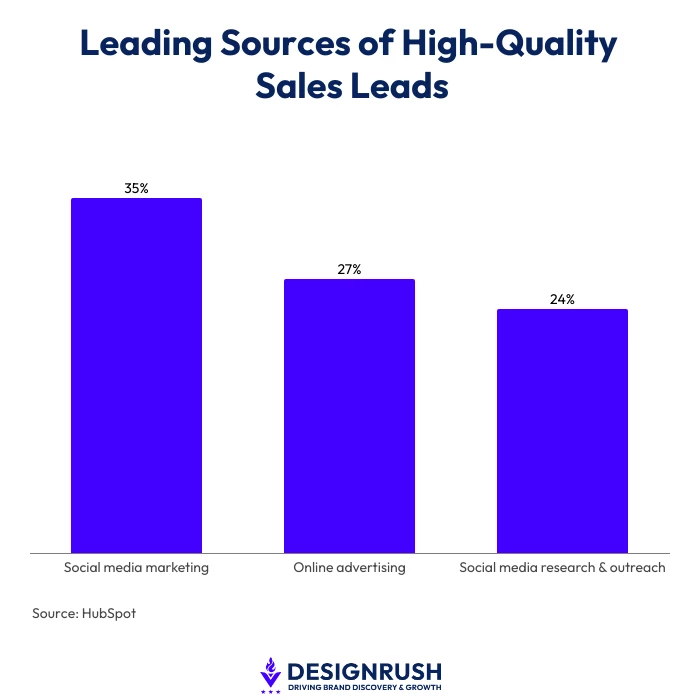
HubSpot also found that 35% of sales professionals say social media is their top source of high-quality leads.
For anyone still treating social as just a brand awareness tool, those numbers should be uncomfortable to read.
The feeds people scroll through over breakfast have become where purchase decisions actually happen.
Brands that haven't caught up to that reality are bleeding money into campaigns that look good on paper and go nowhere in practice.
Social Media As a Revenue Channel
While getting eyeballs has never been easier, turning those looks into customers is where things get complicated.
Performance-focused digital marketing agency, Viacon, has seen that audiences are growing harder to impress and even harder to push toward action.
This misalignment between what brands think social is doing for them and what it's actually doing keeps growing.
In an exclusive DesignRush interview, Viacon SEO Team Lead Sudarshan Nath gets real about what brands still get wrong about optimization.
"Brands often focus too much on likes and reach instead of buyer intent," Nath says.
“But it's a tough habit to break since vanity metrics are easy to report and actual conversion data requires harder conversations.”
The feeds that brands are competing in look nothing like they did a few years ago.
From the likes of creator partnerships, sponsored content, trend cycles, and product drops, consumers are faced with a barrage of never-ending information.
This means that stopping someone's scroll takes more than a polished image and a tagline.
Why Audiences Are Tuning Out Social Ads
Research from Exploding Topics claims that people spend an average of two hours and 24 minutes on social media platforms every day.
And spending that much time online has made people very good at spotting anything that feels fake or forced, something many consumers don’t appreciate.
In fact, a Marketing LTB report found that 62% of consumers care more about authenticity than polished content.
"Another mistake is using overly polished creatives that don't feel authentic or platform-native," Nath says.
This is evident across the campaigns plastered across the various platforms.
TikTok’s creator content shot on phones and built around personality consistently outperform slick brand campaigns that feel imported from a different era of advertising.
Instagram has its own version of this through Reels and influencer content rooted in community and social proof.
LinkedIn is the same story, where executives who sound human are getting engagement, while a barrage of press releases gets the silent treatment.
Every platform has its own set of rules. Ignore that and it shows.
But respect it and the results will follow.
The Real Problem Is Reach Without Intent
Over 68% of marketers report social media as a critical lead generation channel, yet a significant portion are still struggling to turn that presence into high quality prospects.
And even though many still have difficulty converting that attention, they keep investing.
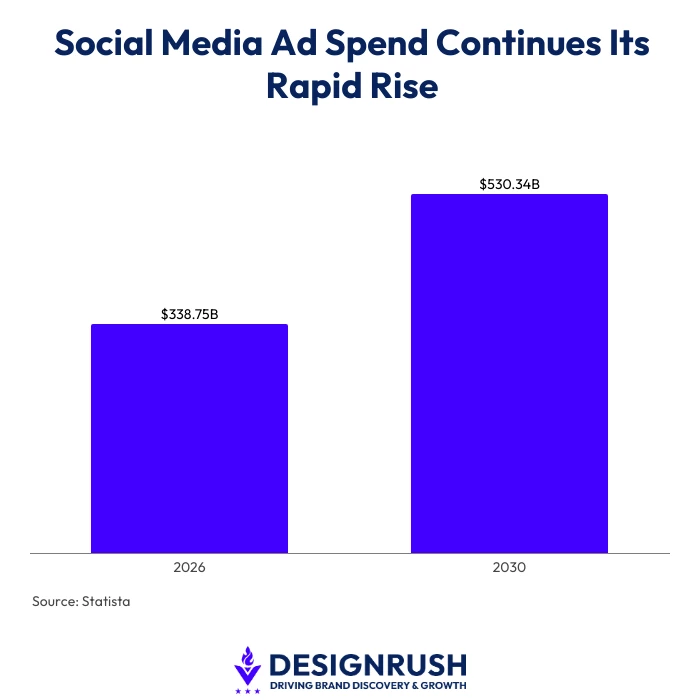
Statista puts global social media ad spend at $338.75 billion this year. And growing at a CAGR of 11.86%, the industry will be worth as much as $530.34 billion by 2030.
But with investment of that size, it's critical to show value and tangible results. And teams watch the metrics that carry the most meaning.
These metrics, such as click-through rates, saves, shares, product page visits, and conversions, show a user did more than scroll past.
"Conversion-focused creative should quickly communicate value, build trust, and drive action. Clear messaging, strong hooks, social proof, and direct CTAs matter more than pure entertainment," Nath says.
For brands, this is an especially pertinent point. Considering how fast social feeds move and consumer concentration fades, taking too long can ultimately cost them consumer attention.
Why Landing Pages Kill Social Conversions
The landing page is where a lot of otherwise solid campaigns start to fall apart.
Even a short delay can kill the momentum an ad worked hard to build, with Site Qwality reporting that 53% of mobile users abandon pages that take longer than three seconds to load.
"The landing page is critical. If the post-click experience is slow, confusing, or inconsistent with the ad, conversion rates drop significantly," Nath says.
This boils down to a problem with structure.
The creative gets attention, the targeting does its job, and then someone clicks through to a landing page that feels like it belongs to a completely different campaign.
This includes using a different tone, different visual language, and then sometimes even a completely different message.
Audiences don't mentally separate the ad experience from the post-click experience the way internal teams do. They experience it as one thing, and if that thing feels off, they leave.
Fixing this has started changing how teams are organized.
Creative strategists, UX designers, developers, and media buyers are working together much earlier in the process because too many conversion problems were showing up after the ad had already done its job.
Why Platform Strategy Gets Underestimated
Most brands are on multiple platforms. Whether they have a different strategy for each one is a different question entirely.
"It’s best to keep the core message consistent but adapt the format, hooks, and style to fit each platform's audience behavior and content style," Nath says.
That adaptation matters because audiences interact with each platform differently.
- TikTok: Attention and Discovery
TikTok prioritizes content that captures attention quickly, making it a strong environment for creator-led discovery and impulse engagement. - Instagram: Visual Branding and Influence
Instagram remains heavily visual, driven by creators, Reels, and aspirational branding that encourages users to buy into a lifestyle before making a purchase. - LinkedIn: Trust and Expertise
LinkedIn operates differently, rewarding credibility, expertise, and consistency over time, particularly in B2B marketing and eventually conversations.
What works on TikTok has no business being on LinkedIn. Brands that haven't figured that out yet will keep scratching their heads at the numbers.
What Winning Brands Do Differently
The old playbook was simple enough. Build one campaign, run it for a quarter, and review results at the end. That, however, doesn't fit with how social media works anymore.
Trends cycle out and algorithms shift, meaning that content that's hitting hard one week can go cold before the campaign is even finished.
"Brands should prioritize creative testing and audience understanding. The ability to test and optimize fast will matter more than relying on one large campaign idea," Nath explains.
The days of going live with a campaign and checking back in a month are over.
Why?
Brands are making calls in real time now.
This means swapping out creative, trying different hooks, tweaking messaging while the campaign is still running.
Nath's advice to leaders boils down to a few things worth acting on:
- Views mean nothing on their own, so pay attention to what people do after they see the content.
- Make sure that the landing page feels like it belongs with the ad that got the viewer there.
- Give each platform its own strategy because what works on one rarely works on another.
- Be adaptable and leave room to adjust while campaigns are still running.
Because the brands pulling ahead aren't necessarily spending more. They're just being smarter about where the real conversion problems actually live.