
Key Takeaways:
- The U.S. and U.K. declined to sign a global AI agreement at the Paris AI Summit, breaking from more than 60 countries, including China and the EU.
- The decision highlights a growing divide in AI governance, with the EU pushing for stronger regulations while the U.S. and U.K. favor a looser approach.
- Businesses may face uncertainty as they navigate conflicting AI policies across different markets.
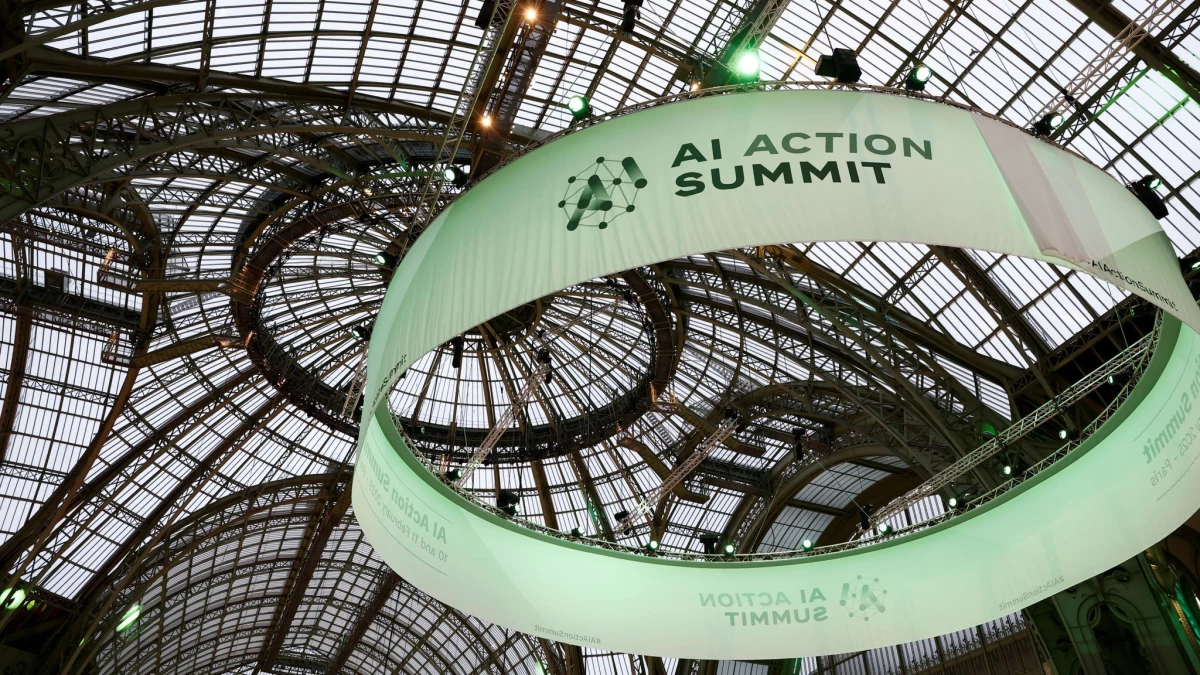
The United States and the United Kingdom refused to sign a global agreement on artificial intelligence at the Paris AI Summit on Tuesday, distancing themselves from more than 60 nations that endorsed the declaration.
The move highlights a widening gap in AI governance, with Washington and London resisting regulatory approaches embraced by Europe and other global powers.
The agreement, backed by countries including China, India, Japan, Australia, and Canada, promotes AI that is “inclusive, ethical, and sustainable.”
Nations are coming together to shape the future of AI—collaborating to ensure innovation is inclusive and transformative. We will keep working to make AI a force for progress and prosperity.
— Narendra Modi (@narendramodi) February 11, 2025
Here are some more glimpses from the AI Action Summit in Paris. pic.twitter.com/CzZPS47Mou
A U.K. government spokesperson said in a statement that the country would only support initiatives aligned with its national interests.
Meanwhile, U.S. Vice President JD Vance criticized what he called Europe’s “excessive regulation” of AI, warning that such measures could stifle innovation.
Vance’s speech at the Grand Palais in Paris underscored the sharp policy differences between the U.S., the EU, and China.
.@VP at the AI Action Summit in Paris: "We've also watched as hostile foreign adversaries have weaponized AI software to rewrite history, surveil users, and censor speech ... I want to be clear: this administration will block such efforts, full stop." pic.twitter.com/qmpJgcQd6V
— Rapid Response 47 (@RapidResponse47) February 11, 2025
The U.K.’s decision to stay out of the pact raised questions about whether it was following Washington’s lead.
However, a government source insisted the choice was independent, citing concerns that the declaration lacked strong language on security.
Industry experts warn that the U.S. and U.K.’s refusal to sign could weaken global cooperation on AI governance.
Meanwhile, Andrew Dudfield, head of AI at the U.K. fact-checking charity Full Fact, said the decision risks “undercutting its hard-won credibility as a world leader for safe, ethical and trustworthy AI innovation.”
A Shifting AI Power Struggle
The debate over AI regulation is part of a broader power struggle. The EU recently implemented the world’s first comprehensive AI law, while China is expanding its state-backed AI initiatives.
French President Emmanuel Macron positioned Europe as a “third way” or middle ground between U.S. deregulation and China’s government-controlled AI development.
The Paris Summit also highlighted concerns about AI’s role in defense, misinformation, and economic shifts, with leaders calling for a balance between innovation and accountability.
Despite the diplomatic divide, discussions on AI governance will continue. The Élysée Palace noted that additional countries might still sign the declaration.
The divide in AI regulation forces businesses to navigate conflicting global policies, with the EU prioritizing oversight while the U.S. and U.K. push for innovation-friendly environments.
Companies must weigh the benefits of regulatory stability in Europe against the faster-moving, less-restricted artificial intelligence development in the U.S. and U.K. to determine the most strategic approach for innovation that will benefit long-term growth.
Meanwhile, the Paris AI Summit is the latest in a series of global AI conferences shaping the future of regulation, innovation, and international cooperation.