
Uber Eats x Sesame Street: Key Findings
- The campaign introduces four new films to expand the long-running “Get Almost, Almost Anything” advertising platform.
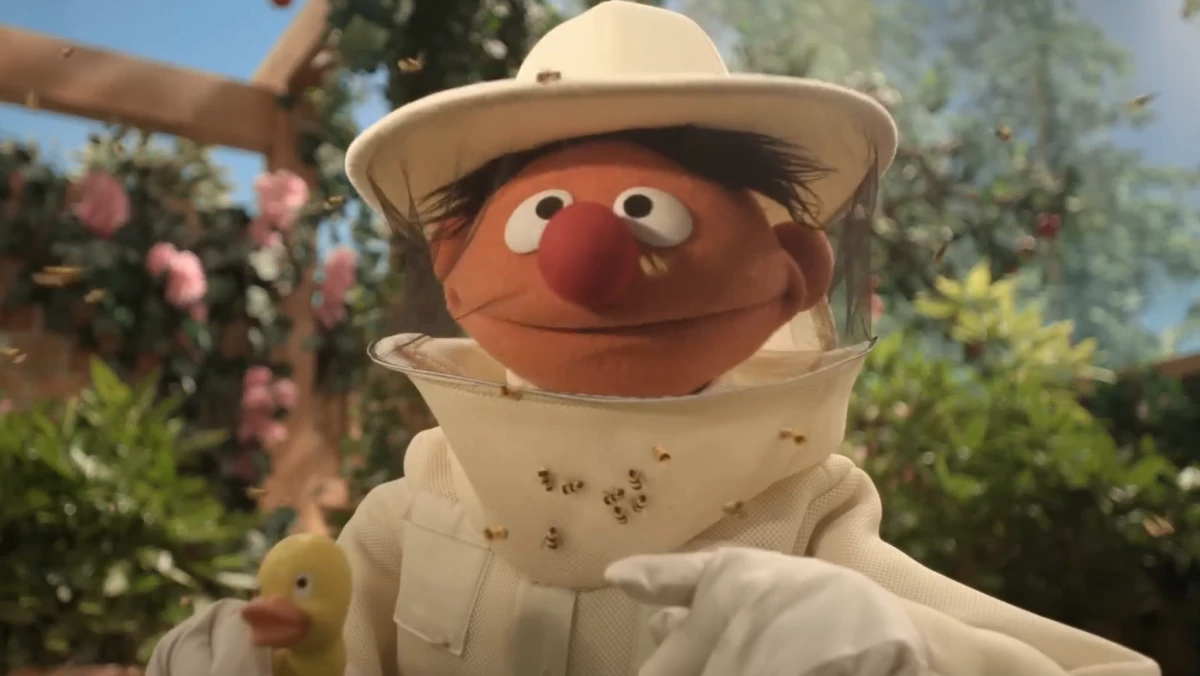
- Sesame Street characters Bert and Ernie appear in the “Burt’s Bees” spot, bringing the children’s franchise into the campaign.
- Each ad exaggerates the literal interpretation of product names such as “Shower Caddy,” “Head of Lettuce,” and “Hot Dogs.”
Uber Eats is once again proving that a simple joke about product names can carry an entire marketing stint.
The delivery company has launched a new wave of its long-running “Get Almost, Almost Anything” campaign, continuing its partnership with Special US and director Nick Ball of MJZ.
The idea remains straightforward.
Take everyday product names, interpret them literally, then reveal the real item customers can order through the Uber Eats marketplace.
The latest batch of films builds on this formula, incorporating more unusual product references and unexpected characters, including a collab with Sesame Street.
Each spot builds a believable scene around a deliberately incorrect interpretation of a product name before flipping the joke back to the real item.
“The magic of 'Get Almost, Almost Anything' is the endless room it gives us to play,” Liza Keller, head of integrated marketing at Uber Eats, said in a press release.
“By taking everyday items from our selection and reimagining them in unexpected ways, we’re able to entertain people with humour while highlighting just how wide and wonderful the Uber Eats marketplace has become.”
Special Group’s Matthew Woodhams Roberts said the team intentionally pushed toward stranger examples this time.
“To take this campaign even further, we wanted to get more obscure to illustrate the range of things Uber Eats delivers,” he shared in a statement.
It's an approach that serves as a key part of the company’s brand identity, positioning the app as a place where consumers can order "almost, almost anything."
It Just Keeps Getting Weirder, Literally
Each new film builds a small narrative around its literal interpretation before revealing the real product.
In “Burt’s Bees,” created with Sesame Street, viewers see Ernie dressed in a beekeeper suit while bees swarm around Bert in a chaotic scene.
The visual gag exaggerates the idea of “Burt’s Bees” before the punchline returns to the familiar lip balm brand available through Uber Eats.
“Shower Caddy” begins with someone showering peacefully until a literal golf caddie appears inside the bathroom, holding clubs and offering advice mid-rinse.
The joke plays on the phrase “shower caddy,” replacing the bathroom organizer with a sports assistant who clearly does not belong there.
Another spot, “Head of Lettuce,” stages a locker-room showdown between hockey players who dramatically shake their long hair at each other as if competing in a hair commercial.
Meanwhile, “Hot Dogs” shows a group of dogs lounging poolside, clearly pleased with themselves while overheating in the sun.
Across the films, the creative team maintains a straight-faced tone.
Scenes are framed carefully and performed seriously, which makes the absurd situations land harder, and this formula keeps the concept flexible.
New products can generate new jokes, allowing the brand to continuously highlight the breadth of its marketplace while maintaining a recognizable structure.
Why Go Back to the ‘Almost Anything’ Joke
Everyone loves a good wordplay, and Uber Eats is showing how a simple comedic rule can evolve into a repeatable advertising strategy.
- Building campaigns around simple creative rules allows brands to scale storytelling without constantly inventing new structures.
- Cultural IP or character partnerships can refresh long-running ideas, helping ads reach audiences outside the core demographic.
- Comedic campaigns perform best when production discipline keeps performances grounded, letting the absurdity of the premise drive the humor.
Ultimately, as long as Uber Eats keeps finding product names that invite visual misreading, the platform can keep generating new worlds without rewriting its core idea.
Our Take: Can a Joke Carry a Campaign for Years?
I like a campaign that knows exactly what it is and doesn’t pretend to be anything else.
Uber Eats built a simple joke engine. Misread a product name, play it straight, then pull the rug out from under the viewer.
It's not complicated at all, and even if the jokes don't land with some, it's bound to bring a smile to many.
Meanwhile, competitor DoorDash recently debuted the fully automated delivery robot "Dot" in Fremont, promising a wider rollout in the coming months.
The best ideas start with real human insight.
These top creative firms design work that feels immediate, tactile, and emotionally precise.