
DoorDash Dot in Fremont: Key Findings
- Dot will debut on March 5 at the Fremont Restaurant Week kickoff, anchoring innovation to a local small-business moment.
- The rollout begins with just three chaperoned robots, showing a trust-first approach before eventually scaling to 30 units.
- The encroachment permit extends through March 2027, proof of DoorDash's commitment to long-term operational integration.
A food delivery robot built in Fremont is about to start rolling through its own backyard.
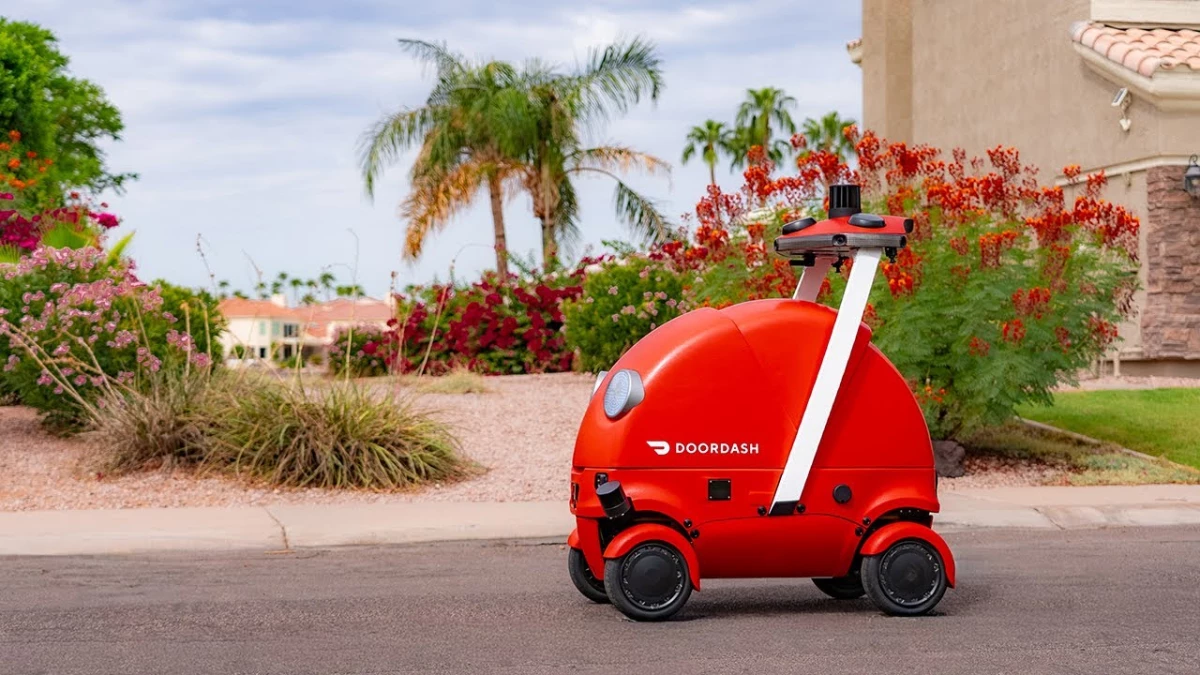
DoorDash has officially partnered with the City of Fremont to introduce "Dot," its all-electric autonomous delivery device.
Through a phased public rollout, the effort is designed to prioritize safety and community engagement.
The agreement follows months of conversations between DoorDash and city officials, with staff from Fremont’s Economic Development and Public Works departments leading the implementation.
Manufactured locally, Dot is a compact robot designed to transport orders directly to customers while navigating city streets.
“We’re thrilled to partner with the City of Fremont to bring Dot from the factory to Main Street,” Ashu Rege, VP and Head of Autonomy at DoorDash Labs, said in a statement.
“This is a crucial step to start the process of getting Dot onto the road in Fremont, and eager to continue conversations with our partners to ensure that this exciting step forward carries everyone — from business owners to customers — into the future.”
Meanwhile, Fremont Mayor Raj Salwan sees the collaboration as an innovation milestone and a local economic win.
“Fremont is proud to partner with DoorDash on the launch of Dot, an all-electric autonomous delivery robot manufactured right here in our city,” Salwan shared.
“This collaboration reflects Fremont's leadership in advanced manufacturing and robotics innovation while reinforcing our commitment to sustainability.”
The brand partnership also aligns with Downtown Fremont’s commercial goals.
With the integration of autonomous delivery into a visible local initiative, DoorDash's rollout comes as part of its comprehensive brand marketing strategy tied to small business support and sustainability.
A Careful, Public Rollout
Dot will make its inaugural delivery on March 5 during the kickoff event for the 4th Annual Fremont Restaurant Week, hosted by Fremont Bank.
The event runs from March 6 to 15, giving DoorDash a built-in moment to introduce the robot to residents and restaurant owners alike.
Deployment is structured in phases and subject to an encroachment permit extending through March 2027.
Phase 1A allows up to three robots to operate for testing and demonstration, each chaperoned by local operators. This stage focuses on community feedback and real-world observation.
Phase 1B, pending review, would expand operations to up to 30 autonomous robots within designated service areas, including Downtown/City Center, Centerville, and Irvington.
Proposed primary travel corridors include Fremont Boulevard, Walnut Avenue, Mowry Avenue, Stevenson Boulevard, and Paseo Padre Parkway.
A later Phase 2 would require separate review and approval for continued expansion.
DoorDash says it will operate under standardized safety procedures, including speed limitations and an Incident Response Protocol developed from experience in other cities.
For Fremont, the optics matter. The city gets to showcase a homegrown robotics product in a real commercial setting.
But for the brand, the effort serves as a test market tied to civic pride and restaurant traffic instead of just pure experimentation.
In 2025, DoorDash generated approximately $75 billion in sales, a testament to its scale as the largest food delivery platform in the U.S.
DoorDash’s Fremont Rollout is a Lesson in Cautious Launching
Brands exploring emerging tech can learn a thing or two from DoorDash's "Dot" rollout. Here, we learn that:
- Pilot new technology in controlled phases to build trust before expanding the footprint.
- 74% of event attendees leave with a positive brand impression. Tying launches to local events can strengthen relevance and recall.
- Work directly with city stakeholders to position emerging tech as civic progress, not disruption.
The effort now begs the question: Can autonomous delivery truly become a practical habit for residents?
Our Take: Can a Robot Make Delivery Feel Local?
I’ve seen plenty of tech launches that treat cities like laboratories. This doesn’t feel like that.
Tying Dot’s debut to Fremont Restaurant Week and phasing deployment with visible guardrails makes robotic automation feel like real infrastructure.
We think the strategy is sound. Start small. Show up publicly. Let people see the machine before they trust it.
Tech often moves faster than consent, which is why slowing down can be the smartest move.
Robotics seems to be advancing at a rapid pace lately.
Last month, Bosch even used two robots as the protagonists of its “Impressive Innovation” campaign, where they dramatize the brand’s engineering credibility.
The best ideas start with real human insight. These top creative firms design work that feels immediate, tactile, and emotionally precise.