
Uber Eats’ 'Get Almost, Almost Anything': Key Findings
- Uber Eats’ latest campaign work turns everyday grocery items into absurd literal scenes, showing how visual misdirection can refresh a platform.
- Treating common product names as cinematic worlds proves that simplicity, with the right execution, can be memorable without overexplaining the message.
- The campaign shows marketers that comedy stemming from language and shared understanding builds brand recall.

Campaign Snapshot
Uber Eats’ latest campaign leans into visual misdirection and playful literalism to remind consumers just how much they can actually order through the app.
Created by Special US and directed by MJZ’s Nick Ball, the campaign adds a new chapter to Uber Eats’ “Get Almost, Almost Anything” platform by pushing simple ideas to strange extremes in four new films.
Each film begins in an unexpected scenario inspired by a product name, only to reset the moment with a clear reveal of what customers can actually order through the app.
Special US CCO David Horton said the goal was not to oversell range, but to make everyday products feel memorable again.
“This campaign reminds people of the incredible range and selection on Uber Eats. But the truth is, most of that range consists of everyday items.
“So by playing with their meaning, those everyday items became far more memorable,” he explained.
The creative approach avoids heavy dialogue and explanation, relying instead on strong visuals and timing.
Horton added that the intent was to build moments rather than traditional narratives.
“It was a choice to make each of these an absurd world that wasn’t narrative driven, but rather a moment that created a cinematic, literal misinterpretation of the name of each product,” he added.
Together, the films are a testament to Uber Eats’ ongoing use of humor, pushing language just far enough to surprise without confusing the core message of availability and ease.
Literal Worlds, Quick Reveals
The campaign launches with four films, all structured around the same bait-and-switch setup.
One spot places viewers inside an awkwardly slow dance class inspired by the phrase “mild salsa."
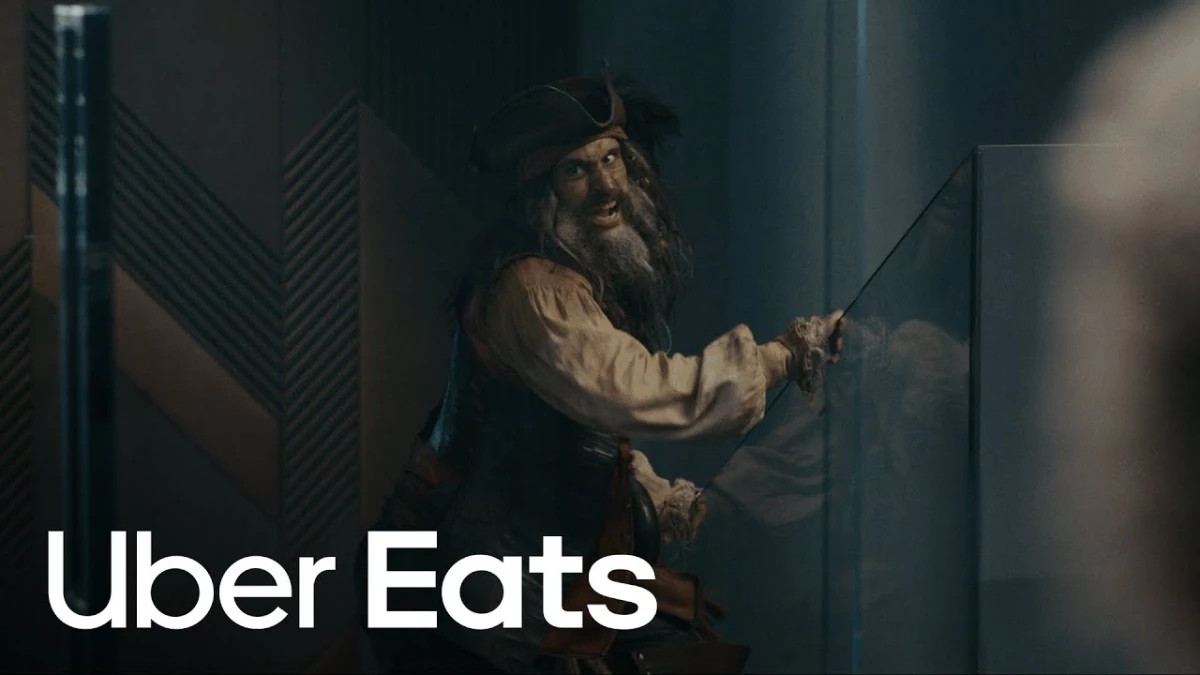
Another turns a pirate into an unlikely office dancer.
Elsewhere, farmers celebrate with outsized enthusiasm, and a pair of lovers reconnect while dressed as fruit in "Passion Fruit."
In every case, the surreal setup gives way to a straightforward product delivery moment, grounding the joke in what Uber Eats actually offers.
The campaign is rolling out across TV, online video, and social channels through the end of the year and into early 2026.
It's a move that upholds the platform’s promise with simple, repeatable ideas rather than one-off stunts.
What Marketers Can Learn From Uber Eats’ Literal Approach
Uber Eats is offering us clear lessons on how to stretch a platform idea without wearing it out.
Here are specific use cases on how to integrate these teachings into your own brand campaigns:
- Simple wordplay can turn ordinary products into standout creative without confusion.
- Repeating a strong structure across multiple spots builds recognition while still leaving room for surprise.
- Visual-first storytelling helps absurd ideas land quickly across TV and social feeds.
Other brands have found themselves in a similar spot.
Zoom poked fun at office culture to push its platform, using its brand name "Zoom" as a verb in its latest campaign.
Meanwhile, Airheads presented us with a bizarre but fresh idea with "Decoy Boy," helping millennials too old to trick-or-treat to still join in on the fun.
These efforts are equal parts absurd, funny, and fresh, making them stickier and more memorable for the audience.
Overall, the lesson here is not to take yourself too seriously. When you do that, a more natural comedic tone for your brand follows.
Our Take: What Makes Absurdity Effective?
Something we like about this work is how controlled it feels.
The campaign never overacts or explains itself, and that restraint lets the absurdity land.
It trusts the audience to catch the joke without pointing at it, which is rare in platform advertising.
The risk is that such minimal explanation can slip into confusion if the idea ever loses clarity.
For now, though, Uber Eats knows exactly what it stands for and sticks to it even when the props get ridiculous.
In other news, Kinder Joy and Netflix's Stranger Things are teaming up for the last season's promotion, launching a multi-platform fan experience around the world.
Discover the top product design agencies turning ideas into nostalgia-fueled fun in our directory.