
AI-Powered Shopping: Key Findings
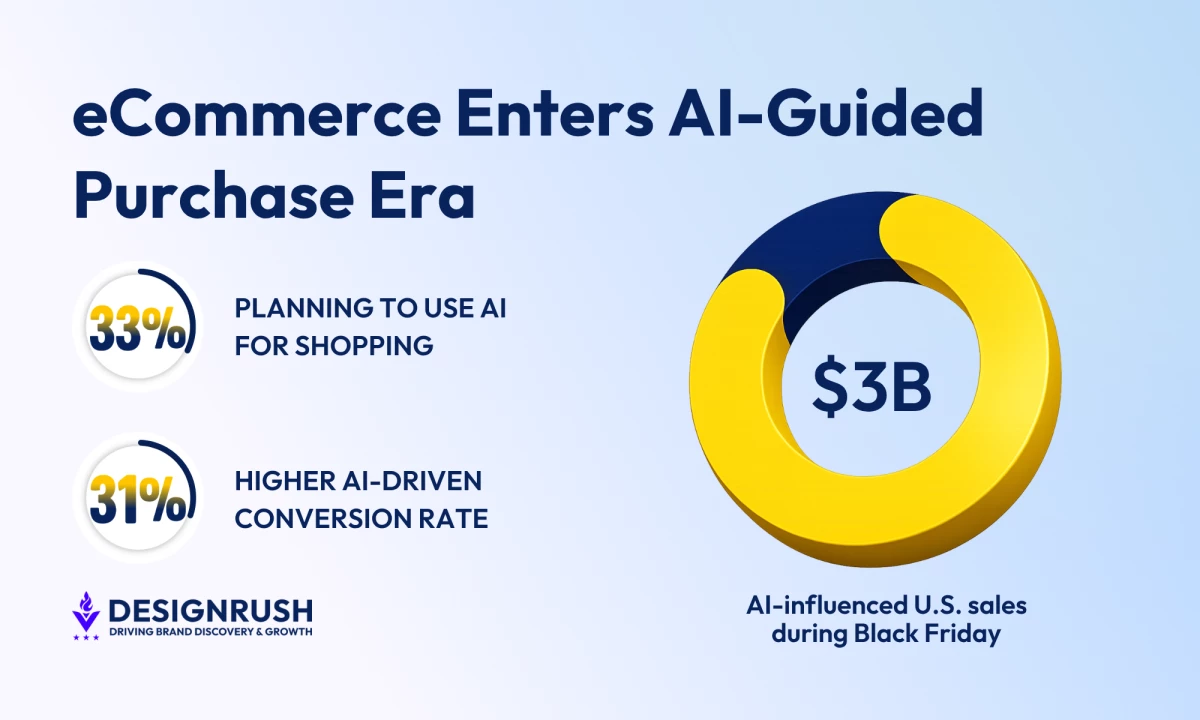
- With 33% of U.S. shoppers planning to use generative AI in purchasing journeys, AI-powered shopping is becoming a core discovery channel, with structured product data driving visibility and conversions.
- Shopify’s Universal Commerce Protocol enables AI-powered shopping to compress discovery and checkout into one flow, leaving brands using traditional navigation at risk of losing control over product surfacing and recommendations.
- AI-referred traffic converts 31% higher, while $3B in U.S. online sales were influenced by AI during Black Friday, pushing brands toward machine-readable infrastructure or exclusion from purchase decisions.
Shoppers are starting to skip the scroll.
Instead of browsing pages, they’re asking AI what to buy and acting on the answers.
Shopify is preparing for that behavior with its Universal Commerce Protocol (UCP).
It’s designed to let AI assistants find products, compare options, and complete purchases across platforms without relying on traditional navigation.
That aligns with consumer intent already showing up in survey data.
The number of U.S. shoppers planning to use generative AI more than doubled since 2024 to 33%, Deloitte found in its 2025 Holiday Retail Survey.
This indicates a clear move away from manual discovery.
Editor's Note: This is a sponsored article created in partnership with Isadora Agency.
UCP connects AI agents directly to merchant systems, making it possible to jump from discovery to checkout in a single flow without interruptions.
So, what used to take multiple steps now happens through guided interaction.
How AI Changes the Commerce Model
As shoppers increasingly rely on AI to guide them from question to purchase, the clicks are starting to disappear.
Instead of working through menus and filters, they interact with systems that recommend products, respond in real time, configure options, and complete transactions in one go.
“The biggest change is that the customer no longer adapts to the website,” says Isadora Marlow-Morgan, President & Strategic Director at Isadora Agency.
“Now the experience adapts to the customer. AI makes complex decisions simple and removes the mental load shoppers used to carry.”
That behavior is already reflected in how people shop.
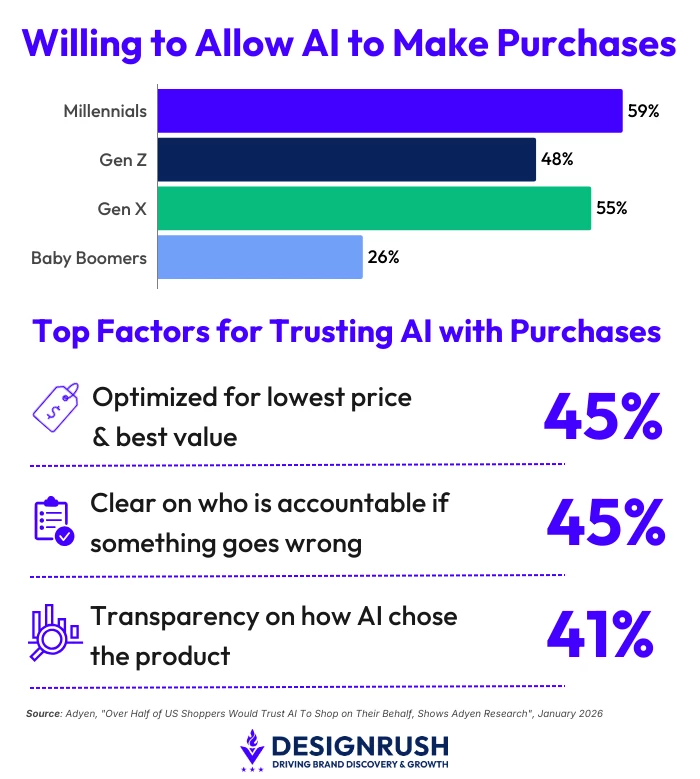
U.S. shoppers who use AI assistants report that the tools save them time, with 66% citing efficiency gains in their purchasing process, Adyen’s 2026 Retail Report found.
That efficiency also carries through to outcomes. Adobe found that AI-referred traffic converts 31% higher than other traffic sources, pointing to stronger purchase intent in AI-driven journeys.
Which means that structured product data, APIs, and machine-readable commerce infrastructure are now essential.
“Product discoverability now depends on the backend, not just page design,” says Marlow-Morgan.
“AI agents need accurate, current, and standardized information to deliver relevant recommendations. The brands that invest here will see both higher conversion and better customer trust.”
Real-World Applications and Market Impact
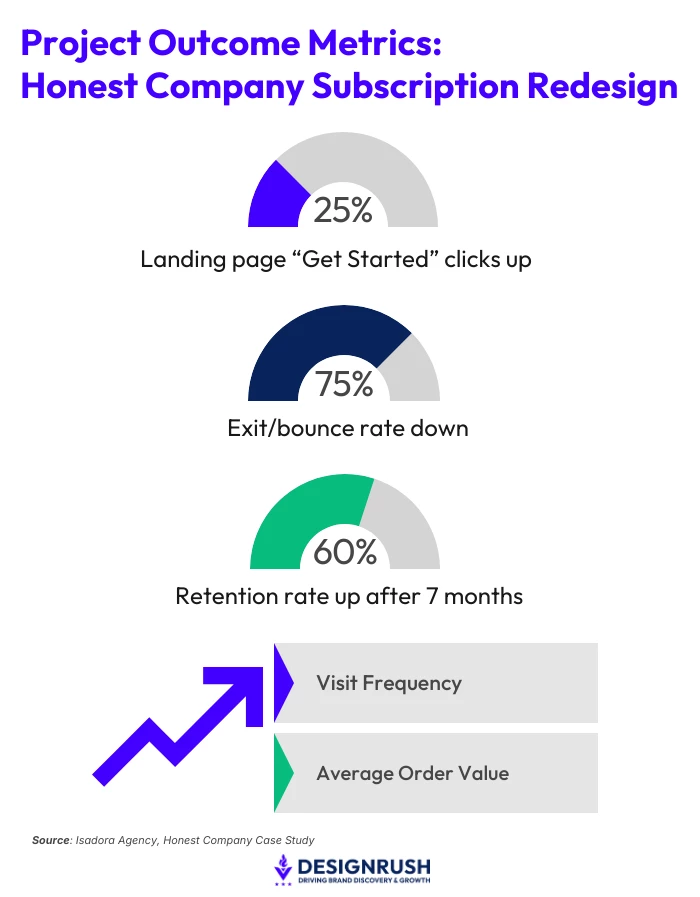
Isadora Agency’s work on the Honest Company diaper subscription flow shows how this plays out in practice.
Before, parents used to browse through size charts, quantities, patterns, and add-ons to complete a purchase.
Now, they describe their needs in an AI-enabled scenario, and receive tailored recommendations that account for child age, subscription frequency, style preferences, and complementary products.
That change is already visible in how transactions are being recorded across eCommerce systems.
AI and digital agents influenced $3 billion in U.S. online sales during the 2025 Black Friday period, Reuters reported.
That translates into AI affecting purchase decisions and contributing directly to revenue outcomes.
Execution, however, is where many fall short.
Gartner predicts that 60% of AI projects without AI-ready data will be abandoned, pointing to the need for structured, machine-usable catalogs, pricing, and fulfillment information.
“The AI layer is only as good as the data behind it,” Marlow-Morgan notes.
“If product feeds aren’t accurate or complete, shoppers won’t get useful guidance, and conversions suffer. It’s the quiet reality of AI commerce.”
Strategic Takeaways for Brands
Brands should start by tightening product catalogs, improving metadata, and making sure inventory and checkout systems are fully accessible through APIs.
As platforms like Shopify introduce UCP-style integrations, early adopters will be in a stronger position to support AI-led transactions.
Others may find themselves stuck with flows built for a browsing-first model.
The risk is straightforward: if brands can’t provide clean, structured product data and smooth execution paths, they’ll struggle to meet rising expectations for fast, AI-driven purchasing experiences.
So, preparing now means:
- Structuring product information
- Testing conversational flows, and
- Ensuring AI agents can execute purchases efficiently.
“Ecommerce success in the AI era is about trust and clarity,” Marlow-Morgan concludes.
“When your system understands your products, shoppers feel guided, not lost. That’s the kind of experience that builds loyalty and drives revenue.”
In practice, that means every data point matters.
AI can guide shoppers without a hitch, but only if the underlying product information is complete, accurate, and structured to support intelligent decision-making.