
Shopify’s Horizon vs Dawn Takeaways:
- Shaving just 0.1 seconds off page load can boost conversions by 8%, underscoring Horizon’s focus on Core Web Vitals.
- Horizon’s modular, component-driven architecture makes themes more scalable and easier to maintain than Dawn’s flat Liquid templates.
- Merchants should plan a phased migration to Horizon for better performance, native metaobject support, and smoother app integration.
Shaving just one‑tenth of a second off page load time can lift conversions by 8%, according to Deloitte’s Milliseconds Make Millions study.
This type of boost is why Shopify’s Horizon theme foundation targets exactly those Core Web Vitals improvements that directly affect site performance and user experience.
It replaces Dawn’s flat Liquid templates with modular components that load on demand while handling assets and scripts automatically to meet performance targets.
For merchants still on Dawn, Horizon provides a clear upgrade path to shave off critical milliseconds and capture higher conversions.
Component-Driven Architecture Benefits
Caleb Bradley, founder and CEO of Bighorn Web Solutions, says the biggest leap in Horizon over Dawn is its component‑driven architecture. Bradley outlined how the new structure makes themes more maintainable, scalable, and better suited for growing storefronts:
1. Component-Driven Architecture
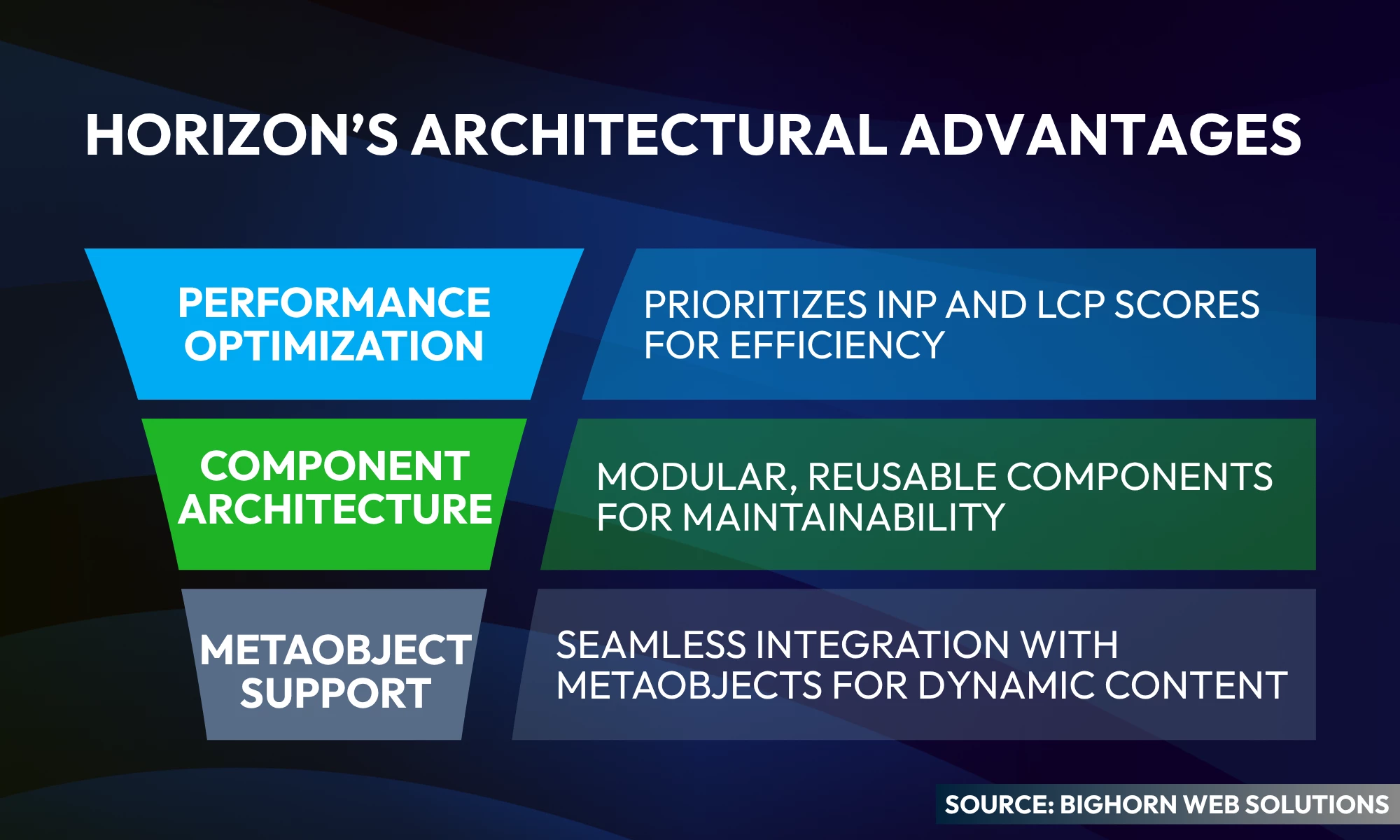
- Horizon introduces more modular, reusable components, making code more maintainable and scalable.
- Unlike Dawn’s flat Liquid structure, Horizon leans into section partials and stricter logic separation. This is better for teams working in parallel or larger stores with complex requirements.
2. Built for Performance
- Shopify has prioritized Interaction to Next Paint (INP) and Largest Contentful Paint (LCP) scores in Horizon’s structure.
- Horizon ships with smarter asset handling, lazy loading out of the box, and optimized render paths, meaning less developer overhead just to hit Core Web Vitals.
3. Native Support for Metaobjects + Shopify Functions
- Horizon plays more seamlessly with metaobjects, making dynamic content and data modeling far cleaner than with Dawn.
- It’s also designed to accommodate Shopify Functions, like for discounts and shipping, without hacking in support.
With all those changes in mind, merchants might wonder whether it’s time to make the switch. According to Bradley, the move to Horizon isn’t urgent, but strategic.
“Dawn is still supported, but Horizon is the future. Shopify is investing in Horizon for performance, user flexibility, and new features. Merchants don’t need to switch overnight, but planning for a phased migration, especially during a redesign or new campaign, is smart.”
The catch? Horizon is still new, and early adopters may run into growing pains.
Where Horizon Fixes What Dawn Broke
Since Horizon is brand new, third-party themes built on it may still be limited in variety and features.
“App compatibility with app blocks and new metaobject-based content models may also be inconsistent at launch,” Bradley said.
Many popular UI customizations or extensions haven’t been ported to Horizon yet, which means developers may need extra time to rebuild or adapt them.
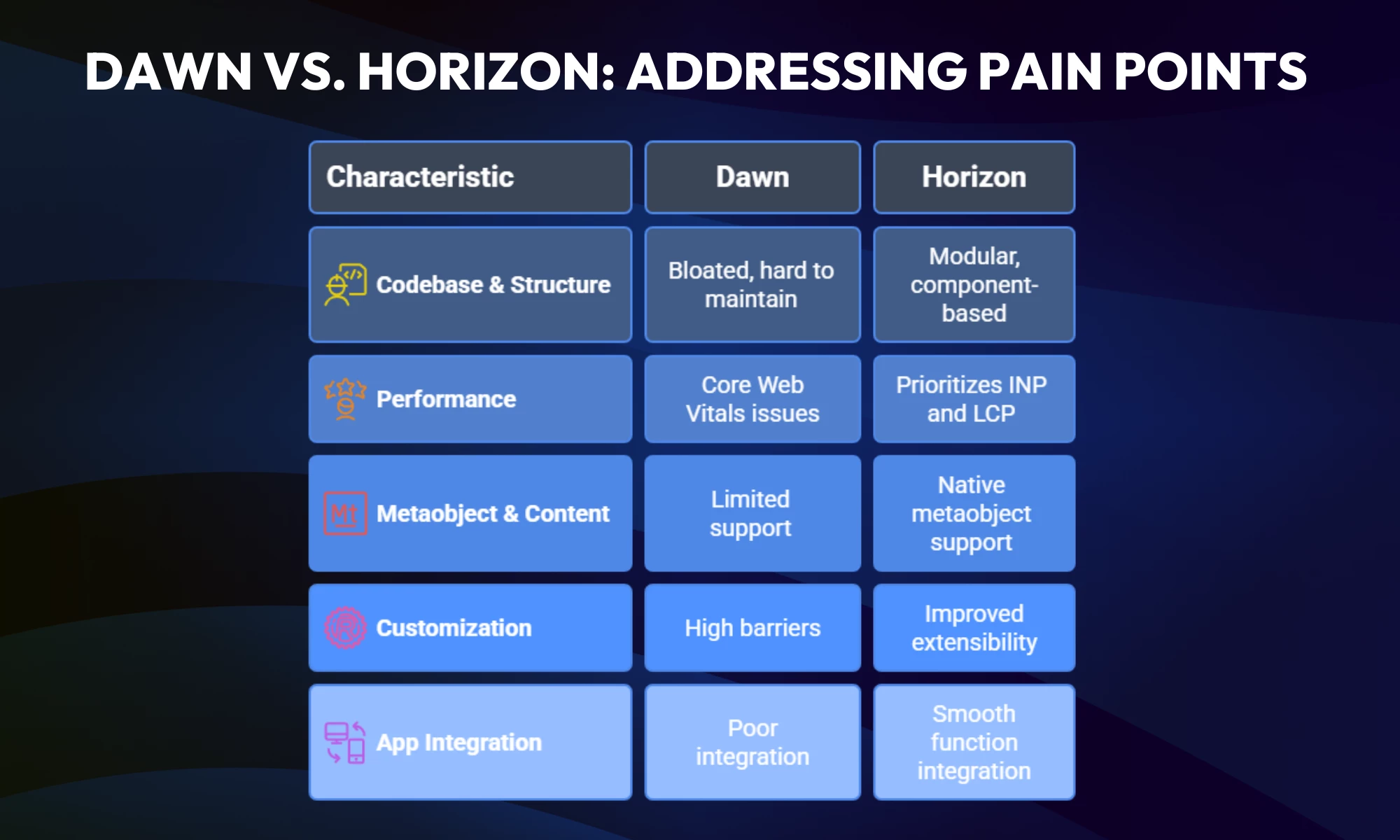
However, Horizon’s value becomes more obvious when you stack it against Dawn’s long-standing pain points. Here’s where Shopify is addressing what frustrates developers and merchants the most:
1. Cleaner Codebase and Structure
Dawn Pain Point: Bloated sections, scattered logic, and hard-to-maintain Liquid templates.
Horizon Fix: A modular, component-based structure that makes sections reusable, code easier to manage, and scaling smoother for complex storefronts.
2. Performance Bottlenecks
Dawn Pain Point: Hitting Core Web Vitals often meant custom fixes, with many sites still falling short despite the effort.
Horizon Fix: Built to prioritize Interaction to Next Paint (INP) and Largest Contentful Paint (LCP) out of the box, using smarter asset loading, hydration, and script deferrals to boost speed.
3. Limited Metaobject & Dynamic Content Support
Dawn Pain Point: Merchants looking for flexible, schema-driven content without relying on developers had to bend rigid Liquid layouts to fit their needs.
Horizon Fix: Horizon offers native support for metaobjects, making it easier to model rich content directly in the Shopify admin and reducing reliance on developers.
4. Customization Barriers
Dawn Pain Point: Even small customizations often mean editing core Liquid files, which risks causing regressions.
Horizon Fix: Improved section extensibility and dynamic rendering let merchants adjust layouts or content through the UI, while developers keep core code untouched.
5. App & Function Integration
Dawn Pain Point: Shopify Functions, like discounts and shipping logic, often felt like afterthoughts, poorly integrated or unsupported.
Horizon Fix: Designed to work smoothly with Shopify Functions, dynamic sources, and new app blocks, reducing friction around complex logic.
Bradley highlighted the shift in approach Horizon brings to theme customization: moving from rigid, code-heavy methods to more flexible, data-driven workflows.
“Customization will become more about architecting flexible systems, not just building bespoke layouts.”
Before Horizon: Custom sections often required Liquid-level changes, rigid templates, or app-based workarounds.
With Horizon:
- Metaobjects now serve as the standard method for creating dynamic content and reusable components.
- Agencies will start by designing content models, then connect templates to render content from structured data, much like headless CMS workflows.
- Expect reduced hardcoding and more schema-driven design, allowing merchants to manage content on their own and agencies to reuse components across multiple storefronts.
As merchants plan their move to Horizon, they should also consider the broader challenges of eCommerce migration. Addressing SEO, data integrity, and user experience alongside design changes is critical to avoid costly setbacks.
Careful planning and expert guidance will ensure the transition strengthens the business rather than disrupts it.