
Our analysts track the weekly developments reshaping organic visibility and AI discovery. Brands building search programs can partner with vetted SEO agencies for strategic implementation.
Three announcements changed access, advertising, and measurement this week.
- Google lowered the eligibility threshold for U.S. Search profiles to 10,000 followers and added multi-account management for publishers.
- OpenAI launched Sponsored Agents, allowing users to start a full conversation with a business's AI agent after clicking an ad in ChatGPT.
- John Mueller confirmed a Reddit user's finding that Search Console can't show where a link ranked inside an AI Overview.
The follower drop, the ad format, and the reporting gap each get their own breakdown below.
Our Take: Why Did Google Need a Redditor to Find Its Flaw?
A site owner had already worked out the flaw. Mueller's only job was confirmation.
We think this order matters. Google leaves this kind of audit to the site owners reading the report.
A Redditor reverse-engineered the position-tracking logic, then asked Google to confirm it on the record.
The SEO community currently understands these reporting gaps better than Google's documentation explains them.
The next one will probably surface the same way, through someone testing the report against what's actually happening.
Google Lowers the Bar for Search Profiles
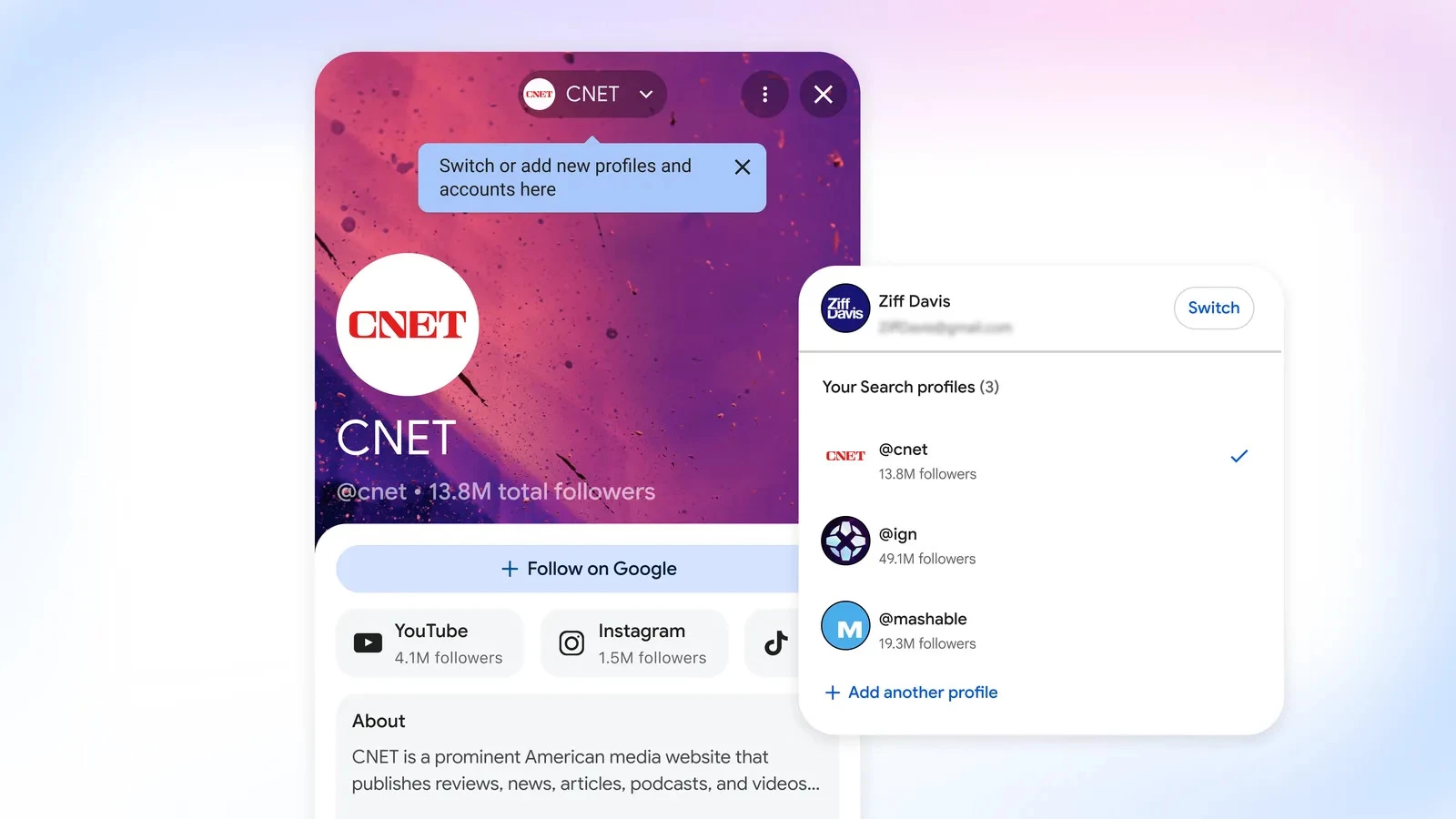
The Google Search profile's following count has just dropped to 10,000, according to a September 16 posting on the company's blog.
The count is per account, so 10,000 followers on any one of YouTube, Instagram, X, or TikTok qualifies.
Search profiles remain available only in the U.S.
This is the third threshold change since launch.
Back in June, when the feature debuted, the threshold was 100,000 followers on three platforms and 300,000 on TikTok.
Google lowered the bar to 35,000 across all four platforms in August.
Now, in September, the threshold is 90% lower than the original level for the first three platforms and 97% lower for TikTok.
Still, Google's help documentation states that a Search profile doesn't directly affect rankings.
The real value is in Discover. Follow someone through their profile, and their content is more likely to show up there again.
The update also brought multi-account management. Publishers with several sub-brands can now manage every profile from a single login.
If the pattern holds, and Google keeps lowering the barriers to this feature, a brand with 8,000 followers today has a real shot at qualifying before the quarter ends.
OpenAI Lets Ads Start a Real Conversation
On the same day Google opened Search profiles, OpenAI introduced Sponsored Agents.
A user can click an ad in ChatGPT, then talk directly with that business's AI agent, which is clearly labeled and separate from the original chat.
The feature is being tested now with select US advertisers.
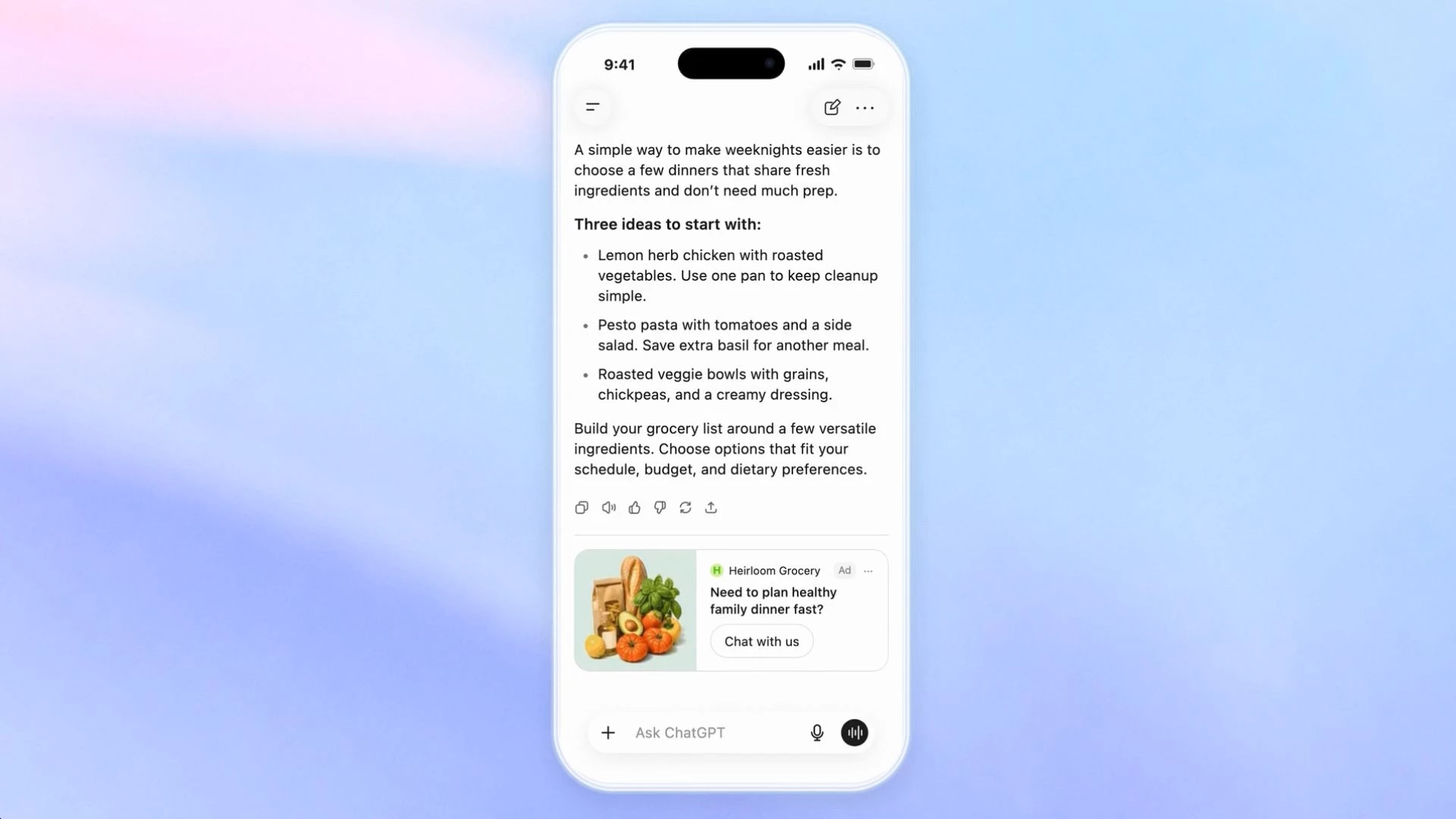
The update also puts AI into ad production itself.
Advertisers can create and analyze campaigns with natural-language prompts inside ChatGPT, while separate AI creative tools sit inside Ads Manager.
OpenAI will also suggest ad copy and imagery based on a landing page.
HubSpot and Shopify are the first CRM and eCommerce integrations, letting businesses manage ChatGPT ad campaigns from tools they already run.
The Shopify app is U.S.-only until September 23, when it opens to other ChatGPT Ads markets.
A Sponsored Agent conversation runs on infrastructure only OpenAI can see into.
A brand writes the script, and the AI lab owns every word of how that script actually plays out.
Mueller Admits AI Search Reporting Doesn't Work Yet
Google's Search Console AI performance report can't accurately show where a link ranked inside an AI Overview.
John Mueller confirmed this on Reddit, agreeing with a user's detailed critique.
The report assigns every link the same position, the one AI Overview itself occupies wherever it appears on the page.
Exposure has the opposite problem. Rendering alone counts as an impression, whether or not a user scrolls down to see it.
Links behind a "Show More" button work in reverse.
They sat right there the whole time, but they don't count until someone actually clicks to reveal them.
Mueller called position tracking hard to make useful here.
Google records the AI Overview as a single block, the same way it handles other search features.
It doesn't have a better method yet, Mueller added, and is open to suggestions from the SEO community.
Position is only half the problem, and the same Redditor pushed back with a sharper ask.
A query that triggers the feature without citing a site looks identical, in the report, to a query that never triggered it in the first place.
These are two different problems with the same blank row, and there's currently no way to tell them apart.
SEO Industry Insights
Search rankings have been swinging for two straight weeks with no confirmed cause.
Sites that "fell off a cliff around 9/4" completely surged back on September 12, Glenn Gabe posted on X.
Drops and recoveries hit ultra-YMYL and sports-focused sites hardest. Google has not confirmed an update at any point in the cycle.
Welcome to Google Land. A quick update on the huge drops I reported yesterday. A number of the sites that fell off a cliff around 9/4 completely surged back yesterday. They dropped heavily in Search and some in Discover as well. The recovery is wild... See one below. And note,… https://t.co/CW3wJulcvYpic.twitter.com/Iutc6MwxHL
— Glenn Gabe (@glenngabe) September 13, 2026
That timeline itself is the strongest clue, according to one reply on the thread.
A recovery this fast, with no one changing anything, rules out a genuine reassessment of quality. These don't reverse in a week.
Anyone who rewrote content during that window will likely credit the rewrite for a recovery that was coming either way.
A separate spike in chatter and ranking-tool volatility hit on September 15, Barry Schwartz reported.
Two unconfirmed swings inside two weeks is enough reason to hold off on any conclusions about a specific traffic change until Google says otherwise.
On a different front, a chunk of June indexing data disappeared from Search Console's page indexing report this month. The gap alarmed site owners who feared new deindexing.
@johnmu.com Seeing this across all my GSC props. The data was there yesterday? 🤷♂️ @glenngabe.bsky.social @rustybrick.com
— dan-lauer22.bsky.social (@dan-lauer22.bsky.social) September 11, 2026 at 3:14 PM
[image or embed]
Mueller traced the gap to a June reporting delay.
The page indexing data from that period was never captured in the first place, he explained on Bluesky, and Google doesn't backfill missing indexing data after the fact.
Anyone troubleshooting a June traffic dip should stop checking this report for answers. The data isn't coming back, and it never will.
Three Checks Before Reporting Season
Three checks are worth making before reporting season gets busy, and each catches a different kind of mistake:
- Audit your follower counts first. Google's new eligibility bar is low enough for most mid-sized US publishers to clear.
- Treat AI Overview position as directional. A rising number still needs a downstream metric like referral traffic to confirm it means anything.
- Widen your diagnostic window. A gap in June's indexing data can make an old issue look brand new in September.
Google's reporting gaps keep surfacing through outside testing.
Anyone waiting for Google to flag the next one is waiting on the wrong party.
Last week's SEO roundup covered a different kind of Google disclosure gap, along with ChatGPT's Labrador index and the Zyppy ranking factors survey.
If a platform's own reporting can't tell you where you rank, what exactly are you optimizing toward?
These leading SEO agencies help brands separate a platform's new feature from its old, unfixed reporting gap.