
AI has become one of the fastest-adopted technologies the creative industry has ever seen.
Case in point, 86% of creators now use AI tools, per Adobe's 2026 Creators’ Toolkit Report. Of that figure, 87% say AI has helped accelerate the growth of their business or audience.
Adobe's 2026 Creators' Toolkit Report reveals 75% of digital content creators deem AI essential. However, traditional creatives like graphic designers and photographers feel overlooked, raising concerns about inclusivity in the creative industry.#Adobe#AI#CreativeIndustry… pic.twitter.com/gGLp26SLjp
— The Daily Tech Feed (@dailytechonx) June 16, 2026
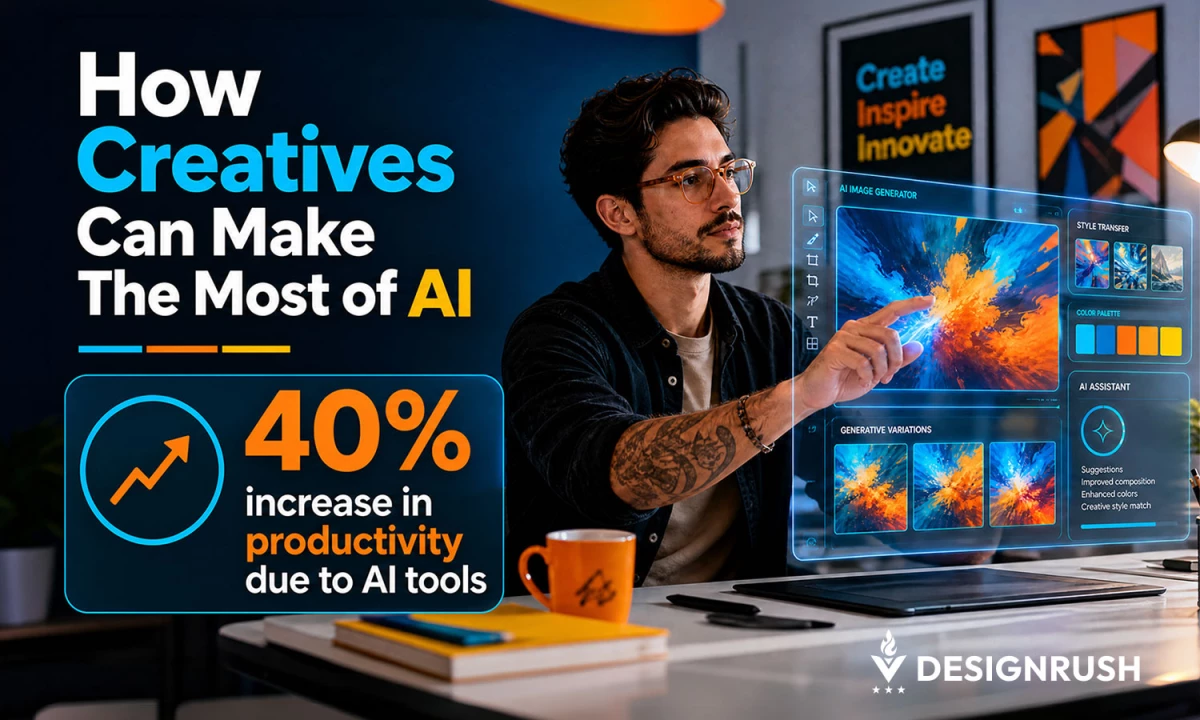
On average, creators also report a 40% increase in productivity after incorporating AI into their workflows.
Those numbers paint a compelling picture of AI's potential.
But Adobe's report also revealed a growing frustration among users, as 34% of creators say AI-generated content still produces inconsistent quality.
As AI becomes commonplace across creative teams, access to AI is no longer a competitive advantage.
Instead, it's what teams bring to the technology to ensure consistent quality.
For businesses creating visual content at scale, the strongest results depend on the content used to inspire that image, the resources available throughout the creative process, and whether the resulting asset is suitable for commercial use.
These are the factors that truly matter as AI-generated design becomes a standard part of creative production.
Understand What Makes Great AI-Generated Content
One of the main arguments for using AI in creative work is speed and efficiency since a designer can turn an idea into a visual concept and explore multiple treatments for a campaign within seconds.
Yet the ability to generate more isn't exactly the same as the ability to create better.
As more teams gain access to similar AI capabilities, the creative resources used, such as Shutterstock, will differentiate exceptional creative work from average output.
In particular, three factors stand out for businesses looking to get more value from AI-generated design:
1. Start with premium human-made content
When it comes to creating AI-generated content, the conversation typically revolves around creating the perfect prompt.
But in practice, the quality of the output depends just as much on what you start with as how you describe it.
This is where referencing premium, human-made content becomes a significant advantage.
Professional photography, illustrations, videos, and other creative assets contain deliberate decisions around composition, lighting, styling, subject matter, and visual storytelling.
And those qualities are what give AI-generated creative more structure and specificity to work from.
In practice, this often looks like:
- Anchoring a campaign around a real product image while using AI to extend or reimagine the environment
- Maintaining a consistent brand aesthetic while generating multiple visual variations for different channels
- Building out campaign concepts by iterating on professionally shot imagery rather than starting from scratch
- Using existing creative assets as style references to guide AI-generated outputs
This is where Shutterstock's AI image editor becomes especially relevant.
Shutterstock combines its AI capabilities with an extensive library of human-made, commercially licensable content, allowing teams to draw from professional creative assets while developing new AI-generated ideas in the same environment.
That integration makes AI less about replacing existing creative resources and more about expanding what teams can do with them.
2. Bring AI and creative content into one environment
The second differentiator is access to AI and creative content within an integrated environment.
Creative teams rarely need just one type of asset. A single campaign may require photography, video, illustrations, music, AI-generated images, and multiple variations of each.
When those resources are separated across different platforms, finding and developing the right creative can become unnecessarily fragmented.
An integrated environment gives teams greater flexibility in how they approach a project.
Shutterstock's latest update brings AI generation together with access to its extensive collection of images, videos, music, and other creative assets.
That combination gives teams more options without forcing them to treat AI-generated content and traditional creative content as separate approaches.
The true value here lies in creative choice. Teams can determine whether an idea is best served by an existing asset, a newly generated visual, or a combination of both.
It's this flexibility that helps designers explore more possibilities while keeping the creative direction grounded in professional content.
3. Develop creative that is ready for business use
Generating an image that looks good isn't the same as producing an asset that a business can use with confidence.
After all, creative teams have to consider licensing, usage rights, brand suitability, quality, and the context in which an asset will appear.
Those considerations become even more important when AI-generated content is being incorporated into advertising, marketing campaigns, websites, social media, and other customer-facing materials.
Shutterstock's library provides access to commercially licensable images, videos, music, and other creative assets, while its AI capabilities allow teams to generate and develop new visual content.
That combination helps connect creative experimentation with practical business requirements.
Instead of treating AI-generated imagery as an isolated output, teams can incorporate it into a broader approach to producing commercial creative.
This is particularly valuable for businesses and agencies that need to produce large volumes of visual content while maintaining standards for quality and usage.
Use AI to Expand Creative Possibilities
The arrival of AI sparked an almost immediate debate about whether machines would eventually replace creative professionals.
But the reality is that AI and human ingenuity need to work hand-in-hand if teams want to produce quality content efficiently and expand creative possibilities.
Overall, Adobe's research showed that AI has already solved part of the creative industry's productivity problem.
But as major creative teams gain access to the exact same tools, it's the human side of the equation that will give brands and agencies the edge over their competitors.
Want to explore AI-assisted creativity for yourself? Try Shutterstock’s AI image generator or AI video generator for your next project.