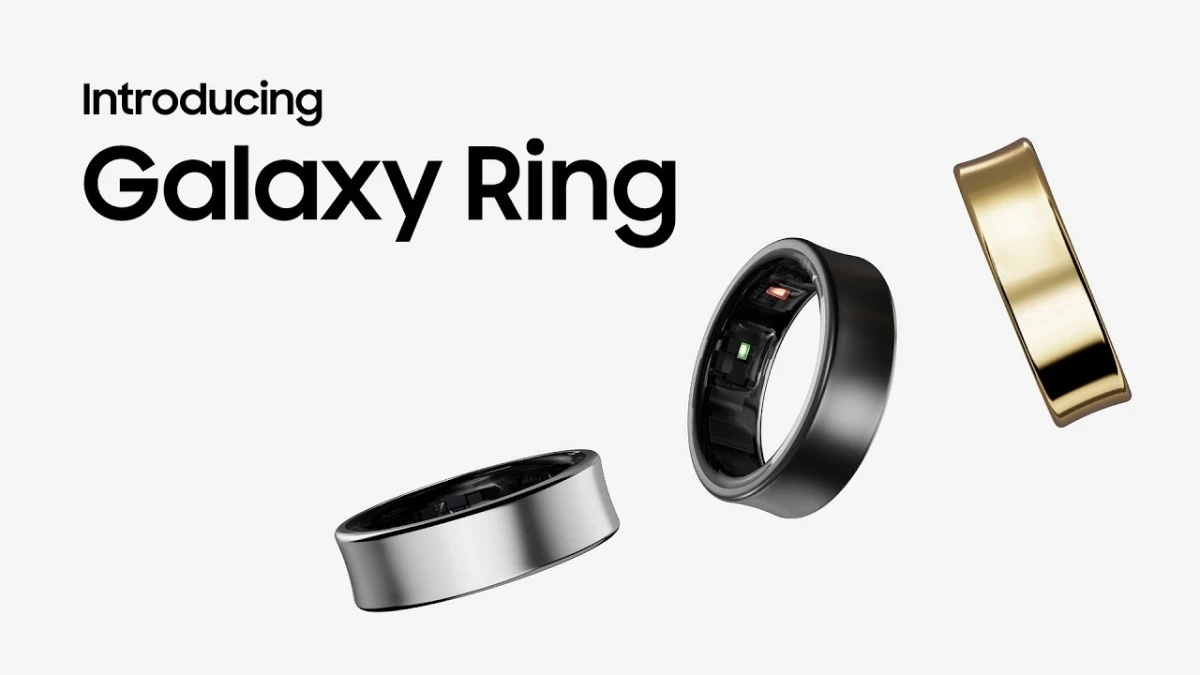

Korean tech giant Samsung made waves last week after officially announcing the release of its Galaxy Ring at its Unpacked event.
Coming out on July 24, the smart ring will be available in three colors (black, gold, and silver) with a competitive $399.99 price tag.
Featuring a titanium frame and water-resistant construction, the AI-powered ring is designed to be worn as part of an ecosystem, complementing a smartwatch and a smartphone.
Francisco Jeronimo, Samsung VP for Devices Research for Europe, the Middle East, and Africa at market intelligence firm IDC, said in a statement to CNBC that “the more devices a user has from the same brand, the more comprehensive the data collected, enhancing the effectiveness of AI digital assistants”.
He continued by saying that users would pick one brand over another due to the personalized experience offered by investing in a full ecosystem.
The ring comes with a number of sensors, including ones for optical heart rate and skin temperature, as well as an accelerometer.
The combination of sensors is designed to offer accurate readings, as the ring monitors the wearer’s health 24 hours a day.
However, the Samsung Galaxy Ring doesn’t feature any LED lights or vibration motors that act as alarms or warning mechanisms like other smart rings.
Weighing between 2.3 to 3 grams depending on the size, the ring comes in nine sizes (from 5 to 13).
Customers can even order a special Sizing Kit to find the right size before purchasing their ring.
The Samsung Galaxy Ring is also one of the first smart rings to come with its own charging case that holds 1.5 times the charge.
It has a six-to-seven-day battery life, taking only 80 minutes to get a full charge.
Put a Ring on It
Industry observers have labeled the ring as a niche product, projecting middling sales despite its high quality.
“For Samsung, this category may not become a major revenue stream, but it helps expand the wearables portfolio and opens the door to new services in the future, should they decide to,” Jeronimo stated.
Many praised its lack of a paid subscription, drawing comparisons to the Oura smart ring.
Samsung Galaxy Ring costs $399 and doesn’t come with any subscriptions. Zing! Wonder who Samsung was throwing shade at 😉 #unpackedpic.twitter.com/AxjiA13cJS
— Ray Wong (@raywongy) July 10, 2024
Samsung sued Oura in a preemptive strike last month, moving to block the Finnish health tech company from claiming patent infringement for features common to all smart rings, as the latter has done for several brands in recent years.
Despite the many obstacles to success, Samsung’s commitment to producing the Galaxy Ring confirms its desire to expand its audience reach and create an ecosystem of products that consumers can trust.
The device’s current target audience is the health and fitness crowd, to which the Galaxy Ring offers a comfortable and less intrusive alternative to the smartwatch.
Editing by Katherine 'Makkie' Maclang