
B2B marketing is moving beyond identifying companies and toward understanding the people and relationships that determine who actually buys.
That's why Salesforce is now giving AI a larger role in figuring out who those people are.
The company's Summer ’26 updates for Marketing Cloud Next introduced new AI capabilities designed to help marketers identify buying groups, create and execute campaigns, and unify marketing intelligence.
Hot agent summer 😎
— Salesforce (@salesforce) June 18, 2026
Instead of simply automating individual tasks, these updates are now designed to identify audiences, understand customer context, personalize engagement, and act on those insights.
That creates a less glamorous but more consequential question:
Does the system actually understand the people and organizations it's being asked to market to?
After all, knowing that a contact exists is not enough for a B2B marketing system trying to identify a buying group.
It needs to understand where that person works, what the organization does, how the organization is structured, what role the contact plays, and how that role relates to the purchasing decision.
According to Peter Long, CEO of MCH Strategic Data, this makes organizational and contact data increasingly important as AI takes on more responsibility for marketing decisions.
"AI can move faster than any marketing team, but it can only be as accurate as the customer data behind it," he says.
"Organizations need a reliable foundation of accurate account, organizational, and contact data so marketing and sales teams are working from the same understanding of who their audiences are."
Why Buying Groups Depend on Better Data
AI can help marketers identify the people involved in a B2B purchase, but that capability depends on having enough information to understand organizational structure and roles.
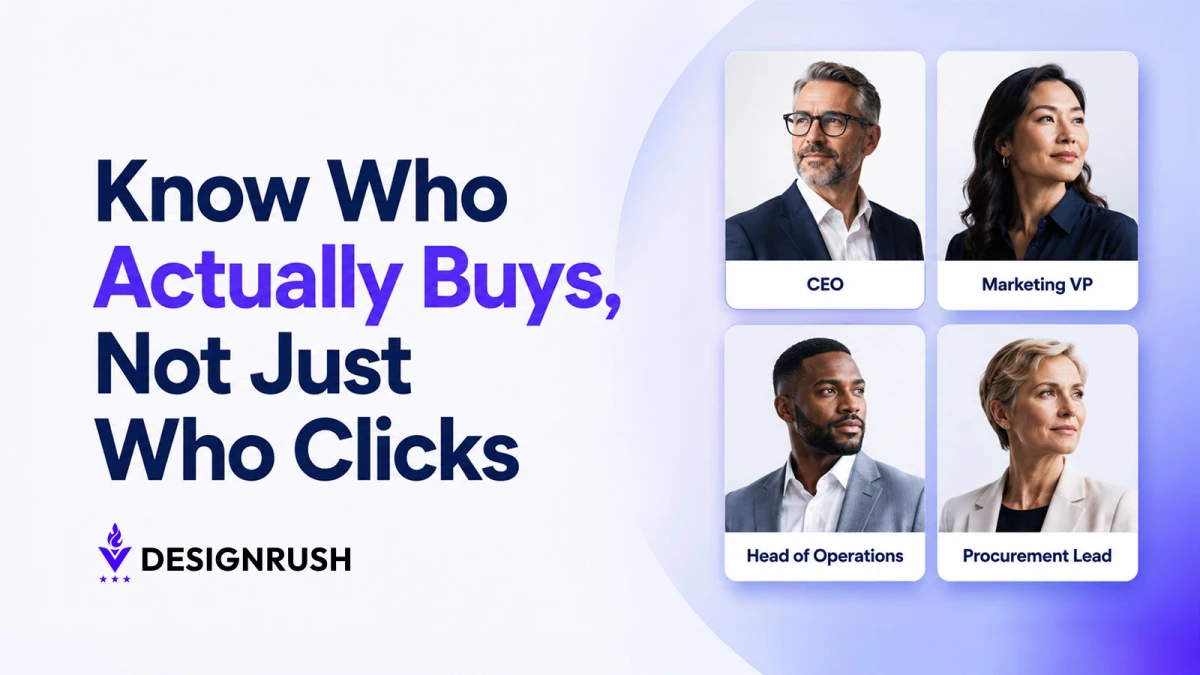
This is particularly important since B2B purchasing rarely comes down to a single contact.
A software purchase, for example, may involve a department leader who defines the need, an end user who evaluates the product, and an executive who ultimately approves the investment.
All these people have varying concerns and priorities. Given this, an AI system trying to identify that buying group needs more than a list of names.
It needs organizational context.
At a minimum, that means having access to:
- Accurate account information that establishes what company a contact belongs to.
- Complete contact records that provide enough information to identify relevant people.
- Reliable job functions and titles that help distinguish responsibilities within an organization.
- Organizational relationships that show how companies, divisions, subsidiaries, and locations connect.
- Visibility into decision-making roles to identify who influences, evaluates, uses, and approves a purchase.
When any of these are missing, problems can move quickly from the database into the campaign.
And because AI is designed to operate at scale, those mistakes can be repeated across an entire audience before anyone notices.
This is why Long argues that marketers need to examine whether their data can actually answer the questions their AI strategy requires.
"Before asking AI to identify a buying group, marketers need to ask whether their data can actually show them who belongs in that group," he says.
"If the organizational relationships, roles, or contact records are incomplete, the system is being asked to make an intelligent decision with an incomplete picture."
Turn Organizational Data Into Buying-Group Intelligence
A buying group is not just a collection of contacts attached to the same account.
It's a set of people who may influence the purchase in very different ways, understanding those relationships gives CRM, ABM, and AI platforms the context they need to interpret other signals.
This is where organizational and contact data can play a foundational role.
Organizational and contact data can give marketing systems a more accurate picture of who is who, where they fit within an organization, and how accounts and contacts are connected.
That's why experts at MCH Strategic Data recommend teams to:
1. Identify the buying group within each account
Rather than treating every contact associated with an account as an equally valuable prospect, teams can use job function, seniority, department, and organizational relationships to identify the people most likely to influence the opportunity.
That information can then be used to:
- Define the relevant buying-group roles for each target account.
- Identify gaps where important functions or stakeholders are missing from the account.
- Group contacts according to their likely involvement in the purchasing process.
- Distinguish between broad account coverage and genuine buying-group coverage.
2. Give behavioral signals the necessary organizational context
Once relevant contacts and roles have been established, marketing platforms can combine that information with the engagement and behavioral data already generated by the business.
For example, a company may know that several contacts at the same account have interacted with its website, campaigns, or other marketing activities.
On its own, that activity provides only part of the picture. But when combined with the newly established organizational context, that activity offers better insight into what's really going on.
That allows CRM, ABM, and AI platforms to:
- Connect engagement from individual contacts to their organizational roles.
- Compare activity across different functions within the same account.
- Understand whether engagement is coming from relevant stakeholders or unrelated contacts.
- Combine behavioral signals with account and organizational context when evaluating an opportunity.
In this model, MCH Strategic Data's role is to help ensure that the people and organizational relationships behind those signals are accurately represented.
3. Use buying-group structure to strengthen account prioritization
The same distinction applies when marketers prioritize accounts.
A single highly engaged contact does not necessarily indicate that an entire organization represents a strong opportunity.
As such, marketing teams may need to understand whether that contact belongs to a relevant function, whether other buying-group roles are represented, and how activity across the account fits together.
MCH Strategic Data's organizational and contact data can provide that structural layer.
Marketing and sales platforms can then combine it with their own engagement, intent, and behavioral signals to evaluate account activity more effectively.
"When marketers connect organizational structure with contact roles and engagement, the system can move beyond identifying active contacts and start recognizing where a real buying opportunity is developing," Long adds.
Turn Customer Intelligence Into a Competitive Advantage
AI is moving closer to the decisions that once required marketers to interpret account activity, identify stakeholders, and determine where an opportunity is developing.
That shift changes the value of customer data.
As such, the companies that give AI a clear understanding of their markets, accounts, and buying groups will be better positioned to turn automation into actual revenue.