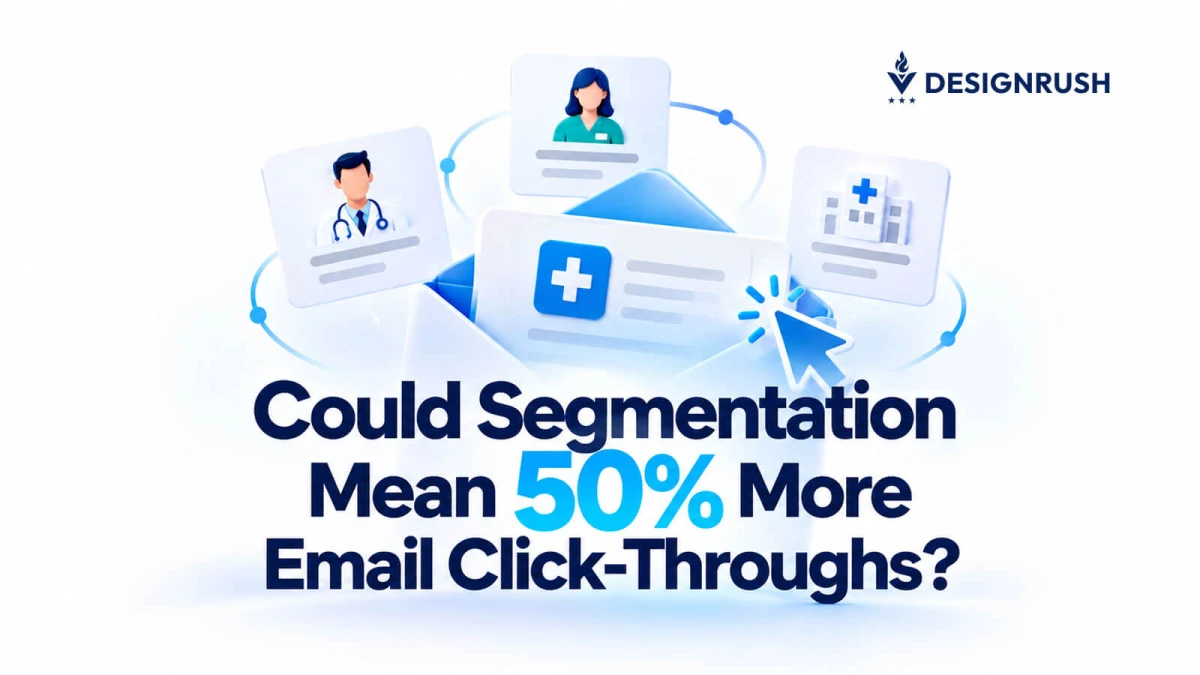

Segmented email campaigns generated 30% higher open rates and 50% higher click-through rates than unsegmented sends, according to HubSpot’s 2026 State of Marketing data.
A hospital cardiologist and a family physician in private practice may both appear as “physicians” in a contact list.
However, their clinical needs and purchasing responsibilities can differ significantly.
One may need evidence for a hospital review committee; the other may be wondering how the product fits into a busy practice.
Give both the same email, and the marketer leaves them to find their own reasons to care.
How should healthcare marketers segment by specialty, role, and setting?
MCH Healthcare offers healthcare contact data through ListBuilder, where marketers can run counts and place orders 24/7.
Teams can also use MCH's email deployment service, or manage sends themselves.
This gives marketers the option of sourcing contacts and handling delivery through one provider instead of coordinating separate data and sending vendors.
MCH Strategic Data CEO Peter Long recommends starting with the product and the decision it asks a recipient to make.
"A cardiologist may use a device directly, advise colleagues on its clinical value or work within a health system where a committee reviews new equipment," he says.
"A procurement director has a different brief, even when the purchase concerns the same product."
Healthcare marketers can segment contacts by three criteria:
- Medical specialty: The recipient’s clinical area and its relevance to the product.
- Job role: The recipient’s responsibilities, from patient care to procurement.
- Practice setting: The organization’s structure, including whether purchasing decisions are made by an individual practice or a larger health system.
Together, these fields can identify a more specific audience, such as cardiologists working in health systems.
"A segment should change the information a recipient sees, not merely the greeting," Long says.
"The message needs to reflect the question that person is responsible for answering."
What should each healthcare email segment receive?
Long recommends matching email content to each recipient's responsibilities.
Each email should have a reason to arrive; another slot on the marketing calendar isn't one.
"A second email should have a purpose beyond being the next send on the calendar," he notes.
"It can answer an evaluation question raised by the first message or give another stakeholder the information needed to consider the product."
In fact, 20% of market-leading B2B teams used one-to-one personalization, compared with 5% of lagging teams, according to McKinsey’s 2026 Global B2B Pulse Survey.
The survey covered multiple industries, so the figures don't necessarily establish how healthcare email segmentation affects engagement.
However, they do show differences in personalization practices across B2B teams, supporting the case for adapting healthcare emails to clinical and purchasing roles.
How contact data and deployment affect healthcare email campaigns
MCH Strategic Data verifies accept-all domains in its healthcare buying organization data to help marketers assess contact quality.
Because these domains accept incoming emails without confirming individual mailboxes, successful delivery also depends on factors such as hospital security filters and sender reputation.
Marketers can manage their own campaigns or use MCH Strategic Data’s email deployment service.
Keeping data and sending with one provider may reduce the need to coordinate separate vendors, although marketers should still assess the data, service and process against their own requirements.
"When the list, message and sending process are treated as separate jobs, problems can hide between them," Long adds.
"Teams need to know how contacts were selected and how a campaign will be delivered before they judge the response."
After each campaign, review performance by segment, including:
- Open and click-through rates to see which emails attract attention and prompt action.
- Bounce and unsubscribe rates to identify potential problems with contact data or messaging.
- Replies and requests for information to gauge recipient interest.
The next campaign should reflect what those results reveal about each audience, with messages that speak to their specific clinical or purchasing needs.
After all, if the email could go to any physician on the list, what makes it worth sending to this one?