
Netflix is asking advertisers to pay for audience attention while changing how it defines and reports engagement.
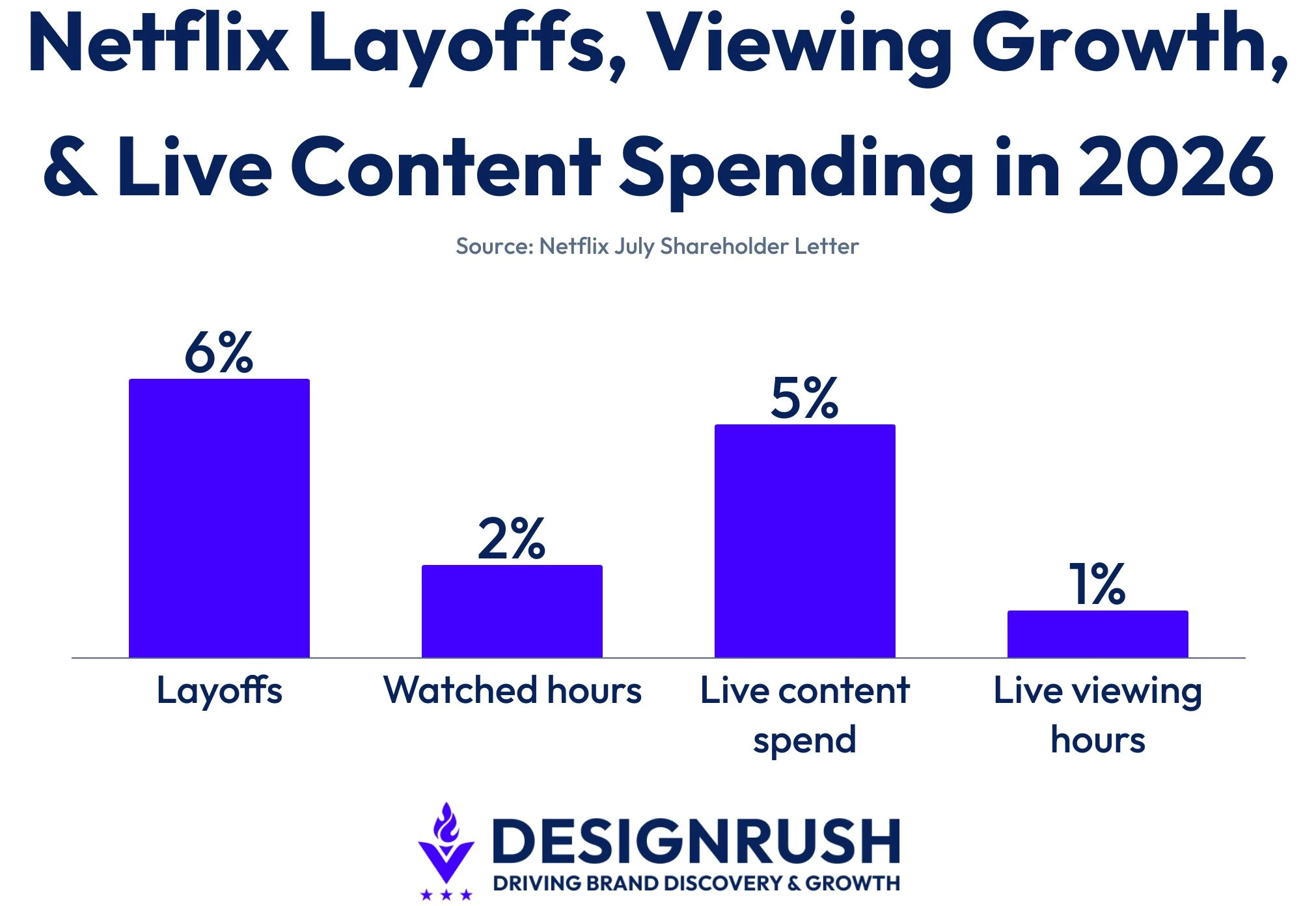
It announced plans to cut roughly 1,000 jobs, or 6% of its workforce, on October 14.
The cuts will primarily affect product, technology, legal, and human resources teams.
The cuts put Netflix's advertising pitch under scrutiny.
In August, the company said it had nearly doubled its ad commitments at its 2026 U.S. upfront, telling buyers they could reach its "most engaged audiences."
The streamer pitches this reach to the public, too, on "The Netflix Effect."
The site credits its titles with more than $325 billion in gross value added to the global economy over the last decade.
Netflix's shareholder reporting offers a more complicated picture of engagement.
In July, the company broadened its definition to include the quality and variety of its programming.
It also announced plans to publish its What We Watched report annually from 2027.
"Our business is strong and growing, and we remain on track to deliver our full year forecast," co-CEOs Ted Sarandos and Greg Peters wrote in their memo to employees, according to CNBC.
The cuts coincide with a leadership change in Netflix's content operation.
Former Fox and Disney executive Peter Rice will replace Bela Bajaria as chief content officer on October 26.
He inherits live programming with advertising commitments already in place, including the 2027 FIFA Women's World Cup.
Netflix's ad business is expanding, but media buyers still need reliable evidence of the audience attention they are purchasing.
Live Programming Takes 5% of Spend for 1% of Viewing
In its July shareholder letter, Netflix said "not all hours are equal" and called time spent only one part of engagement.
Netflix said that moving What We Watched off the earnings calendar keeps the focus on revenue and operating profit.
It will continue reporting title-level and total viewing hours, along with weekly Top 10 lists across more than 90 countries.
The annual schedule will still leave advertisers and outside analysts with fewer regular snapshots of viewing behavior.
Analysts have questioned the timing of the reporting switch, yet Netflix's own numbers still show viewing hours growing.
Members watched more than 97 billion hours in the first half of 2026, up 2% year over year, exceeding the 1.5% growth it reported for 2025.
Netflix is also asking advertisers to evaluate its audience through several measures.
Viewing time can show how much content people watch, while quality and variety are harder to assess through a single public metric.
Netflix also has commercial reasons to expand its definition, with its ad business on track to reach $3 billion in 2026.
Live events draw some of the platform's strongest ad demand, yet they barely register in viewing hours.
Netflix expects live programming to take just over 5% of its 2026 content spending, with only about 1% of viewing hours.
Live events also drove six of Netflix's 10 biggest sign-up days in five years, even though Netflix only started streaming them in 2023.
These figures suggest that viewing hours alone can't capture every commercial benefit of a program.
But advertisers still need evidence connecting audience attention to real campaign outcomes.
Netflix will need to give buyers other reliable ways to assess performance as its advertising business expands.
Peter Rice Inherits a Slate With Ad Commitments
Rice's appointment adds a programming dimension to Netflix's advertising challenge.
At Fox Networks Group, he oversaw sports rights deals involving FIFA, WWE, the NFL, MLB, and the UFC.
He later oversaw Disney's coverage of major sporting events, according to CNBC.
The company sold out of game sponsorships for the 2027 FIFA Women's World Cup.
It also nearly sold out its available in-game inventory, according to its August upfront announcement.
Netflix also expanded its live programming through NFL games, WWE, and MLB events.
These properties give advertisers access to scheduled events that can attract audiences around a shared broadcast.
Rice will oversee programming decisions tied to audience acquisition, retention, and advertisingcommitments.
His first test is deciding which live rights earn back their cost through new sign-ups and sports sponsorship sales.
Three Priorities for Streaming Advertisers
Netflix's engagement disclosures and live programming figures point to three priorities for companies selling advertising against streaming content.
- Viewing time needs context. Streaming platforms should pair viewing hours with audience retention and campaign outcomes to show advertisers what their spending delivers.
- Live rights have several commercial uses. Content teams should assess audience acquisition, sponsorship demand, and viewing behavior to justify the cost of major events.
- Reporting frequency affects buyer confidence. Streaming services should maintain consistent performance reports to help advertisers compare results and plan future spending.
Platforms that publish audience data less often will need to hand buyers more campaign-level proof to protect their advertising revenue.
Our Take: Can Netflix Prove Its Audience Is Worth More?
Netflix's most persuasive engagement numbers come from live sports, the smallest slice of its viewing.
We'd give Netflix a yes for live events, while its scripted slate still has to prove the audience is worth more.
Netflix's Lions-Vikings game averaged 27.5 million U.S. viewers last Christmas by Nielsen's count, a number buyers already know how to price.
But quality and variety come with no third-party score, so buyers have to take Netflix's word for them.
Moving What We Watched to an annual report also gives ad buyers fewer chances to verify its claims.
Rice comes from a broadcast business where sports ad deals run on Nielsen ratings.
Netflix should sell the next upfront on the programming it can measure with the ratings that TV buyers already trust.
Netflix reports its third-quarter earnings on October 20.
These results should provide another look at advertising growth and the company's financial outlook.
Looking to make streaming campaigns more accountable?
Explore these top advertising agencies that specialize in media planning, connected TV, and digital advertising strategy.