
Ring's Super Bowl Ad Backlash: Key Findings
- The commercial sparked privacy concerns, with critics arguing that the AI-powered feature normalizes mass surveillance.
- Privacy experts and politicians across party lines questioned whether pet-finding AI could be repurposed for human tracking.
- Ring claims the feature is "dog-specific" and separate from facial recognition capabilities, though the statement's language left future applications ambiguous.
Ring's Super Bowl LX debut backfired spectacularly, with the home security company's heartwarming lost-dog narrative immediately triggering surveillance fears.
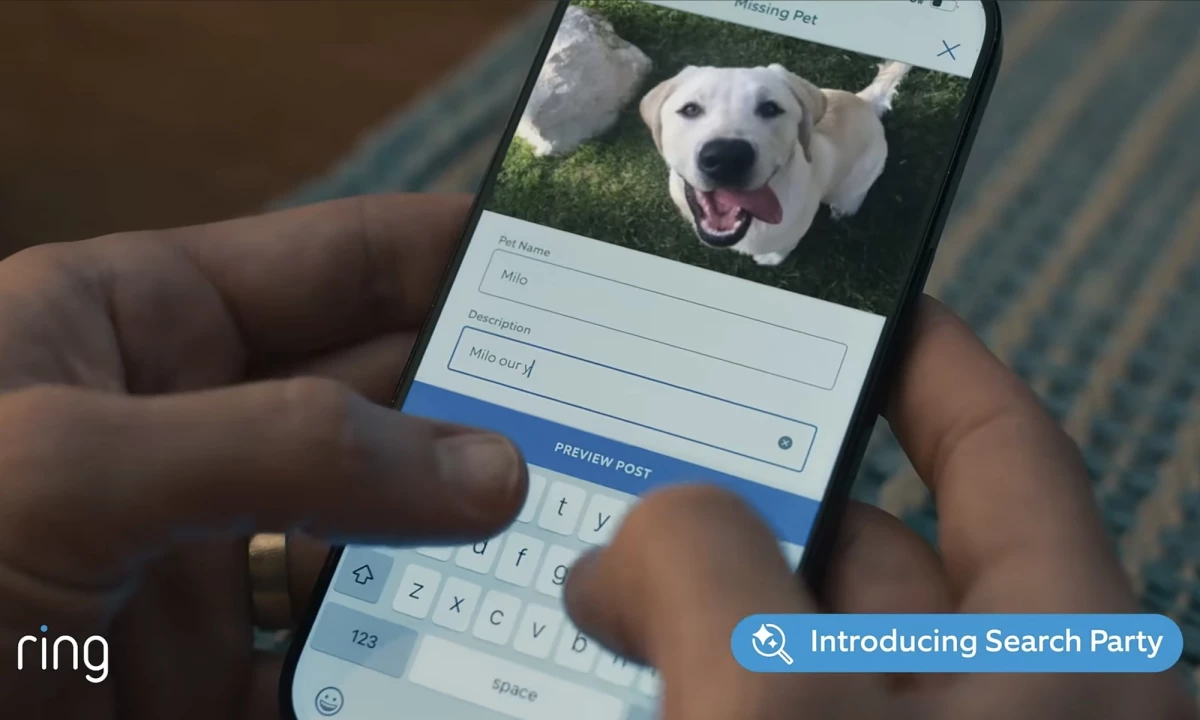
The 30-second ad introduced Search Party for Dogs, an AI feature that scans neighborhood Ring cameras to locate missing pets.
Ring framed the technology as a "community service" to help reunite families with lost dogs.
However, viewers quickly identified darker implications about its networked surveillance capabilities.
Social media reaction was swift, with both liberal and conservative commentators expressing alarm about what the tech represents at scale.
Experts and Politicians Challenge 'Cuddly' Framing
Reacting to the company’s Super Bowl ad, privacy expert Chris Gilliard was sharply critical of Ring’s surveillance footprint:
"[It's] a clumsy attempt by Ring to put a cuddly face on a rather dystopian reality: widespread networked surveillance by a company that has cozy relationships with law enforcement and other equally invasive surveillance companies," he told 404 Media.
Massachusetts Sen. Ed Markey, who has also previously criticized the company's law enforcement ties, also expressed his distaste for the platform.
Ring’s Super Bowl ad exposed a scary truth: the technology in its doorbell cameras could be used to hunt down a lost pet...or a person. Americans oppose this creepy surveillance state. Amazon must discontinue its dystopian monitoring features. pic.twitter.com/jJawEvV8Pa
— Ed Markey (@SenMarkey) February 12, 2026
The backlash centered on Ring's recent rollout of its facial recognition feature, Familiar Faces.
Making the leap from pet-finding to human tracking now feels uncomfortably short.
GOP strategist Brady Smith also weighed in on X, describing the ad as "awfully dystopian."
The rare, unified response across political lines demonstrates how unsettling the technology feels, regardless of ideological perspective.
Ring's Partnership Network Amplifies Privacy Concerns
Ring's collaboration with Flock Safety, a surveillance technology company known for automated license plate readers used by police departments, intensified people's privacy fears.
The partnership aimed to connect Ring's residential camera network with systems that have reportedly allowed federal agencies to access nationwide camera data.
Social media users immediately sounded off, emphasizing that the company's market penetration across American homes expands the scope of potential surveillance networks.
Ring paid somewhere between $8 and $10 million for a 30-second Super Bowl spot to tell 120 million viewers that their cameras now scan neighborhoods using AI.
— Aakash Gupta (@aakashgupta) February 10, 2026
The math is wild. Ring has roughly 20 million devices in American homes. Search Party is enabled by default. The opt-out… https://t.co/757ABPuYVJ
The criticism revealed how quickly viewers connected pet-finding AI to potential human surveillance applications, especially given Ring's existing law enforcement relationships.
The company also canceled its Flock Safety partnership days after the reception, claiming the integration "required more resources than anticipated."
According to AI software development experts, the situation exemplifies the gap between rapid AI innovation and the general public's expectations around transparency and data protection:
“When AI systems lack clear privacy boundaries, users tend to assume the worst," said Goran Skorput, CTO AI, Big Data, Analytics at Kanda Software.
"Given how many people already approach AI with skepticism, safety and privacy controls are not optional features. They are foundational to acceptance and adoption, regardless of industry."
"Developers need to prove that AI is designed to protect users first, otherwise even well-intentioned applications risk being perceived as surveillance tools.”
Ring's Official Statement Leaves Questions Open
Ring spokesperson Emma Daniels told The Verge that Search Party is designed only to match dog images and is "not capable of processing human biometrics."
She maintained that Familiar Faces' facial recognition operates as a completely separate feature.
"These are not tools for mass surveillance. We build the right guardrails, and we're super transparent about them," Daniels added.
However, when pressed on whether Ring cameras could eventually search for people, Daniels chose careful language.
She claimed the features "are not capable of that today" and said she had "no knowledge or indication that [Ring was] building features like that at this point."
The response left open the possibility of future human-tracking applications, reinforcing concerns about mission creep.
This backlash demonstrates how brands can face severe risks when consumer benefits clash with privacy implications, and it's important to do the following first:
- Pressure-test sensitive features early. High-profile debuts magnify reactions that smaller rollouts might surface first.
- Use precise, definitive language. Ambiguity around limits can escalate concerns more than the feature itself.
- Account for ecosystem baggage. New tools will be judged against existing partnerships and history.
Brands introducing AI-powered features during high-visibility moments need clear boundaries on data usage and application scope.
Our Take: Can Emotional Appeals Override Surveillance Concerns?
As a pet lover, I would have to admit that I found the feature appealing, breathing a sigh of relief that more dogs could be reunited with their owners faster.
I think Ring hoped that lost-dog stories would override privacy fears (like it did for me), but many viewers saw a very different implication.
At a moment when privacy anxiety sits at an all-time high, Ring showcased technology that may have just confirmed people's worst fears about connected home devices.
And airing the spot during the Super Bowl put this concern in front of 125 million people.
Brands deploying AI features walk a fine line between utility and intrusion, and Ring's Big Game moment shows what happens when this balance tips.
In other news, we rounded up Super Bowl LX's best campaigns that combine entertainment with strategic messaging.
Brands navigating AI technology launches need agencies that understand privacy sensitivity and consumer trust dynamics. Explore the top AI companies in our directory.