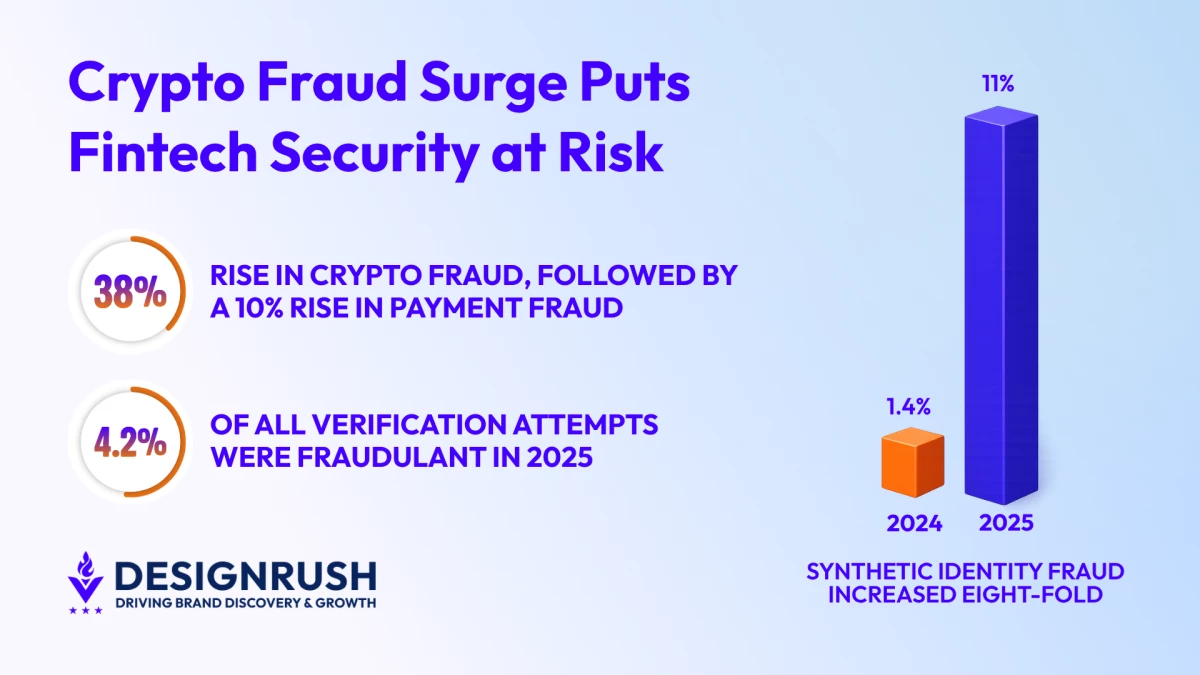

Attempted crypto fraud surged 38% in 2025, document fraud rose 21%, and payment fraud climbed nearly 10%, according to Fintech News.
As more financial services move online, attackers are responding with AI-generated identities and manipulated documents designed to slip past verification systems.
For fintech companies, security is no longer an afterthought. It's central to how products are built and experienced.
This approach shapes the work done by Shakuro, a leading multidisciplinary software design and development agency with experience in developing numerous fintech apps.
The company’s Chief Technology Officer, Alex Chaly, explains that many fintech teams still underestimate how deeply prevention needs to be built into the foundation of all platforms.
"The fraud numbers we're seeing point directly to weaknesses in product architecture and verification systems,” Chaly says.
“If security isn't built into the architecture from the start, you're building your foundation on sand.”
WPBF 25 News paints a picture of how dire the fraud situation is, with a recent cryptocurrency scam leading to victims losing over $333 million last year:
Fraud Is Rising Across Financial Services
The same report found a net fraud rate of more than 5.5% in financial services, roughly 30% above the global average.
Crypto and lending platforms recorded the highest rates of identity fraud, while trading and investment platforms saw the most authorized fraud.
Likewise, traditional banks also performed poorly across both categories.
Overall, 4.18% of all verification attempts were fraudulent in 2025, meaning that roughly one in every 25 attempts involved someone impersonating another person.
That follows two straight years of 20% annual increases, with little sign of slowing.
"Platforms that haven't invested in strong verification systems are already feeling the pressure,” Chaly adds.
“Fraud prevention can no longer sit outside the core product experience because that's where attackers are focusing their efforts.”
FOX59 News delves into five of the top AI scams impacting consumers today:
AI Fraud Is Getting Smarter
The bigger challenge is the technology driving it.
Fintech News adds that in 2025, digitally presented media was 300% more likely to be AI-generated or manipulated compared to the previous year.
Moreover, deepfake-driven fraud is now appearing inside verification systems at scale.
AI-assisted document forgery made up 2% of all fake documents detected in 2025, up from nearly zero the year before.
Fraud groups are now deploying AI agents that create synthetic identities and respond to verification systems in real time, testing security checks, adapting after failed attempts, and returning with more convincing tactics.
Synthetic identity fraud, in particular, is rising sharply.
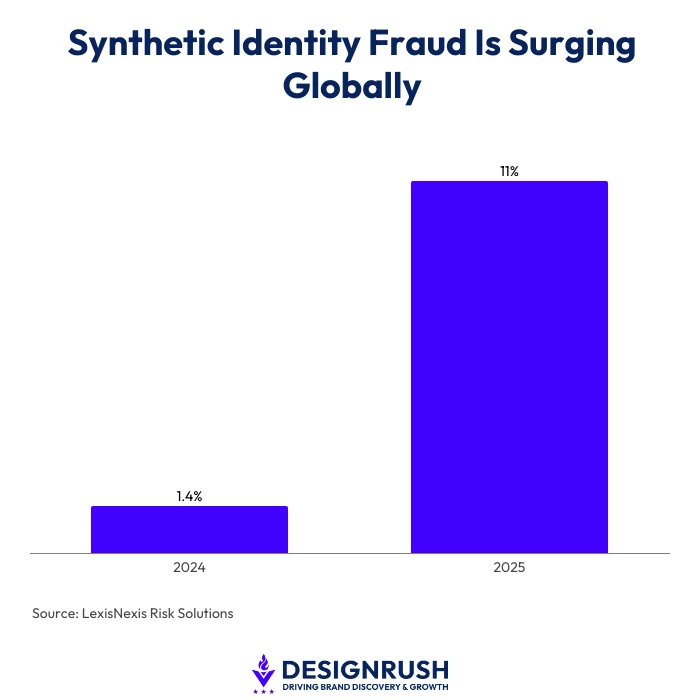
LexisNexis®'s Cybercrime Report found that synthetic identities accounted for roughly 1.4% of fraud cases in 2024 before surging to more than 11% in 2025, marking an eight-fold increase in one year.
"What makes AI-driven fraud so dangerous is how quickly it adapts, with systems learning from failed attempts and returning stronger,” Chaly says. “Static security models won't keep pace for long.”
MONEY FM explores how synthetic identities are becoming the new face of banking fraud:
Fraud Starts Long Before Login
Fraud no longer begins inside financial platforms.
Attackers are using gaming communities, dating apps, and social media platforms to build trust and gather personal data before going after the victim’s financial accounts.
By the time suspicious activity appears, the groundwork may already have been laid elsewhere online.
"The attack surface for fintech fraud no longer starts at the login screen. In many cases, identity manipulation begins weeks earlier across entirely different platforms and communities," Chaly says.
Eva Velasquez, Identity Theft Resource Center President & CEO, breaks down some of the many tactics used by fraudsters to obtain information:
Fintech Security Starts at the Foundation
Fintech teams are now rethinking how products are built. Identity verification systems now need to catch AI-generated document fraud alongside more traditional threats.
Static fraud models aren't keeping up, regulators are watching more closely, and companies are increasingly looking for development partners who actually understand fintech.
"We've witnessed many companies treat security as a phase-two problem, and by the time they revisited it, they were already dealing with the consequences,” Chaly says.
“Essentially, the products that build long-term trust are the ones where security shaped decisions from the beginning.”
For fintech executives, the fraud surge is hitting product decisions, operations, and reputation at the same time.
As fraud operations become more automated and identity scams harder to detect, the pressure is on to build security into customer experience, compliance, and infrastructure from the ground up.
As such, Chaly notes that fintech leaders must prioritize:
- Adaptive identity verification capable of detecting AI-generated identities and increasingly sophisticated document fraud.
- Real-time fraud detection systems that continuously learn and respond faster than traditional rule-based security models.
- Compliance-ready infrastructure designed to meet evolving identity verification and data protection regulations, particularly in Europe.
- Earning consumer trust through security, as users judge fintech platforms by how securely they protect personal and financial data.
"Security is becoming one of the strongest trust signals a fintech company can offer. Users want speed and convenience, but they also want confidence that their identity and financial data are protected," Chaly says.
FinTech LIVE’s roundtable discussion outlines how to combat fraud by using robust identity verification methods:
Security Is Separating Fintech Winners
The surge in crypto fraud reflects the growing pressure on fintech companies.
"The next generation of fintech leaders will be the companies that build security and trust directly into the user experience. That's not a technical aspiration anymore, it's a business requirement," Chaly says.
The platforms that treated security as infrastructure early are already pulling ahead.
For everyone else, catching up is becoming more expensive, more complex, and far harder to do under pressure.
The question for fintech leaders now is which side of that divide their platform is heading toward.