
Mergers and acquisitions can transform a company overnight on paper.
Two businesses become one, product portfolios expand, customer bases overlap, and leadership works toward a shared growth strategy.
The brand, however, may still tell the story of a company that no longer exists.
Unfortunately, this risk is becoming more common than most people think.
Global merger and acquisition activity reached $861.1 billion in the first quarter of 2026, a 9.7% increase over the same period in 2025, per S&P Global's Q1 2026 M&A report.
The market recorded its strongest start to a year since 2021, driven by large, transformational deals even as the total number of announced transactions declined.
Of course, a completed transaction doesn't automatically justify a new logo, a new name, or an entirely different brand identity.
Yet retaining the existing brand without reconsidering its positioning can create its own problems.
For example, customers may struggle to understand the combined company's capabilities and employees may continue communicating different priorities.
According to Doug Hughmanick, Founder and Head of Creative at ANML, the question is whether the brand reflects the business the company has become.
"For a brand to work after a merger, it has to reflect the reality of the combined business," he says.
"If the products, audience, and value proposition have changed, the brand needs to help customers understand what that means for them."
In this DesignRush interview, Hughmanick discusses how companies can determine when an M&A transaction warrants a brand change, which elements deserve protection, and how to build a unified identity.

Who Is Doug Hughmanick?
Doug is the Founder and Head of Creative at ANML, where he oversees all creative, blending design expertise with hands-on leadership to drive the agency's vision. He has led projects for clients like CNN, KitchenAid, and ServiceNow.
Recognize When the Business Has Outgrown the Brand
A merger can change what the business sells, whom it serves, how it competes, and what customers should expect from it.
And when those changes are substantial, an existing brand may no longer communicate the company's actual capabilities.
The problem lies in how companies often approach branding as a separate workstream, one that should be handled after closing the merger.
But by then, the business may already be operating under a strategy that its identity, messaging, and website were never designed to support.
Hughmanick argues that companies should start by examining the gap between what the business has become and what the market still believes it to be.
"If the brand still communicates the old company's value proposition, you're asking customers to figure out the transformation themselves," he says.
"That's a lot to ask of someone who has plenty of other vendors competing for their attention."
This matters because a company can successfully integrate two businesses internally while remaining difficult to understand externally.
That disconnect can weaken both the short-term and long-term commercial value of the deal.
"That's why the first question to ask isn't whether the company needs a new logo. It's whether the market understands what the company is now," Hughmanick adds.
"If the answer is no, the brand has a strategic problem to solve before it has a design problem."
For leadership teams, that means treating brand strategy as part of the integration process rather than a finishing touch.
The brand needs to communicate the logic behind the merger, establish a coherent market position, and give customers a reason to reconsider the combined company's value.
Preserve the Brand Equity That Still Matters
Existing brands may carry years of customer trust, category recognition, search visibility, and relationships that would be expensive or impossible to recreate.
As such, Hughmanick says the challenge is separating the elements that still serve the combined business from those that constrain its future.
That distinction also helps companies avoid the mistake of treating the larger or acquiring company as the automatic winner of the branding decision.
"You have to look at what each brand contributes, what customers value about it, and what the new company needs to communicate," Hughmanick says.
"Sometimes the answer is to preserve one name. Sometimes it's to build something new. The decision should follow the strategy, not the deal structure."
But to do that, leadership must conduct an honest assessment of the brand before creative execution begins.
Choose Between a Refresh, Repositioning, and a Full Rebrand
Not every merger requires the same degree of rebrand.
The mistake is assuming that every merger deserves the most extensive option, or that the least disruptive option is automatically the safest.
According to Hughmanick, the scale of change within the business should dictate the scope of the brand work:
- A brand refresh makes sense when the core positioning still works and the company needs to modernize how it expresses itself.
- A brand repositioning is necessary when the business has a different value proposition, audience, or competitive role.
- A full rebrand becomes relevant when the existing identity can't credibly carry the combined company's ambitions.
"Understanding the difference between the three gives leadership teams a more useful starting point than debating colors, names, and visual references before the strategic questions have been answered," he adds.
The decision should also account for execution.
A brand change affects websites, product interfaces, sales materials, customer communications, internal systems, and the many other places where customers encounter a company.
The more extensive the change, the more carefully those touchpoints need to be coordinated.
"Companies sometimes think about the brand as a launch moment. In reality, it's a system that has to work across every interaction," Hughmanick says.
"If the positioning changes but the website still tells the old story, or the sales team is using a different narrative, customers experience the inconsistency immediately."
Turn the Merger Into One Coherent Brand Experience
ANML's work for Salesloft illustrates what happens when the scale of a transaction demands more than a cosmetic update.
Following its merger with Clari, Salesloft was left with two brands, two websites, and a market that didn’t have a clear understanding of who they were together.
ANML approached the project as a coordinated brand and digital transformation.
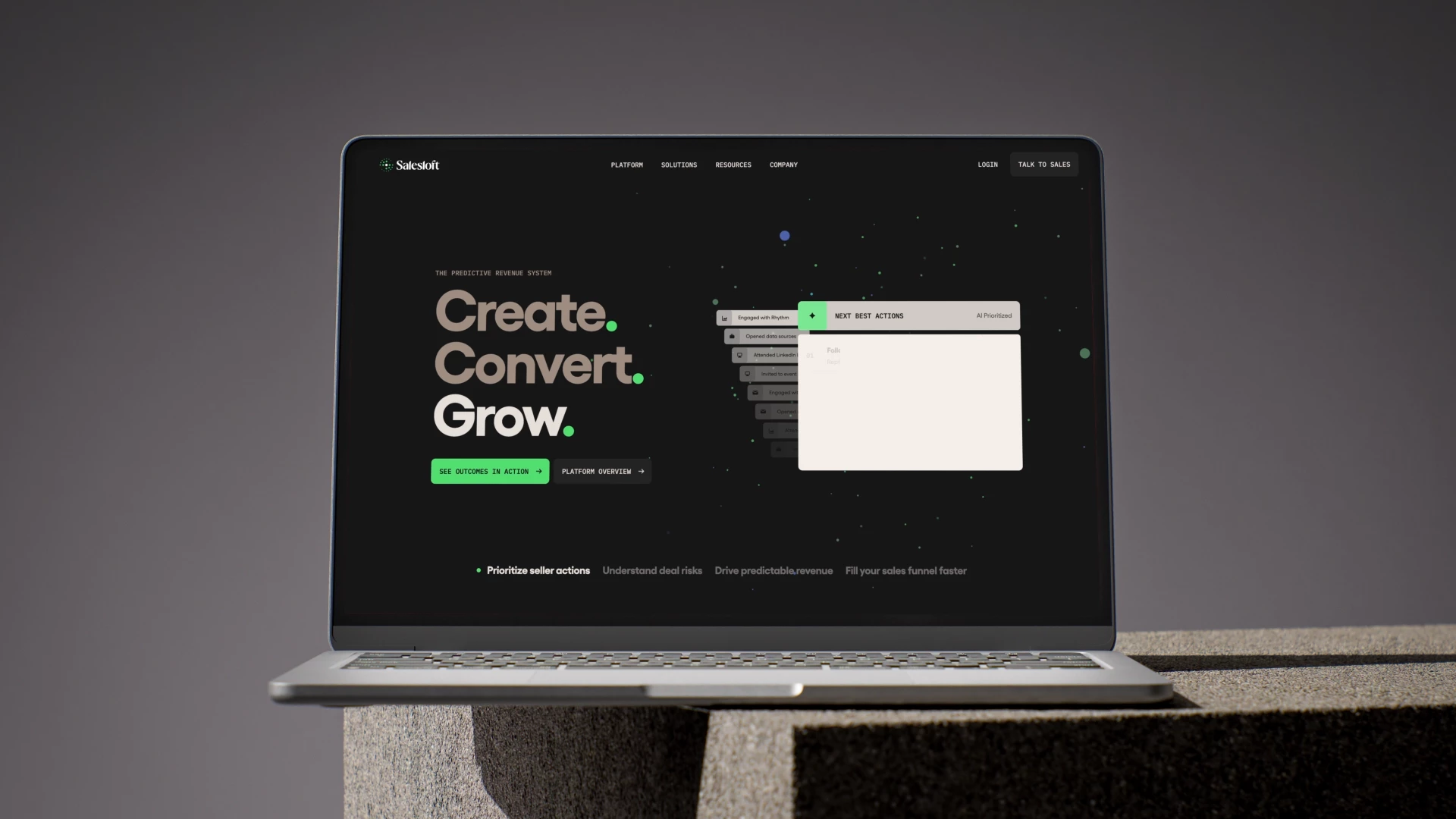
Its work included brand strategy, identity, information architecture, website design, and development.
The team consolidated approximately 10,000 pages onto one domain, preserved 208 referring domains, and launched the unified experience in four months.
Hughmanick says the objective was to create a brand that reflected the combined company's capabilities without erasing what made either business valuable.
"The company had become something different, and the brand needed to communicate that difference," he says.
We had to bring the strengths of both businesses together into a story customers could understand and a system the company could actually use."
The work also extended to non-digital assets, such as business cards, merchandise, and promotional materials.
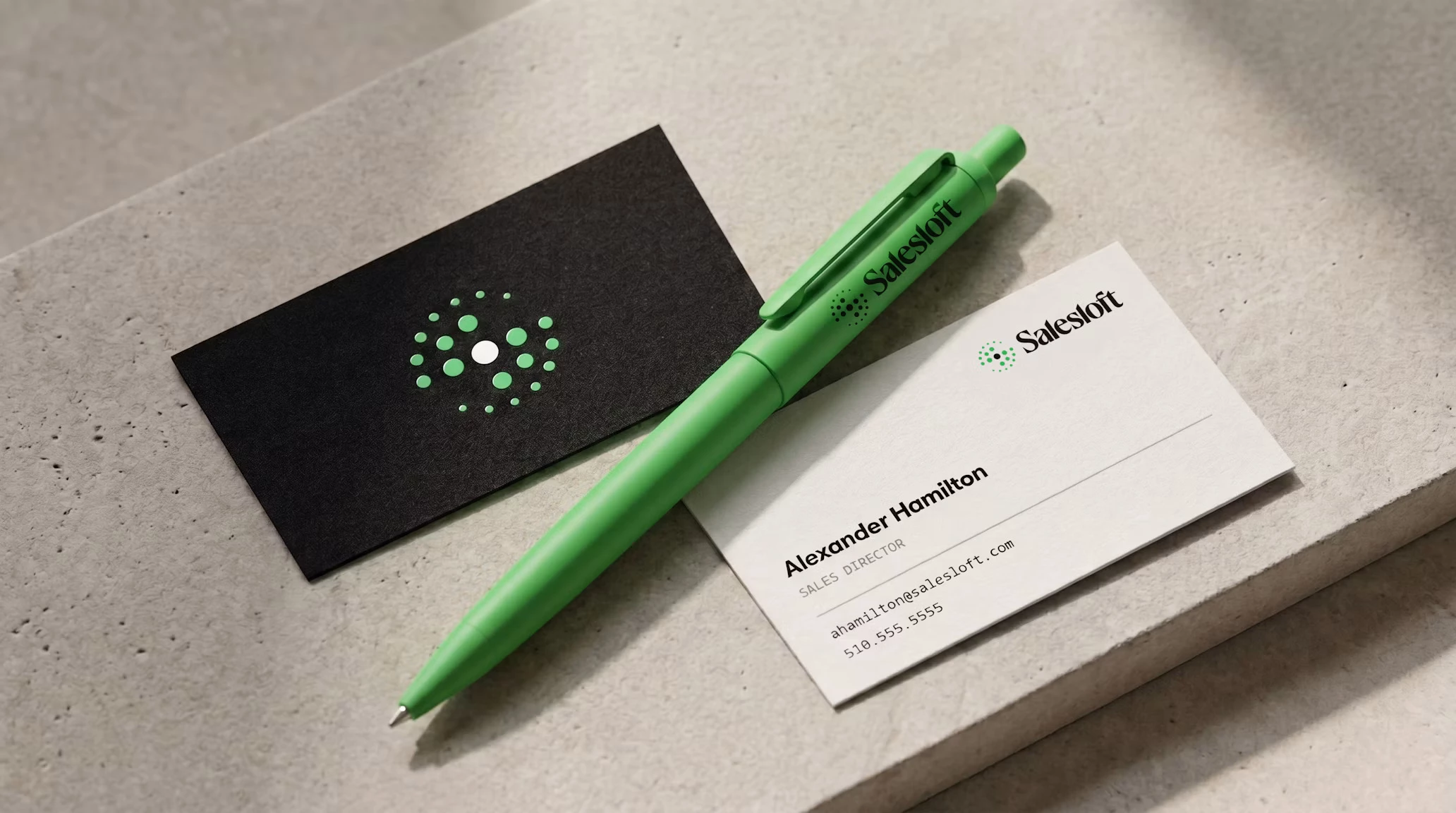
"The new identity extended across campaigns, presentations, social, events, and sales materials. This gave Salesloft a consistent, recognizable presence at every customer touchpoint," he adds.
Make the Brand Earn Its Place in the Deal
An acquisition can deliver new capabilities, customers, technology, and market opportunities.
But none of those advantages guarantees customers will recognize the value of the combined business.
That recognition depends partly on how clearly the company explains what has changed and why the change matters.
"Post-merger branding should make the business easier to understand, give customers a reason to believe in the combined offering, and help employees move in the same direction."
"To put it simply, the identity should reflect the company's next chapter, not a commemoration of the transaction that made it possible," Hughmanick says.