
Pop Mart opens its first international bakery, Pop Bakery, at Resorts World Sentosa in Singapore on July 30.
The 40-seat cafe sits on the second floor of a duplex in Weave, the resort's lifestyle wing, above a Pop Mart retail store.
The menu covers 45 character-themed pastries and drinks priced from S$12 to S$32 (approx. $9 to $25).
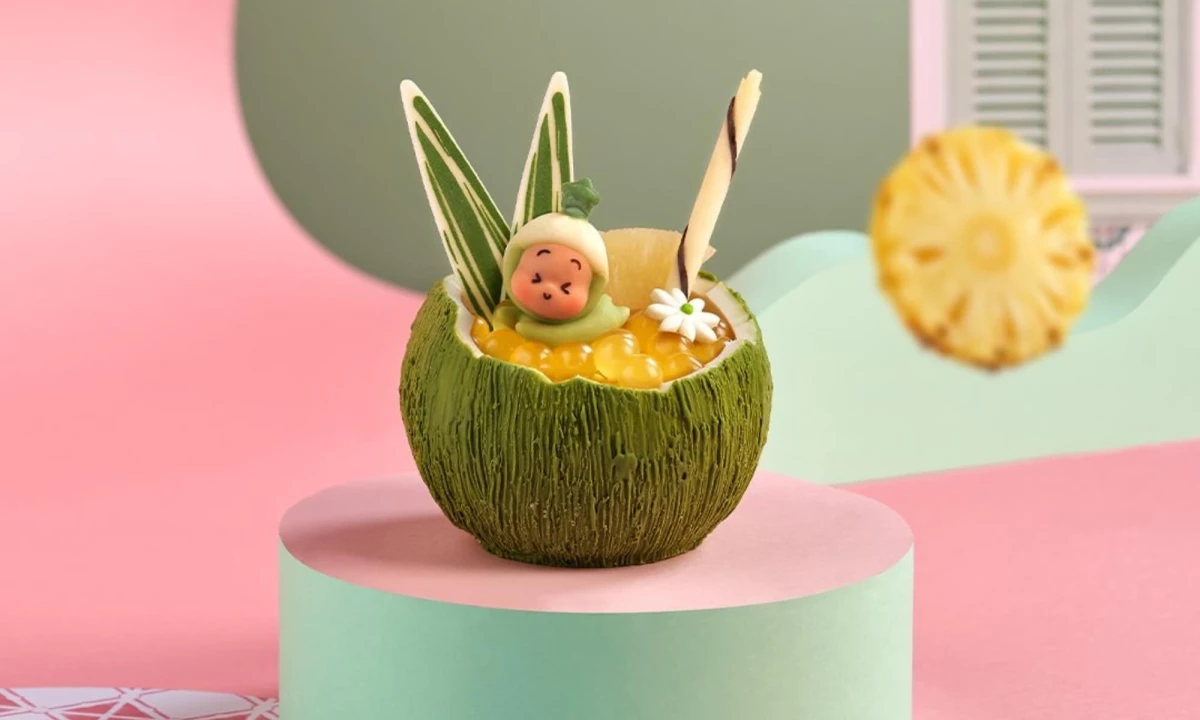
Twinkle Twinkle, a character designed by Chinese artist Daxin, headlines the lineup.
Singapore-exclusive items include a Pucky Xiao Long Bao Dessert served in a dim sum basket with biscuit stick chopsticks.
View this post on Instagram
Zhang Xiaoyang, head of Pop Bakery at Pop Mart, pointed to Singapore's five-year head start as the reason for the pick.
"It was our first market in Southeast Asia, which we entered in 2021, and over the years, we have built a strong connection with local and regional fans," he told CNA Lifestyle.
Zhang added that the company is not stopping in Singapore and is considering opening bakeries in Europe and the U.S.
"It's a matter of timing, and we need to address issues like local supply chains," Zhang explained.
Resorts World Sentosa CEO Lee Shi Ruh also credited her own kitchen team for the menu.
"We're especially proud that our culinary team worked closely with Pop Mart to bring the Pop Bakery experience to life, creating an offering that can only be found at RWS," she shared.
View this post on Instagram
Resorts World Sentosa gets a draw for Pop Mart fans, and Pop Mart gets a pastry team with fine-dining credentials on day one.
This approach is a brand collaboration working as a moat, since this specific menu exists only at this one address.
A Sugar Hedge Against Slowing Toy Sales
Resorts World Sentosa is the second stand-alone Pop Bakery in the world, after the first opened in Aranya, China.
Pop Mart debuted the concept inside its Beijing theme park, Pop Land, in late 2023 and now runs more than 30 mobile dessert kiosks in China.
Pop Mart also plans dessert shops in Thailand, Indonesia, and Malaysia.
Its Bangkok location trades under the Pop Mart Cafe name, a more elaborate sit-down format.
The pastries themselves boast IP favorites as much as flavor.
Labubu Butter Cookies arrive in a keepsake tin in original, chocolate, and a Singapore-exclusive coconut flavor.
Two coconut-shaped mousses topped with Twinkle Twinkle chocolate are the hardest builds, said Resorts World Sentosa pastry chef Sherie Quek.
Zhang said Pop Mart sculpts its desserts in three dimensions so each one reads as the character itself.
Twinkle Twinkle meet-and-greet sessions run Thursdays through Mondays at 2 p.m., 4 p.m., and 6 p.m.
Each guest has to spend at least S$40 (approx. $31) and each table at least S$80 (approx. $62) in a single transaction.
The bakery push arrives as Pop Mart faces questions about how long its toy boom can last.
The company posted 2025 revenue of 37.1 billion yuan (approx. $5.4 billion), up 185% from the prior year, though shares still fell nearly 23% after the results.
This comes as concerns over the sustainability of Labubu-driven growth overshadowed the numbers.
Analysts have also flagged a slowdown taking shape closer to home.
One Deutsche Bank analyst pointed to mounting sales pressure in Pop Mart's domestic market from the second quarter of 2026 onward.
View this post on Instagram
Chairman and CEO Wang Ning has guided 2026 revenue growth at "no less than 20%," well off last year's pace.
Food gives Pop Mart's brand strategy a low-cost proving ground, since a dessert counter reports demand within weeks.
The Wider Diversification Play
Pop Bakery is one piece of a plan Pop Mart has laid out across food, entertainment, and physical spaces.
On entertainment, Pop Mart is developing a Labubu movie with Sony Pictures, a move meant to give its characters a storyline.
On physical retail, the company expanded Pop Land this year, giving fans a place to encounter characters outside of stores entirely.
On food, Pop Bakery is the most literal version of this plan, with Pop Mart building and staffing its own cafes.
View this post on Instagram
Zhang framed the goal as putting Pop Mart characters into everyday routines.
"We hope to use our IP to accompany all aspects of consumers' lives, and desserts are one of them," he said.
The company has also pointed to Disney as a model for forging a lasting entertainment business out of short-term virality.
Disney spent decades on films before it sold a single churro, so its characters arrived with stories already attached.
Pop Mart is running this order backward, which puts pressure on its brand storytelling in every new category it enters.
View this post on Instagram
Pop Mart's bakery opening points to three moves any brand with a loyal following can copy:
- Test the format on wheels before signing a lease. Mobile carts prove demand at a fraction of the cost of permanent retail.
- Sell fans something they can finish. Consumables pull the same customer back weekly and keep spending steady between launches.
- Hand execution to a partner who already does it well. A venue kitchen supplies craft that the brand can't, and the result stays exclusive to one address.
Brand loyalty carries into a new category when the product still delivers what made people fans in the first place.
Our Take: What Happens When a Toy Company Starts Selling Food?
Pop Mart built a $5.4 billion revenue base, from only $1.4 billion in 2024, on products that get bought once and then sit on a shelf.
Meanwhile, a cookie gets eaten in five minutes, which means the customer has to come back and buy another one next week, or maybe even the next day.
View this post on Instagram
The resale market that made Labubu famous also caps what Pop Mart earns, because flippers take the second sale.
Pop Mart spent years building a business on scarcity and resale hype, and both of these things are wearing thin.
A pastry has one buyer, so every dollar runs through Pop Mart's own counter.
Disney worked this out decades ago, where food and drink quietly carry a large share of park revenue.
Pop Bakery is Pop Mart finally charging rent on the characters it already owns.
Want to spark joy among your audience? Check out the top experiential marketing agencies that design campaigns to do just this.