
Bose just bought Skullcandy after launching its own $99 wired noise-canceling earbuds three weeks earlier.
The October 21 acquisition gives Bose control of a lifestyle audio brand with a similar price point and a distinct consumer following.
Bose says Skullcandy will remain a separate brand within its Premium Consumer Audio business.
The deal follows an 18-month licensing partnership that brought Sound by Bose technology to Skullcandy headphones and earbuds.
Bose CEO Lila Snyder said the company wants to reach more consumers through a growing portfolio of brands.
"Skullcandy reaches a really important customer base," she told Bloomberg, citing its active lifestyle, boardsports culture, and devoted community.
But the price overlap adds a complication to Bose's expansion strategy.
The company must now distinguish two brands selling similar tech at roughly $100, while preserving what makes each appealing.
Bose Adds Skullcandy After a Successful Tech Partnership
Bose's $99 Noise-Cancelling Wired Earbuds launched on September 28 and began shipping on October 15.
The USB-C model offers active noise cancellation without Bluetooth pairing or battery charging.
Skullcandy's wireless Method 360 ANC earbuds run on Bose audio technology and list at $129.99, though discounts have brought them close to $100.
Skullcandy's Crusher 1080 ANC headphones also used Bose technology before the sale, which gave the partnership a test run across price tiers.
The partnership also showed how Bose's technology could improve products with a different brand identity.
"For more than 60 years, Bose has been committed to delivering incredible audio experiences however and wherever people choose to listen."
"As we work to reach even more people, we're expanding how we do that," Snyder said in a press release.
Bose now plans to give Skullcandy greater access to its technology, distribution, resources, and commercial relationships.
Skullcandy CEO Brian Garofalow said that joining Bose would bring more audio expertise to the brand while helping it reach new consumers.
"We believe this is a win for Skullcandy and our fans," he added.
Skullcandy's Sound by Bose lineup runs from $129.99 earbuds to $279.99 headphones, so Bose's own $99 wired pair now undercuts its lifestyle brand.
Bose now needs a brand strategy that gives shoppers a reason to pick one logo over the other when the sound inside comes from the same engineers.
73% of Audio Consumers Seek Better Sound Quality
Consumers continue to show interest in personal audio upgrades, where demand spans convenience, sound quality, and new features.
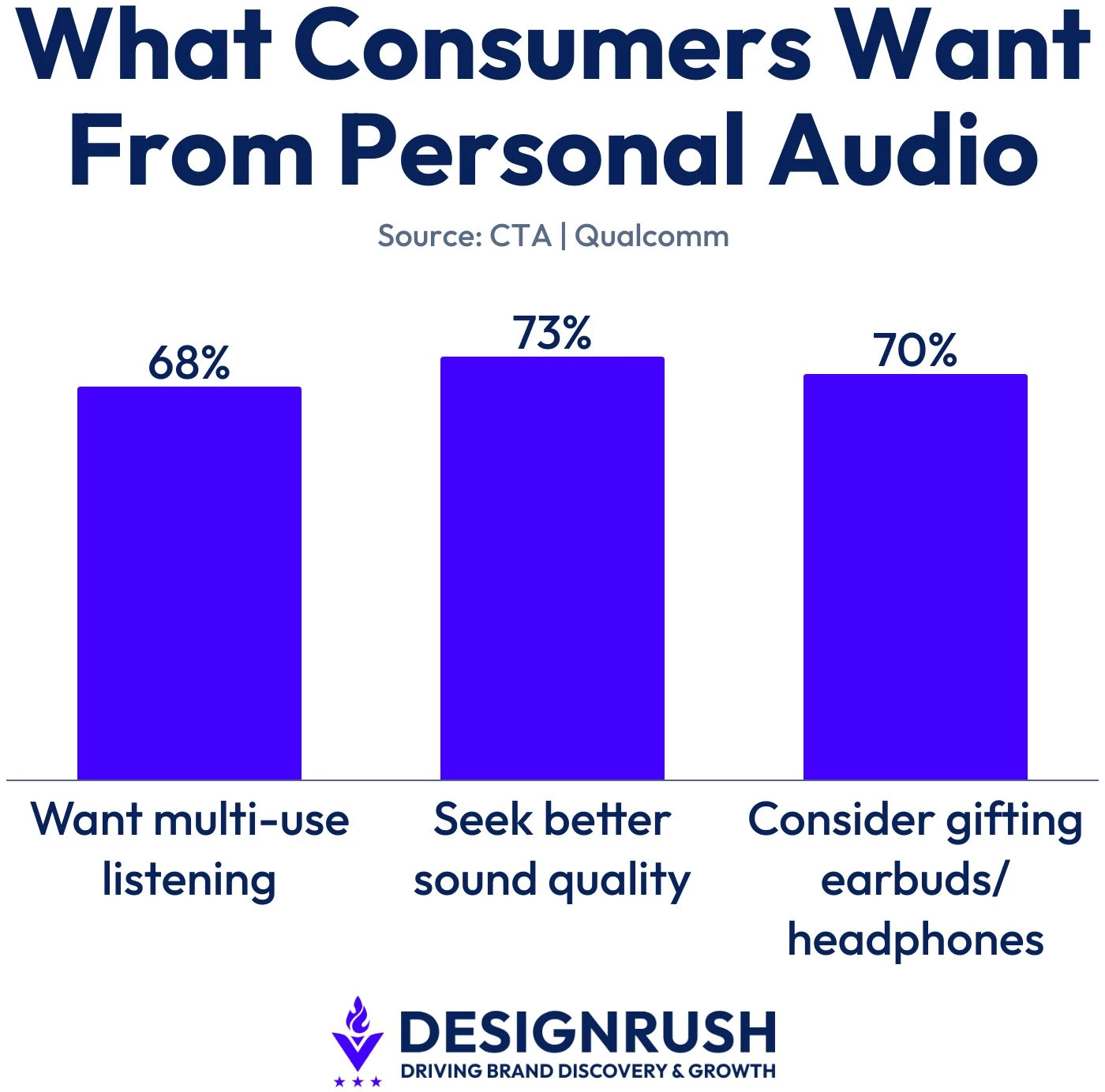
A 2025 CTA survey found that nearly 70% of U.S. consumers were considering wireless headphones or earbuds as holiday gifts.
Audio demand also reflects changing expectations for everyday devices.
In a 2023 Qualcomm survey, 68% of respondents wanted one pair of earbuds or headphones for music, gaming, and calls.
Meanwhile, 73% seek better sound quality with each purchase, up from 67% in 2022.
These findings suggest consumers value versatility and tangible performance gains when choosing audio products.
These trends offer three lessons for audio brands.
- Versatility supports everyday demand. Brands should prioritize features that serve multi-use to increase usefulness across daily routines.
- Sound quality gives consumers a reason to upgrade. Product teams should communicate measurable audio improvements to justify repeat purchases.
- Convenience and performance influence product choice. Marketers should connect features to real listening habits to make product benefits easier to evaluate.
Audio brands can attract buyers when product features solve familiar needs and give consumers a concrete reason to upgrade.
Our Take: What About The Skull AI Subscription?
Bose has not announced plans for Skull AI, Skullcandy's paid voice assistant, since the acquisition.
Skullcandy currently offers the assistant on compatible products, starting with the Method 540 ANC.
The service usesOpenAI technology through a partnership with Bragi.
It processes spoken requests through ChatGPT and delivers responses through compatible earbuds.
Skullcandy charges $4.99 per month or $49.99 per year after a free trial.
The subscription gives Bose a way to explore recurring revenue through a hardware brand.
But charging extra for AI could frustrate customers if they expect smart features to come with their earbuds.
We'd treat Skull AI as a live pricing test for any audio brand weighing an AI subscription.
Bose can measure whether users keep paying for voice assistance before deciding how the feature fits into its wider product portfolio.
Its approach to Skull AI could offer a useful benchmark for subscription pricing and customer retention.
A clear strategy can help companies manage overlapping products without confusing customers.
Explore these top brand strategy agencies to find a partner for portfolio positioning and growth.