
No-AI Disclaimers in Advertising: Key Findings
- Aerie’s no-AI pledge drove a 23% sales increase in Q4 2025, showing a measurable impact on revenue.
- Beauty, baby care, food, and luxury brands are leading the shift, where trust and human authorship are key to purchase decisions.
- "No AI" disclosures now appear as company-wide pledges or campaign-level statements, with different levels of accountability.
2025 was the year AI advertising publicly backfired on multiple occasions.
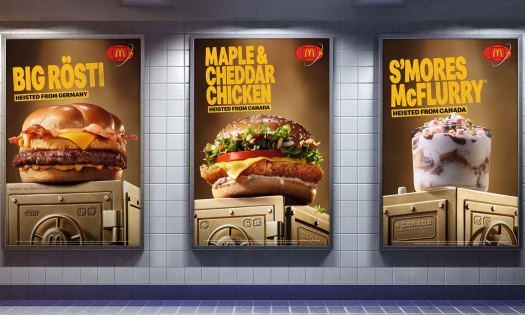
McDonald's Netherlands even pulled a Christmas ad after viewer outcry.
Meanwhile, Coca-Cola faced ridicule for glitchy trucks, and Valentino was called cheap for generating what people deemed tacky and uncomfortable visuals.
It should come as no surprise that audiences are growing more skeptical of brands using AI, with some no longer giving them the benefit of the doubt.
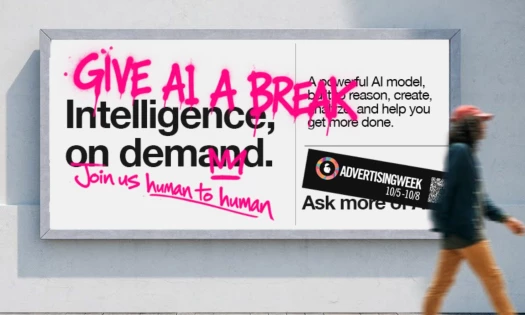
This year, a counter-movement is gaining momentum, and a number of brands are actually advertising the fact that they don't use AI.
What they share is the recognition that in a feed full of synthetic content, proof of human craft is now a differentiator.
The Two Formats Dividing This Movement
The "no AI" disclaimer isn't just a singular strategy.
Some brands make company-wide pledges that apply to all content, while others focus on highlighting human craft within specific campaigns.
Both approaches are strong, but it's the pledge format that will actually hold a brand accountable in the longer term.
The pattern across these brands also has a common thread.
Apparel, beauty, baby care, intimates, food, and analog photography are all categories where brand affinity and physical authenticity are core to the value proposition.
The "no AI" signal has the biggest impact where the perceived gap between human and machine output is most commercially meaningful.
According to a 2025 Gartner survey of 1,539 U.S. consumers, 68% of respondents frequently wonder whether the content and information they see online is genuine.
This means that consumer skepticism around AI-generated content is now the baseline, and brands that ignore it are increasingly paying for it in lost trust.
The pattern across these brands points to something bigger, as authenticity has stopped being a default assumption in a feed saturated with synthetic content.
Even productions that clearly involve real people now include disclaimers, reflecting an obvious change in what audiences expect to see confirmed.
New York's AI disclosure law, the first of its kind in the U.S., will take effect in June 2026.
After Gov. Kathy Hochul proposed completely rewriting the bill with exact wording from a weaker California law, legislators negotiated back in measures that went beyond the West Coast version. https://t.co/vY9joPDdAW
— City & State NY (@CityAndStateNY) December 23, 2025
The distinction between a pledge and a campaign concept will then start to have legal consequences.
But even before the law is enforced, this change is already visible in how these brands present their work today.
1. Aerie
Aerie's latest campaign featured actress Pamela Anderson prompting a chatbot to generate models, only to reveal that the models were real people the entire time.
The American Eagle-owned brand already pledged last October never to use AI-generated bodies or people in its content, aiming to also extend its 2014 no-retouching promise.
The Instagram post announcing the pledge became Aerie's most popular ever, with more than 40,000 likes, while the brand's Q4 2025 sales rose 23% year-over-year.
2. Dove
In April 2024, the brand became the first beauty brand to formally pledge never to use AI to create or distort images of women in its advertising.
The commitment came as part of its "Keep Beauty Real" campaign marking 20 years of "Real Beauty," which was backed by a global study of 33,000 respondents across 20 countries.
Dove also published a free Real Beauty Prompt Playbook, which is a guidance tool for creators using generative AI tools to produce more inclusive imagery.
3. Coterie
This year, the baby products brand told The Wall Street Journal about its plans to keep AI-generated images out of its social media marketing entirely.
CEO Jess Jacobs stated that the brand would never use it to replace "the human moments that define our brand."
The commitment is strategically sound in a category where parental trust is the primary purchase driver.
And proof of this is Coterie's subscriber retention rate sitting at 98% month-over-month.
4. Cadbury
The "It Could Only Be Cadbury Dairy Milk" campaign, created by VCCP and launched in May 2025, was shot using real chocolate on set with no CGI or AI.
Global Brand Vice President Guilherme Ferreira addressed the logic behind this decision in a statement:
"When it feels like everyone is turning to AI and CGI, we were proud to create the film using real life filming on set, utilizing experts in their craft."
5. Polaroid
The brand launched "Camera for an Analog Life" last year to promote the Polaroid Flip, with billboards placed next to Apple Stores and Google offices in New York and London.
Lines used include "AI can't generate sand between your toes" and "Real stories. Not stories and reels."
Brand and Creative Director Patricia Varella framed the campaign as a product-level statement:
"There is something magical in a Polaroid picture. It captures the humanness in all of us, wrinkles and all."
6. LEGO
LEGO's recent "Everyone Wants a Piece" campaign brought Messi, Ronaldo, Mbappé, and Vinícius Jr. together for the first time to promote its World Cup trophy build.
It obviously starred these athletes, but the toymaker opted to include the hashtag #HonestlyItsNotAI, confirming the film wasn't AI-generated.
This simple message reflects an awareness among brands that audiences will assume that footage is synthetic unless they're told otherwise.
LEGO uses AI for internal development, but this creative disclaimer draws a clear line between backend efficiency and how the brand represents itself to the public.
7. Blue Diamond Almond Breeze
Almond Breeze launched "The Pitch" with the Jonas Brothers in January 2026, titled explicitly "No AI Needed."
The ad depicts the brothers rejecting a series of AI-generated campaign concepts before settling on a straightforward product endorsement.
The Jonas Brothers were also involved in every step of the creative process, which in itself became the campaign's proof point.
Here are a few things brands and agencies should take away from this movement:
- Commit at the brand level. A formal pledge creates accountability beyond one campaign.
- Identify trust-sensitive categories. Human authorship matters most where product credibility depends on it.
- Prepare for regulatory change. Audit creative processes ahead of disclosure requirements.
Think of "human-made" as the new organic label, because it's now a way for brands to stand out by being honest about their creative marketing process.
Our Take: Is 'No AI' a Sustainable Strategy?
We think the brands that have made formal, ongoing pledges are gearing up for a much more durable approach than those using their non-AI stances as one-offs.
A pledge creates accountability and gives consumers a real standard to hold a brand to.
A campaign, by contrast, can feel opportunistic if it isn't backed by a consistent operational commitment.
The smartest brands in this space, Dove and Aerie, chief among them, have understood early that the "no AI" position isn't necessarily a rejection of technology.
Both explicitly use AI in operational and customer experience contexts.
But the pledge is narrower and more defensible, covering how the brand represents people in its creative work.
As AI tools become cheaper and more capable, people are getting better at spotting inconsistencies between stated values and actual creative output.
The brands that draw a clear line early will probably find it easier to maintain their value and reputation.
Brands need agencies that understand how to build credible, accountable commitments. Explore these top creative agencies in our directory.