
Multi-Location Marketing Challenges: Key Findings
- Agencies that handle national campaigns well can start struggling once franchisees, owner-operators, and local approvals enter the picture.
- A single national plan can weaken store-level performance when local media, messaging, and community context are treated the same everywhere.
- Leaders need agency partners that can connect campaign activity to business results they can defend.
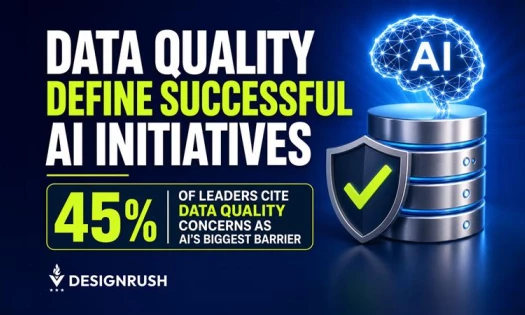
Forty-seven percent of franchisors say managing brands across multiple markets is their biggest challenge, according to the 2025 State of Franchise Marketing report.
For growing multi-location brands, that pressure often starts long before performance slips across the system.
It builds as new locations open, more operators enter the mix, and local market needs become harder to manage through one central plan.
What worked when the brand was smaller can start to break under that pressure.
The reasons aren’t always obvious, but they usually show up in how the work actually gets done.
Matt Powell is the CEO of Moroch, where he works with multi-location and franchise brands across complex local markets.
“We have a belief, we have this kind of mantra that we use, which is local changes everything,” Powell says.
That is why brands that outgrow their agency setup risk more than operational strain.
That can mean weaker store-level performance, slower decisions, and marketing that becomes harder to defend.
In episode No. 134 of the DesignRush Podcast, Powell breaks down why agency setups start to fray as brands expand.
He also explains how local complexity affects execution and what leaders should expect from a partner built for this work.
Watch the full episode on YouTube or listen on Spotify.

Who Is Matt Powell?
Matt Powell is the CEO of Moroch, where he leads work for multi-location and franchise brands across diverse local markets.
Powell's experience in local marketing, media strategy, and performance gives him a practical understanding of how brand consistency, market-level execution, and business results connect.
Why Brands Outgrow the Agency That Got Them Started
Most brands do not realize they have outgrown their agency until the pressure starts showing up in execution.
By then, the problem has usually been building for some time.
In many cases, it starts much earlier, when the business adds more locations, more local decision-makers, and more market-level complexity than the original agency was built to handle.
“There are agencies that will say they are smart in this space and understand it. And sometimes, oftentimes, they don't know exactly what they have signed up for,” Powell says.
This gap doesn’t appear overnight.
It becomes clear as the brand grows and the setup struggles to keep up with local needs and day-to-day realities.
As Powell makes clear, the same three breakdown points show up repeatedly as brands scale.
Each of these can create early cracks in the relationship that become harder to manage as the brand grows.
For brands reaching that stage, knowing how to choose the right digital marketing agency becomes a much more serious business decision.
Where Multi-Location Agency Models Start to Break
As brands scale, managing markets, owners, and local execution gets more complicated.
The same issues tend to surface:
- The agency setup can’t keep up as the brand grows and becomes more complex
- Owner and franchisee input adds more opinions and slows down decision-making
- National strategy stops translating the same way in every local market
Each of these puts pressure on execution and makes it harder to maintain consistent performance across locations.
1. The Agency Setup Begins to Buckle as the Brand Scales
Many agencies can support a brand when the account is still relatively simple.
In the early stage, one partner may be handling a wide range of work because the brand has not yet built a more specialized agency roster.
That setup can work for a while. The strain starts when growth adds more locations, more approvals, and more complexity than the original agency was built to manage.
Powell says this is where many brands start to feel the gap.
“We often find that we're a really good second agency,” Powell says.
“Because the complexity has kind of outgrown the original agency.”
That does not always mean the first agency failed.
In many cases, it means the brand has reached a stage where it needs more structure, stronger local coordination, and a partner that can manage a more layered operating model.
At that point, managing franchise digital marketing gets much harder without the right balance of brand and local execution.
2. Owner and Franchisee Input Adds Complexity
There is a tendency to treat a multi-location brand like one decision chain.
Some of that works. Some of it creates friction.
The brand may look centralized on paper, while the day-to-day reality is shaped by owners, operators, and local priorities.
“And especially when you have the ownership aspect in the mix and, you know, they are all individual businessmen that bring lots of their own thinking to the table, but that can be like herding cats,” Powell says.
That is often where agencies start to feel the friction. The account stops behaving like one brand with one clear voice and starts behaving like a system with many competing views.
As Powell explains:
“There's a lot more decision makers. There's a lot more people involved in this discussion.”
He adds that one of the first questions his team asks is whether franchisees or owners are involved, because that creates “a whole different model and approach” for the agency.
When agencies miss that early, local execution gets harder, approvals slow down, and the relationship starts carrying more pressure than the original setup was built to handle.
3. National Consistency Starts to Lose Local Relevance
The early growth years often push brands to look bigger, more polished, and more national.
That consistency matters.
The problem starts when the local ground game that helped the brand grow gets pushed too far into the background.
Weaken that connection, and it's a lot harder to maintain brand relevance across markets.
Powell says many brands try to run one approach across every location instead of adjusting as the business grows.
“You need both. You need both dynamics. You need to show up as a brand at the 30,000 foot level. You need that consistency. But at the same time, don't lose your roots because you won this battle on the ground.”
Local conditions matter more than a national plan sometimes allows for.
As Powell explains, “the world isn't one size fits all, or even just the U S is not one size fits all.”
By that point, a strategy that looks strong at the national level can start losing traction where the business actually operates.
That is also why local SEO becomes more important as brands expand, since visibility and intent can vary widely from one market to the next.
What Leaders Should Expect From the Right Agency
Fixing this does not come down to adding more reports or chasing stronger campaign numbers.
It comes down to understanding whether the work is actually helping the business at the local level.
That means paying closer attention to how effort and performance connect across markets, owners, and store-level results.
Powell says this is where the right agency model starts to separate itself.
“But if that's not translating into actual business results, there's often a disconnect there,” Powell says.
That kind of visibility makes it easier for leaders to see whether a partner understands store-level performance or is only reporting on activity.
As Powell explains, executives should be able to see how those two pieces connect today and decide whether they actually feel good about that view.
If they cannot, the relationship is already under more stress than it should be.
That is also why knowing the right questions to ask a digital marketing agency matters much more once local performance starts coming under pressure.
It is also why leaders need a clear view of digital marketing ROI before they keep funding work that looks strong on paper.
What Changes When the Right Partner Steps In
Powell shares one case study that shows what a stronger agency setup can do.
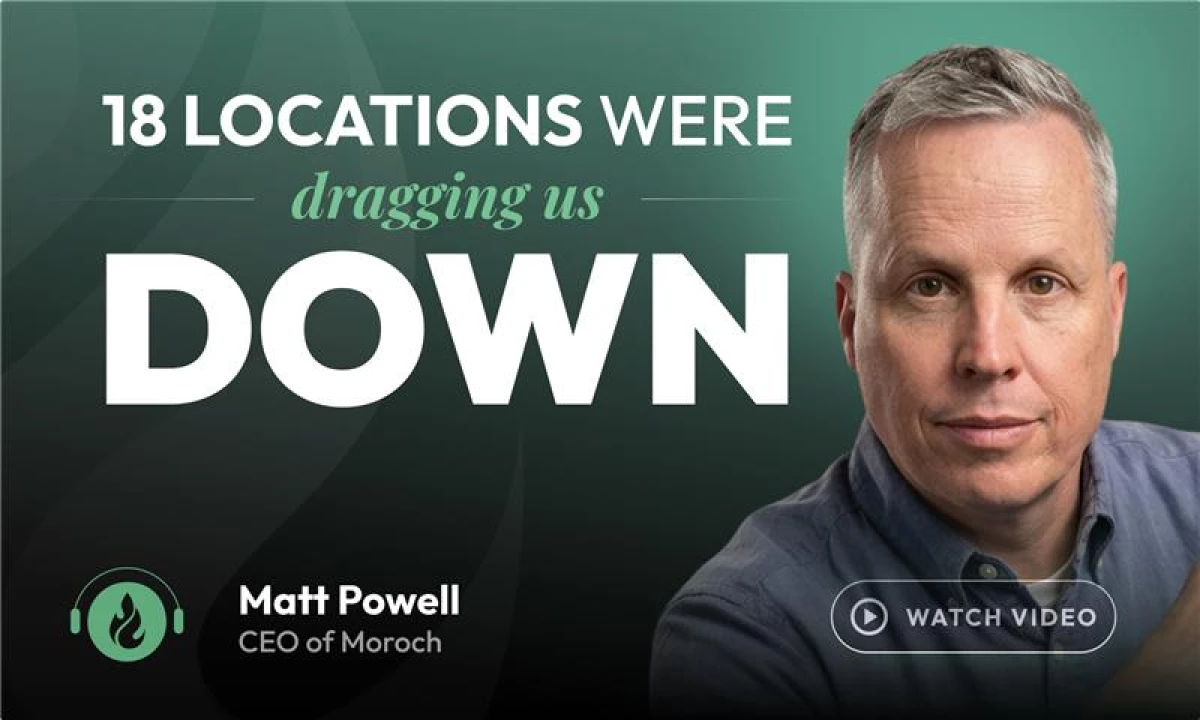
A brand with more than 600 locations had focused only on national efforts. It came to Moroch with a clear problem. Leadership believed its bottom 18 locations were dragging down the year.
Powell recalls the brief this way: “Our bottom 18 locations are dragging all of our numbers down.”
His team studied those underperforming locations and found a common thread.
They were heavily multicultural markets, yet the brand had no multicultural work in place, either in media or in creative.
Moroch adjusted the work, brought local relevance back into the picture, and got those locations back to average, which helped the brand make its numbers.
That example shows what happens when a brand stops treating local variation as a secondary issue and starts treating it as part of performance.
Why Local Execution Drives Business Performance
Store-level performance is often treated as something that shows up at the end of a campaign.
But the conditions behind that performance are set much earlier.
“Even when we're doing a national buy, it's still often localized around the businesses that we're working with,” Powell says.
For brands trying to improve local results, tighten execution, or get more from agency partnerships, that connection is hard to ignore.
It does not start with the report. It starts with how well the agency understands the business on the ground.
Want to take a closer look at how brands can approach this more effectively?
Watch the full episode on YouTube or listen on Spotify.