
Key Takeaways:
- Meta aims to eliminate manual ad creation by letting businesses submit only goals and budgets: AI will generate creatives, find audiences, and measure performance.
- Zuckerberg said Meta’s algorithms outperform traditional targeting, encouraging businesses to stop limiting campaigns by demographics.
- Meta is expanding GPU infrastructure to support AI-driven campaigns, with a revenue model focused on delivering business outcomes, not impressions.
Meta isn’t just upgrading its ad system, it’s dismantling the old rules altogether.
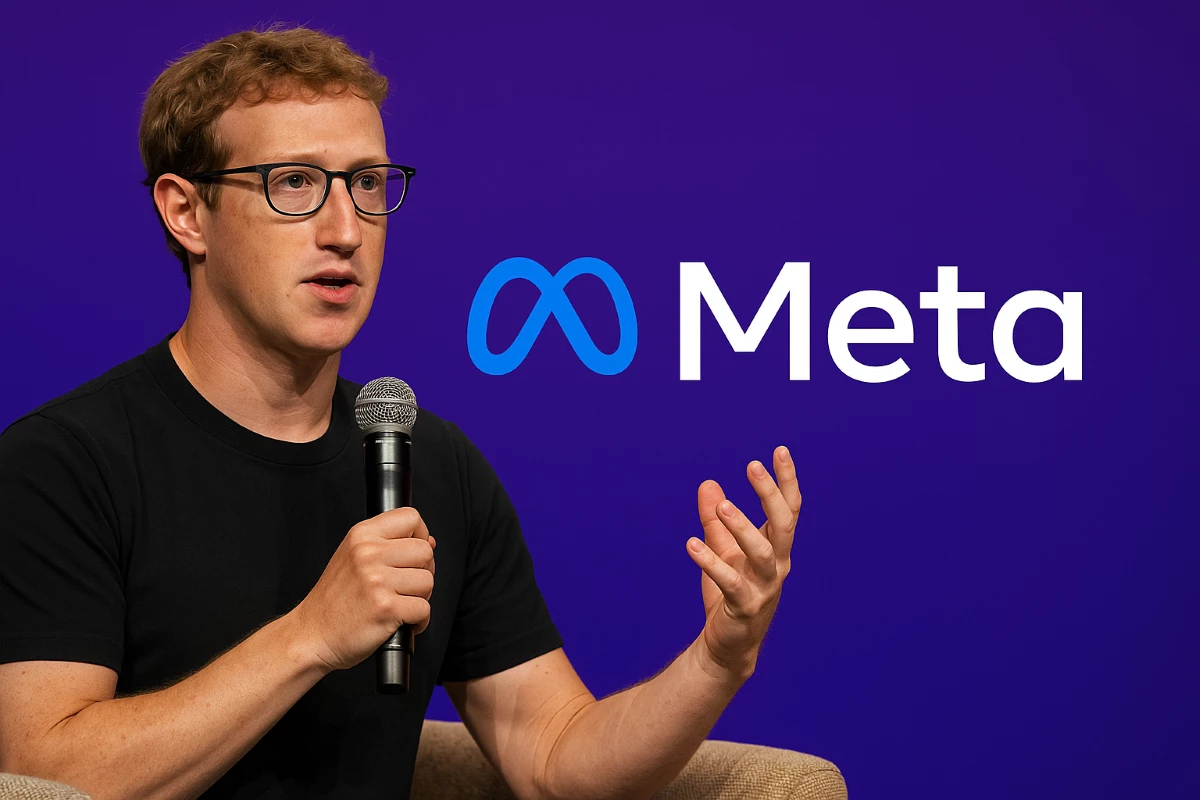
In a recent public interview, Meta CEO Mark Zuckerberg laid out a radically streamlined future for digital advertising.
With the tech giant's new system in the works, businesses would no longer need to produce ad creatives, define customer segments, or manage campaign performance manually.
Instead, Meta’s AI will handle the entire process end-to-end.
Meta CEO Mark Zuckerberg is promoting a future where artificial intelligence is increasingly intertwined with people’s lives https://t.co/pau7clJzy3 via @WSJ
— Carlos A. Moreno (@CarlosAMoreno) May 7, 2025
“You’re a business, you come to us, you tell us what your objective is, you connect to your bank account,” Zuckerberg explained.
“You don’t need any creative, you don’t need any targeting demographic […] except to be able to read the results that we spit out.”
He described this as a fundamental shift in how advertising functions today.
The company’s goal is to automate campaign creation, audience discovery, and performance measurement in a way that replaces manual ad management and third-party services.
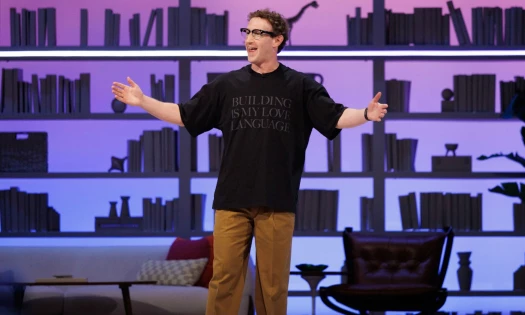
Stripe Sessions is underway! Yesterday we welcomed @dwarkesh_sp and Mark Zuckerberg @finkd onstage to talk AI, stablecoins, and the future of commerce. pic.twitter.com/SGpHNNUJLU
— John Collison (@collision) May 7, 2025
Meta would continuously generate, test, and optimize content, including videos, images, and copy, on behalf of advertisers, based on business goals alone.
Zuckerberg argued that Meta’s AI can already outperform most human marketers in identifying the right audiences.
“It used to be that a business would come to us and say, ‘I really want to reach women aged 18 to 24 in this place,’” he said.
“We believe at this point that we are just better at finding the people who are going to resonate with your product.”
Marck Zuckerberg literally goes off on AI, China, and AGI in 90 mins of goldpic.twitter.com/f1krzHVSKC
— Aadit Sheth (@aaditsh) April 29, 2025
With Meta’s AI handling targeting, marketers can reallocate resources to strategic growth initiatives.
They can focus more on bigger-impact tasks like refining brand positioning, improving landing pages, and keeping messaging consistent.
This shift lets teams boost results by testing what works, improving user experience, and acting quickly on real-time performance data from Meta’s AI.
Margins Now, Market Later
To support these ambitions, Meta is scaling its AI infrastructure and investing heavily in GPUs — a decision Zuckerberg acknowledged may weigh on short-term margins.
But he views this as essential to capturing what he described as a significant increase in advertising's role in the broader economy.
He suggested that traditional advertising, like billboards or broadcast media, limits how widely businesses can access and benefit from ad tools.
With AI reducing complexity and costs, Zuckerberg sees a future where many more businesses can participate, thereby expanding the total market.
👀 Just saw Mark Zuckerberg live at #StripeSessions in SF and… wow:
— frankdesvignes (@frankdesvignes) May 7, 2025
AI isn’t coming—it’s here, executing and scaling.
Meta’s ad engine = “ultimate business results machine”
Tell it your goal + budget. It delivers. No creative? No problem—AI whips up 4,000 versions and tests… pic.twitter.com/o6u3n67yvD
Meta’s business model will also evolve.
In messaging-based commerce, for instance, Zuckerberg said the company plans to offer free AI tools for business communication, only charging when sales are actually generated.
These moves highlight Meta’s intent to control the full advertising funnel, from campaign creation to conversion, all within its ecosystem.
According to Zuckerberg, the bet is simple: if his company can consistently deliver outcomes that matter to businesses, it will become indispensable to advertisers of all sizes.
Another proof of Meta's continued push into this tech is its recent launch of a standalone AI assistant across its devices to challenge rival OpenAI's ChatGPT.