
Until AI can read the context behind a decision, humans aren’t out of a job.
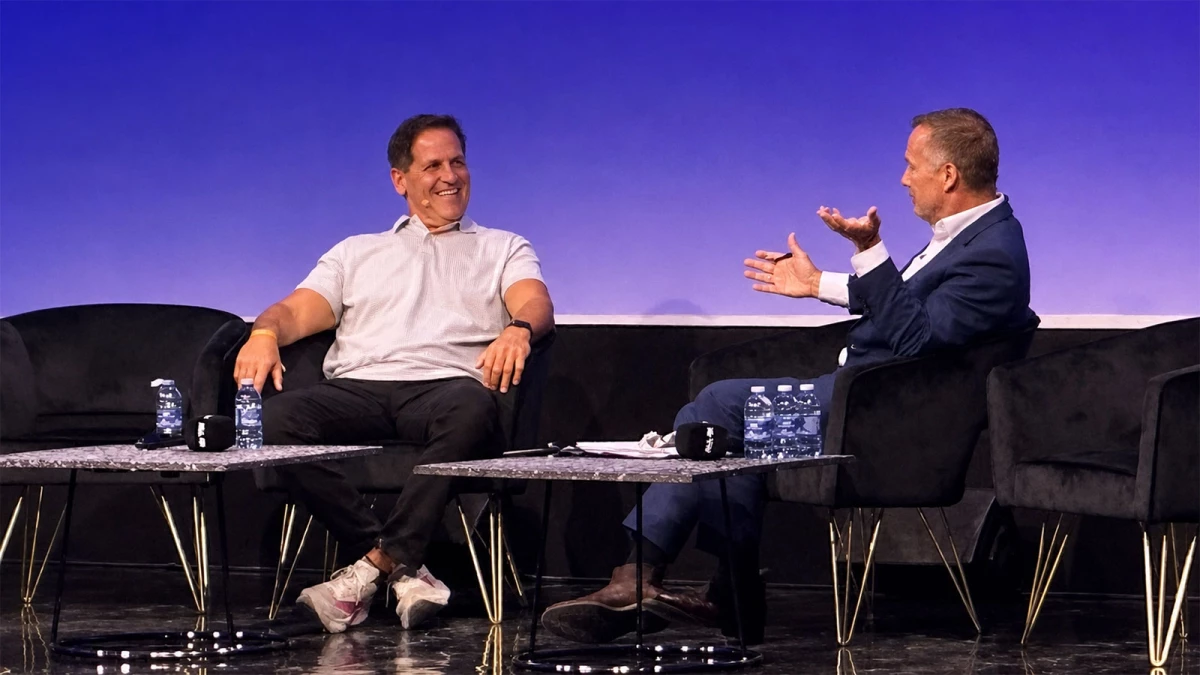
“AIs don't know the consequences of their actions, and that's what you need a human for,” Investor and Entrepreneur Mark Cuban tells DesignRush following his live taping of the "All-In" podcast at RAISE Summit 2026 in Paris.
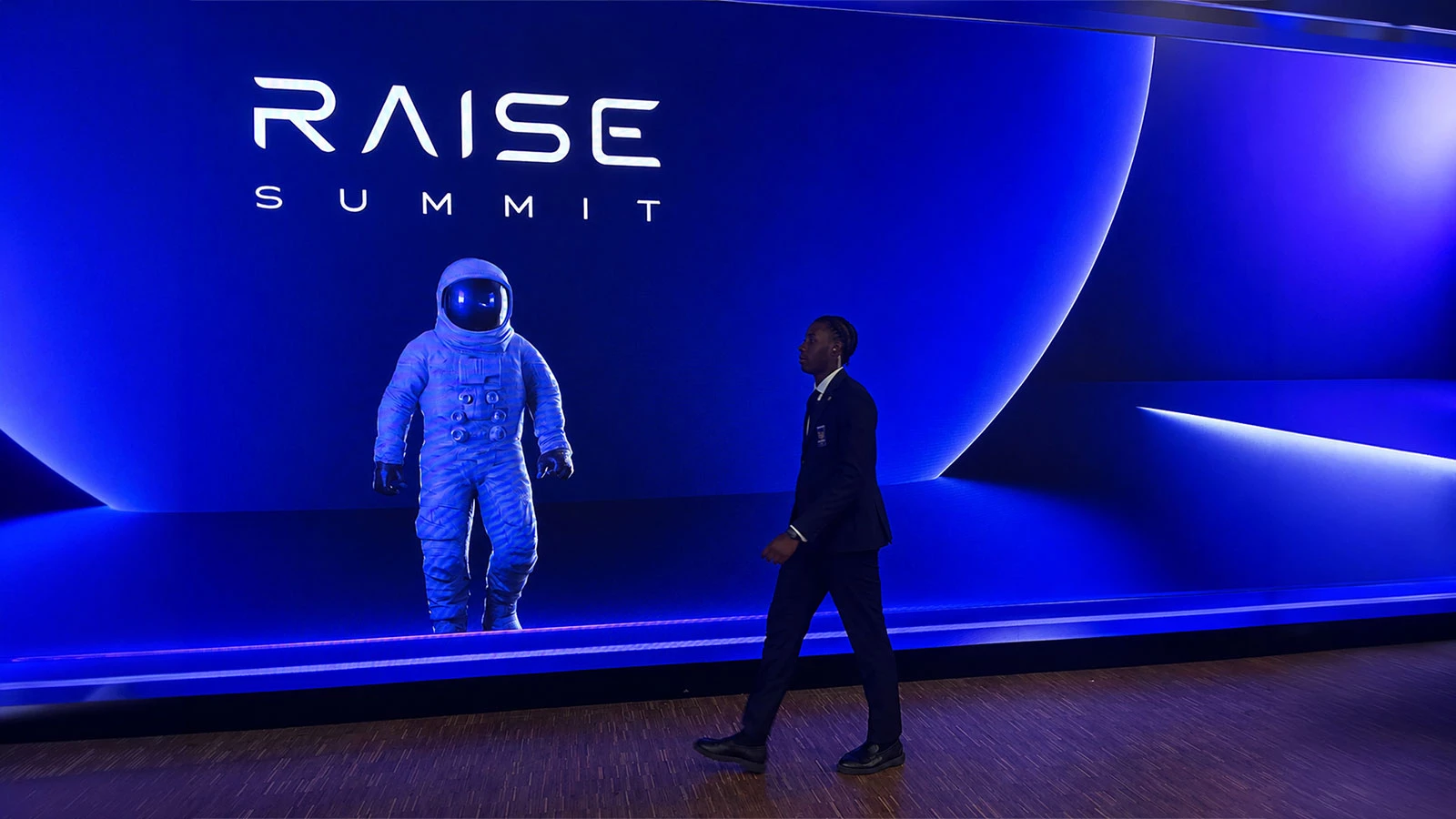
RAISE Summit 2026, the AI industry's largest European gathering, pulled in 9,000 AI professionals on July 8 and 9. DesignRush attended the event, and with our coverage, we noted one question pervading the rest:
What is a human's role now when it comes to AI?
In an exclusive DesignRush interview, Cuban answers this question.
He also talks candidly about AI's growing presence in marketing, why he thinks creatives are right to be wary of it, and the mistake he sees companies making by rushing AI adoption.
'What Is a Human for?'
"What is a human for?" is a quote from Atlantic Writer Charlie Warzel from Vox Media's "The Gray Area" podcast on July 6, 2026.
Warzel calls AI's ascendance a 'crisis of agency,' as synthetic content floods the internet and becomes harder to tell apart from anything human-made
“You can sort of completely blur and warp reality,” Warzel says. “And I think that that's the way that culture works now.”
He gives the example of searching for music on Spotify, where entire pages of jazz and classical musicians have no profile photo, label, or manager listed anywhere. The artists, Warzel found, don't actually exist.
"I'm listening to jazz music that I think is made by another human being," Warzel says. "And it's not."
This abundance of fake information online can result in “a feeling of disorientation, but also paranoia,” he adds.
We asked Cuban what he thought.
He says it's a "great question," one that highlights how most AIs have a way to go before they can forgo human supervision.
"You need humans who can digest all that information, understand the context, and make real-time decisions," Cuban says.
Data indicates Cuban’s not wrong.
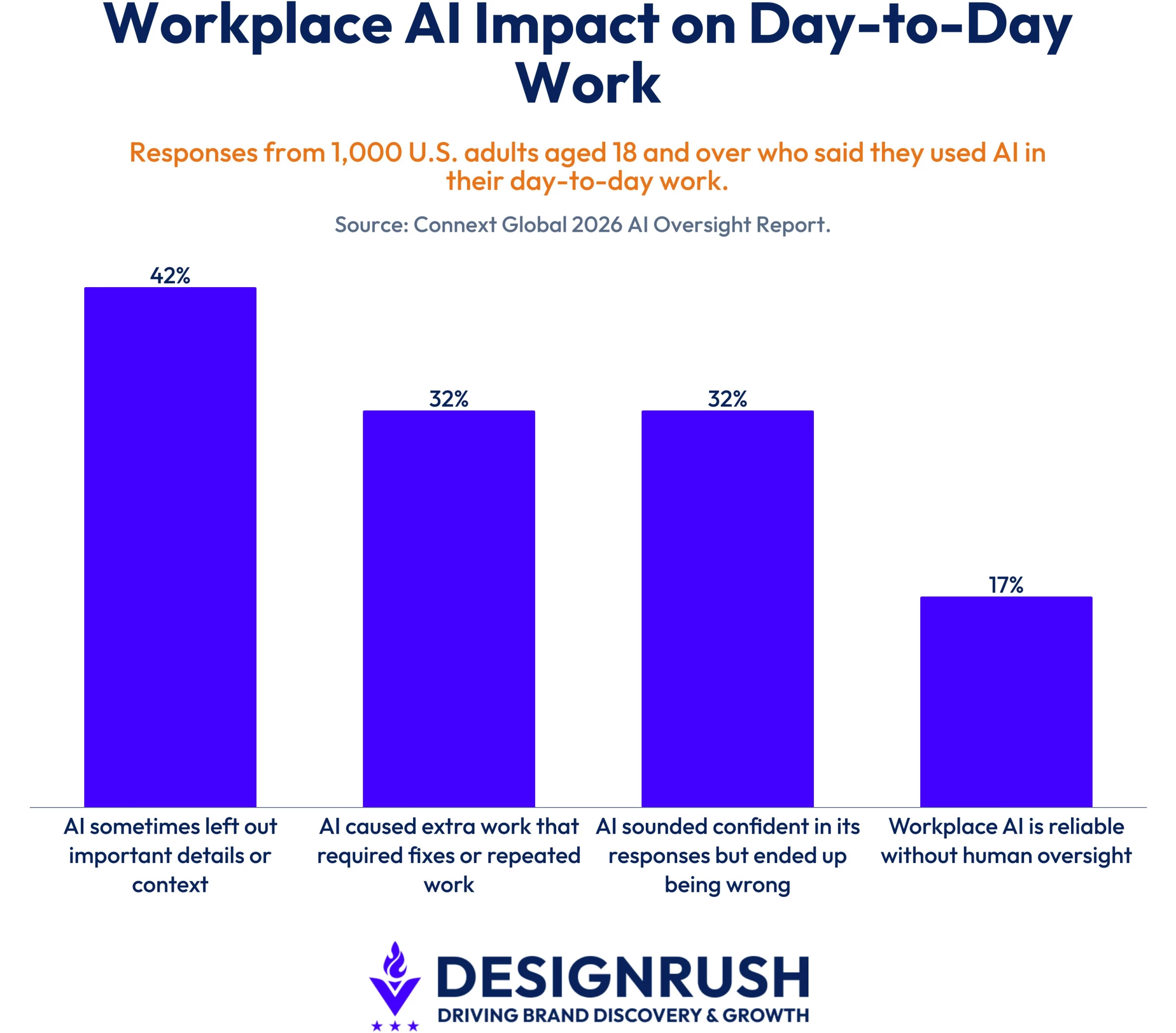
Only 17% of U.S. adults said workplace artificial intelligence is reliable without human oversight, according to the recently released Connext Global 2026 AI Oversight Report.
This survey collected responses from 1,000 U.S. adults aged 18 and over who said they used AI in their day-to-day work. The findings revealed the following:
- 42% said AI sometimes left out important details or context
- 32% reported it caused extra work that required fixes or repeated work
- 32% found AI sounded confident in its responses but ended up being wrong.
How do these issues manifest for creatives and marketers using AI? Cuban says they should make use of it, but with caution.
One way to avoid common pitfalls is to pay close attention to your peers.
AI and Marketing: A Dilemma for Creatives?
Several big brands tested AI-assisted ads and received heat for it.
In December 2025, McDonald's Netherlands pulled a fully AI-generated Christmas ad within three days, after viewers called it "creepy" and panned its cynical tone.
Coca-Cola ran into similar backlash months earlier. Its "Refresh Your Holidays" campaign used AI to reimagine its iconic delivery truck ad, and viewers called the characters unsettling, lifelike but not fully human. The public thought it lacked nostalgia and creative depth.
And media intelligence firm CARMA found about 32% of the conversation was negative, blaming AI for Coca-Cola’s slipup.
Still, Cuban thinks marketers should use AI, even if getting it right requires testing.
Using AI "makes creative people more creative," according to Cuban. That said, he gets why they find it frustrating.
"I understand why creatives are afraid of it," Cuban says. "I understand why they're upset, because it's got trained on their work without their permission. They should be upset."
Cuban adds the technology can make tasks more efficient and productive. It just doesn't manufacture talent someone doesn't already have.
"If you're like me and just not creative, using AI doesn't change anything," Cuban says.
Use AI, but Don’t Rush It
So where does that leave companies racing to adopt AI as fast as possible?
"I think recognizing that it's not a quick process. It's a slow evolutionary process, and I think that's what they're missing," Cuban says.
"They think it's gonna be quick and change everything, but it's an evolution."
Data supports Cuban's stance.
MIT's 2025 NANDA initiative found that about 5% of generative AI pilots at companies achieve rapid revenue growth.
Simultaneously, the vast majority stall out with little to no measurable impact on profit or loss.
This indicates the core issue isn't only about how well these tools work. It's also a consequence of teams skipping the expertise needed, which can create a learning gap that slows progress.
That's why rushing, according to Cuban, is a mistake since it can cause companies to cut corners and still expect results.
"They expect an immediate return, and they think it'll be so simple to do that anybody can do it," Cuban says. "That's where they're making a mistake."
Still weighing your own AI vendor decisions? Check out our selection of the Top AI Consulting Companies.