
Magento Salesforce Integration: Key Findings
- Prioritize integration flexibility to meet B2B buyers’ expectations for seamless, consumer-like experiences.
- Leverage Magento’s API-first design to build scalable, staged connections with Salesforce and other systems.
- Establish governance and strategy to ensure integrations remain reliable and adaptable as your business grows.
B2B brands are no longer competing solely on price or product; they’re competing on experience.
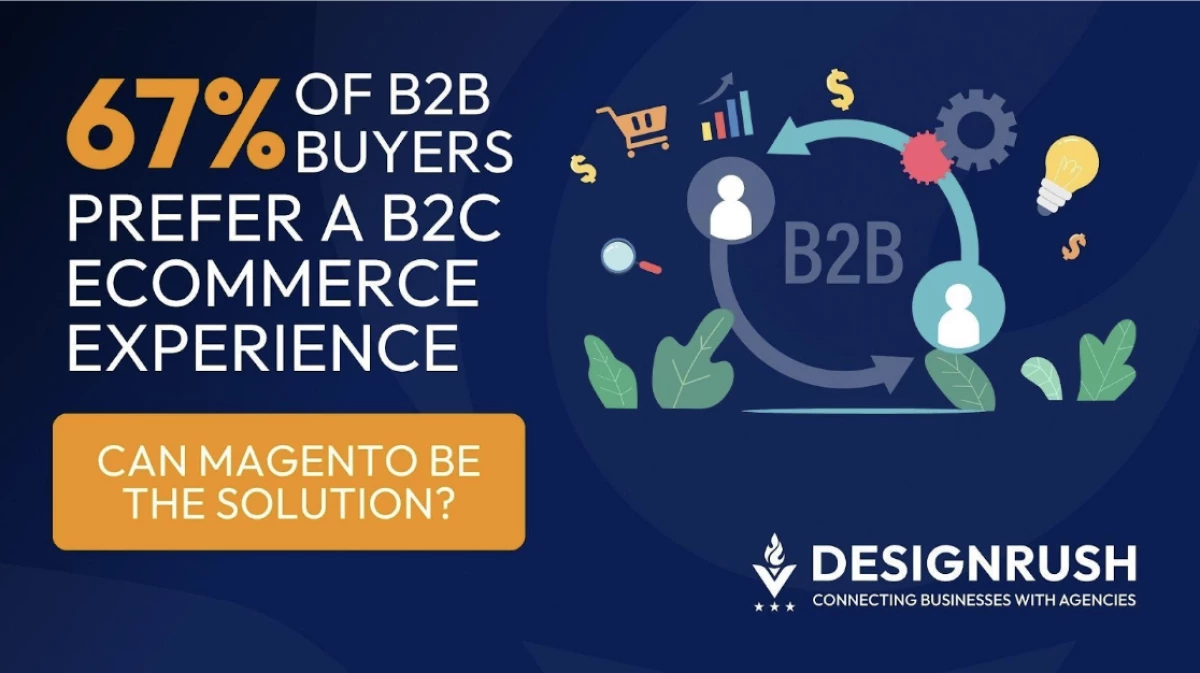
67% of online B2B buyers have switched suppliers in search of a more consumer-like experience, according to a Forbes report.
That shift has made integration flexibility the new differentiator.
Modern buyers expect the same level of speed, personalization, and convenience they get in B2C, and achieving that requires every system to work as one.
Editor's Note: This is a sponsored article created in partnership with Bighorn Web Solutions.
Companies like Bighorn Web Solutions say that businesses are realizing that growth depends less on adding new software and more on connecting what they already have.
How Magento’s Architecture Simplifies Complex Integrations
Magento’s architecture was designed for flexibility. As an API-first platform, it supports deep integration with CRMs like Salesforce through REST and GraphQL APIs.
This makes it possible to build connections that are both real-time and scalable, even across large product catalogs and multi-channel sales environments.
For developers and operations teams, that means fewer workarounds and more control over how data moves.
Magento’s modular structure also allows organizations to start small and expand gradually into marketing automation, inventory updates, or advanced analytics.
“When we work with enterprise clients, the goal is to build a foundation that can scale. Magento’s modular, API-first design makes it possible to integrate in stages, which helps teams maintain stability while still moving toward automation and data intelligence,” said Caleb Bradley, CEO and Founder at Bighorn Web Solutions.
Bighorn Web Solutions has observed that this incremental integration approach works best for B2B teams managing complex workflows.
Instead of overhauling systems all at once, businesses can build stable data pipelines that evolve alongside their operations.
How Integrated Data Improves Decision-Making and Customer Experience
When Magento and Salesforce share data, every department gains clarity:
- Sales teams see order histories and product interest in real time.
- Marketing can track abandoned carts and trigger personalized email journeys.
- Operations can sync inventory levels automatically and avoid fulfillment delays.
The result is context-rich decision-making.
Teams can spot trends, forecast demand, and tailor customer experiences with confidence because they’re working from a single source of truth.
“Data integration is about giving every team the same version of the truth. Once sales, marketing, and operations are aligned on real-time data, decisions become faster and far more customer-focused,” said Bradley.
These integrations often uncover data silos that previously went unnoticed. A sales team might discover duplicate customer profiles, or marketing might find gaps between online and offline touchpoints.
Once those systems are aligned, the impact on responsiveness and customer satisfaction is immediate.
How to Build an Integration Strategy That Grows With You
For most organizations, successful Magento-Salesforce integration begins not with technology, but with planning.
“The most successful integrations start with a clear understanding of business needs, not just technology. By planning carefully, balancing automation, and continuously testing, teams can build systems that scale reliably over time,” said Bradley.
Bighorn’s development teams emphasize these three lessons from past projects:
- Start with your business logic, not your tools. Define which data truly drives decisions before mapping APIs.
- Balance automation with control. Real-time syncs are powerful, but not every process needs them. Batch updates can reduce system load for large inventories or periodic reporting.
- Test and evolve continuously. Integrations aren’t “set and forget.” As Magento or Salesforce update APIs, maintaining documentation and monitoring sync performance ensures long-term reliability.
This approach turns integration into an ongoing discipline rather than a one-time technical milestone.
Why Integration Strategy Matters More Than Technology
Technology alone doesn’t guarantee smooth integration. The real differentiator is how businesses plan for change.
Systems, customer expectations, and data models all evolve, and so must the integration strategy.
“Technology sets the stage, but strategy keeps the system alive. The integrations that stand the test of time are the ones with clear ownership and ongoing governance,” said Bradley.
From Bighorn’s experience, the most successful B2B organizations treat integration as part of their digital governance.
They invest in clear ownership (who maintains the APIs), version control, and error reporting. These steps reduce downtime and ensure that even as platforms grow, the underlying data remains consistent.
When done right, the result is a connected business.
AI and Automation Will Redefine Integration Workflows
The next frontier of Magento-Salesforce integration is automation.
AI-assisted data mapping and anomaly detection are beginning to replace manual sync monitoring.
No-code integration tools are also reducing the technical barriers for non-developers, allowing marketing or sales teams to manage workflows directly.
Bighorn expects this shift toward intelligent automation to accelerate as businesses adopt headless and composable commerce models.
In these setups, flexibility isn’t optional. It’s the foundation for scaling across channels, regions, and devices.
Integration Is the Infrastructure of Experience
As B2B buyers demand faster, more personalized interactions, seamless system integration is becoming the infrastructure behind great experiences.
Magento’s open architecture and Salesforce’s CRM intelligence form a natural pairing; one that helps businesses move from reactive operations to proactive growth.
From Bighorn’s perspective, integration isn’t just about data connectivity; it’s about organizational agility.
When platforms share information freely, teams can collaborate better, respond faster, and build customer relationships that last.