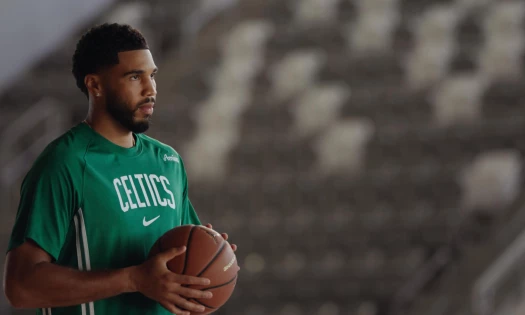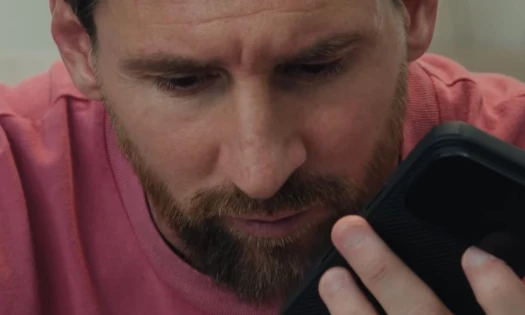

Nike is worth roughly $57 billion, yet it still owes about $15.5 billion under endorsement contracts.
This figure represents roughly 27% of the company's current market value.
On top of this, Nike will leave the S&P 100 on September 21 after almost 18 years in the index.
Honeywell Aerospace, Simon Property Group, and Colgate-Palmolive leave the index on the same date.
Dell Technologies, Palo Alto Networks, Arista Networks, and SanDisk move up from the S&P 500 to fill the four open seats.
Every replacement comes from the information technology sector.
Nike stock has fallen about 78% from its 2021 peak, and the S&P 100 change reflects this stark decline.
The sports brand still has to honor the contracts it signed during its stronger years.
Its FY2026 10-K shows that $1.7 billion of the endorsement commitments is payable within the next 12 months.
The commitments barely moved while the market value behind them collapsed.
Nike signed most of these deals when it was worth close to $281 billion.
Every endorsement that it renews from here on gets priced against a company a fifth that size.
Mbappé's Exit Tests the Endorsement Math
Nike's roster spans athletes, teams, leagues, and public figures across running, football, basketball, and tennis.
The breadth only works if each relationship sells something, and that case gets harder when the biggest names start leaving.
Reports out of France say that Kylian Mbappé's 19-year boot deal with Nike ended on July 31.
Nike has not confirmed the split, and no new footwear partner has been announced for Mbappé.
Mbappé's departure removes one of Nike's most prominent football faces at a time when the category remains central to global brand visibility.
The brand has billions committed to partnerships, yet a marquee relationship can still expire without a renewal.
The company has strong football assets elsewhere, including its relationships with major clubs and national teams.
But individual stars still matter because they give products a personal connection that team sponsorships cannot fully replicate.
This puts more pressure on Nike to keep its biggest athlete relationships commercially useful.
A famous name can generate attention, but Nike needs these deals to support launches, growth, and full-price demand.
Nike's endorsement obligations shrank by roughly $700 million in fiscal year 2026.
The roster is already contracting, and brand partnerships are where that shows up before the income statement does.
The DTC Push Left Wholesale Gaps to Fill
Nike's direct-to-consumer strategy weakened some of the channels that helped drive product discovery and sales.
It spent years prioritizing its own stores and digital channels, while reducing its reliance on wholesale partners.
The strategy gave Nike more control over customer relationships.
It also cut Nike's presence in the retailers where shoppers compare performance footwear.
The numbers now show the cost.
Nike Direct revenue fell 6% to $17.7 billion, while Nike Brand Digital declined 12%, and wholesale revenue grew 6% to $27.5 billion.
The company refreshed more than 15,000 wholesale spaces and said sales with Foot Locker turned positive for the first time in four years.
China presents an even tougher problem.
Its Greater China revenue peaked at $8.29 billion in fiscal 2021 and finished fiscal 2026 at just $5.85 billion.
Nike Digital in Greater China also declined 25% in Q4, while wholesale in the region fell 19%.
Local competitors such as Anta and Li-Ning have gained ground, while On and HOKA have added pressure in performance footwear.
Nike is trying to recover distribution, digital demand, and local relevance at the same time.
The turnaround depends on whether it can make its products easier to discover and harder to replace at full price.
Running Proves the Turnaround Can Work
Nike Running delivered five consecutive quarters of double-digit growth and added roughly $1 billion over the period.
The brand also says it gained five points of running market share in premium footwear across North America and Western Europe.
Pegasus, Vomero, and Structure each answer a specific running need, and Nike has kept the lineup moving with launches like the Peg 42.
Running grew mid-single digits in Greater China during the fourth quarter, despite the region's wider decline.
Nike has one product strategy working at scale, and the rest of the portfolio has not followed it yet.
Nike's situation shows why marketing teams should judge large endorsement portfolios against business performance as well as brand visibility.
- Put partnership spend in a financial context. Brands should track contractual exposure against performance to understand how much flexibility remains.
- Tie athlete deals to measurable demand. Marketing teams should connect partnerships to full-price sales and repeat demand to prove commercial value.
- Give long contracts an off-ramp. Companies should structure major deals with performance milestones to preserve flexibility as demand changes.
Every name on a roster was a good idea once, and almost no brand goes back to check which ones still are.
Our Take: Does Nike Need Fewer, Bigger Bets?
Nike put Mbappé at the center of "Rip the Script" in June for the World Cup, and his contract lapsed two months later.
So yes, Nike needs a smaller roster, and it needs a reason on paper for every name that survives the cut.
Wieden+Kennedy gave all 30-plus names in that film a job, from opening a new algorithm to revealing a jersey.
We think the contracts should be written the same way, with each major deal naming the product or category it has to move.
A footballer should help sell a boot, a runner should support a franchise, and a league deal should create measurable retail demand.
The counterweight is real, since deals judged only on next-quarter sell-through push a brand toward safer, duller names.
Nike disclosed $4.8 billion in demand creation last fiscal year and $15.5 billion in endorsement commitments.
Neither number tells us what a single name in the "Rip the Script" cast returned, and nobody has made Nike answer for it.
Brands assessing athlete, team, or league partnerships can compare these top sports marketing agencies by expertise, clients, reviews, and budgets.