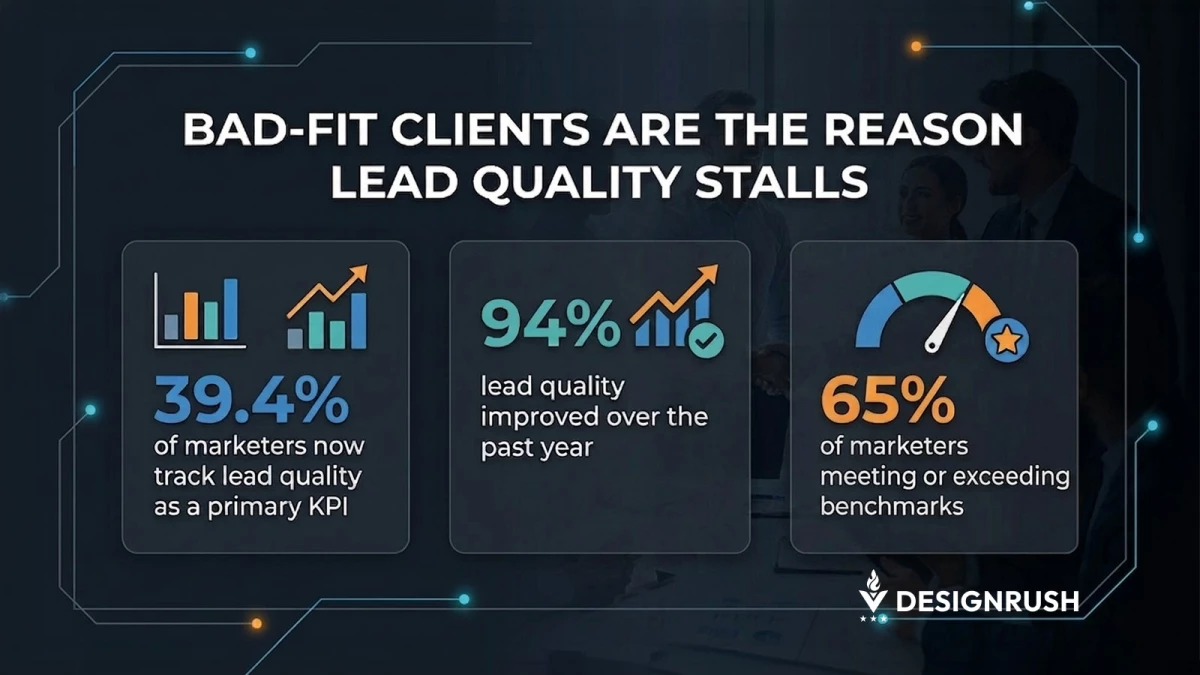

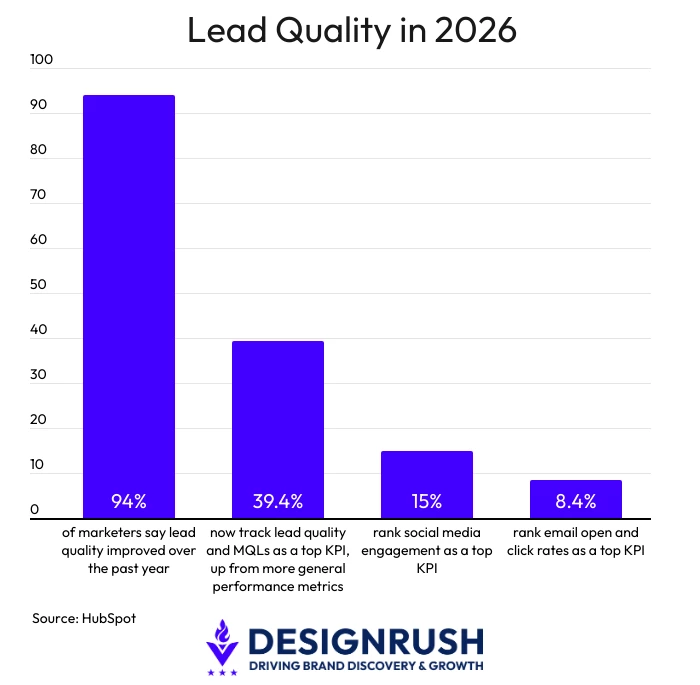
Marketers tracking lead quality and Marketing Qualified Leads (MQLs) as a primary KPI now make up 39.4% of the field, according to HubSpot's 2026 State of Marketing report.
The report shows that 94% in that group saw lead quality improvement over the past year, though the platform stops short of establishing a causal link.
For performance marketing agencies, that selection starts before the first campaign brief and before the marketing budget is set. It starts with who they choose to work with.
Growth Pressure Makes Every Client Look Right
Saying no to a paying prospect feels counterintuitive, especially when there’s a revenue goal that needs to be met.
But a client who does not share an agency's values, or lacks the data, budget, and risk tolerance the model requires, does not become a better fit after the contract is signed.
Disruptive Advertising learned that firsthand. As the agency grew, prospects without the foundational conditions its model requires started coming in.
Jacob Baadsgaard, the agency's founder and CEO, recalls accounts where the foundational conditions were missing on multiple fronts.
Among them was a seven-figure client whose campaigns required the team to market something they did not believe in.
The account was profitable. But the work conflicted with everything the agency was built around.
"We worked with businesses that didn't have good data, and we had a harder time doing the things that needed to be done. We were deviating from the customers we were built to serve," he says.
Firing that client left a hole in the books. But it also redirected energy that had been spent tolerating misalignment back into accounts where the work could actually compound.
Today, the agency turns away 80% of the businesses that approach it, working only with brands the team genuinely believes in.
That alignment is a win for the client and for the marketer who no longer feels disconnected from what they are promoting.
Four Questions That Determine Client Fit
Lead quality is a client selection problem before it is a campaign problem.
The most successful marketers in 2026 track metrics that move revenue, but those metrics only reflect what the qualification process allowed in.
After lessons learned, Disruptive Advertising's approach to marketing alignment now structures every new partnership around four questions:
- What does the math require? This surfaces whether the client's budget and revenue targets are realistic for the investment the model demands.
- Who is the real customer? This identifies the actual end buyer because targeting built around the wrong buyer produces messaging that never reaches a decision-maker.
- How do they buy? Skipping this question means building campaigns around the wrong decision process.
- What does the scoreboard look like? This confirms whether the client's success metrics align with what the agency can influence.
If any answer falls short, an agency shouldn’t move forward.
"Surfacing a misfit early is uncomfortable for about an hour. Discovering it six months into a campaign is far worse," Baadsgaard said.
Client Fit Is Now a Strategic Metric
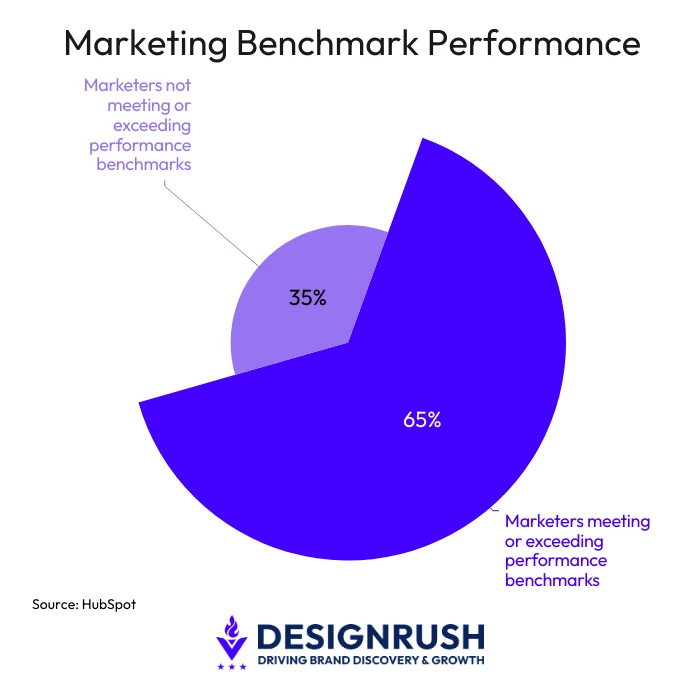
HubSpot's data shows 65% of marketers are meeting or exceeding benchmarks.
The 35% who are not are not necessarily running worse campaigns. They may be running the right campaigns for the wrong clients.
The difference often comes down to who was qualified in the first place.
"Taking on the wrong clients makes it impossible to do your best work. If you are going to scale on purpose, you have to know exactly who you cannot help," Baadsgaard added.
Still, teams serious about lead quality should assess three things before signing a new client:
90 Days of Historical Campaign Data
Ninety days is the industry standard for a reason. Accounts without prior performance data have no baseline for optimization.
Specifically, that means cost per lead, conversion rates by channel, and audience behavior across at least one full campaign cycle.
That window exists for structural reasons. Machine learning algorithms need sustained data to identify high-converting audiences.
B2B sales cycles frequently require 90 or more days for a customer to convert after the first touchpoint.
Below that threshold, you are optimizing against noise.
Budget That Covers Meaningful Testing
Underfunded accounts run out of runway before the data becomes statistically significant.
A budget that covers only campaign execution, with nothing left for iteration, produces results that reflect spend constraints rather than strategy.
Testing requires volume. A budget that cannot sustain iteration through the learning period leaves the agency optimizing against too little data to trust.
Risk Tolerance Through the Learning Period
Performance models take time to compound. Early results lag by design because the system needs volume and iteration before patterns emerge.
Risk tolerance means staying in the engagement through that window. Clients who treat the first month of underperformance as a signal to pivot exit before the data becomes actionable.
The compounding returns that follow a disciplined learning period are exactly what underfunded or impatient accounts never see.
The Qualification Call Is a Performance Decision
As agencies scale and onboard faster, the qualification problem gets harder to see, and with that, harder to solve.
The irony is that growth pressure makes wrong-fit prospects look like the best ones. Urgent timelines, flexible budgets, and a willingness to spend are exactly what agencies want to see.
What is missing is the operational foundation to convert that spend into results.
In performance marketing, that shortfall compounds. It shows up in benchmarks and, eventually, in retention rates.
The 94% improvement in lead quality that HubSpot documents is a lagging indicator. It reflects decisions made in qualification calls, but rarely in campaign dashboards.
Agencies chasing that number through targeting refinements and creative testing are optimizing the wrong variable.
The fix for that is in the qualification call, before the campaign even starts.