
Agile Branding Key Findings:
- Agility is the foundation for relevance. Brands that treat strategy as ongoing and adaptive outperform those stuck in static playbooks.
- Internal alignment is the fuel for external impact. Engaged employees bring brands to life and help sustain transformation over time.
- Emotional connection drives brand loyalty. The brands people instinctively turn to are the ones that feel personal, consistent, and empowering.
Agile isn’t just a buzzword. It’s becoming a baseline.
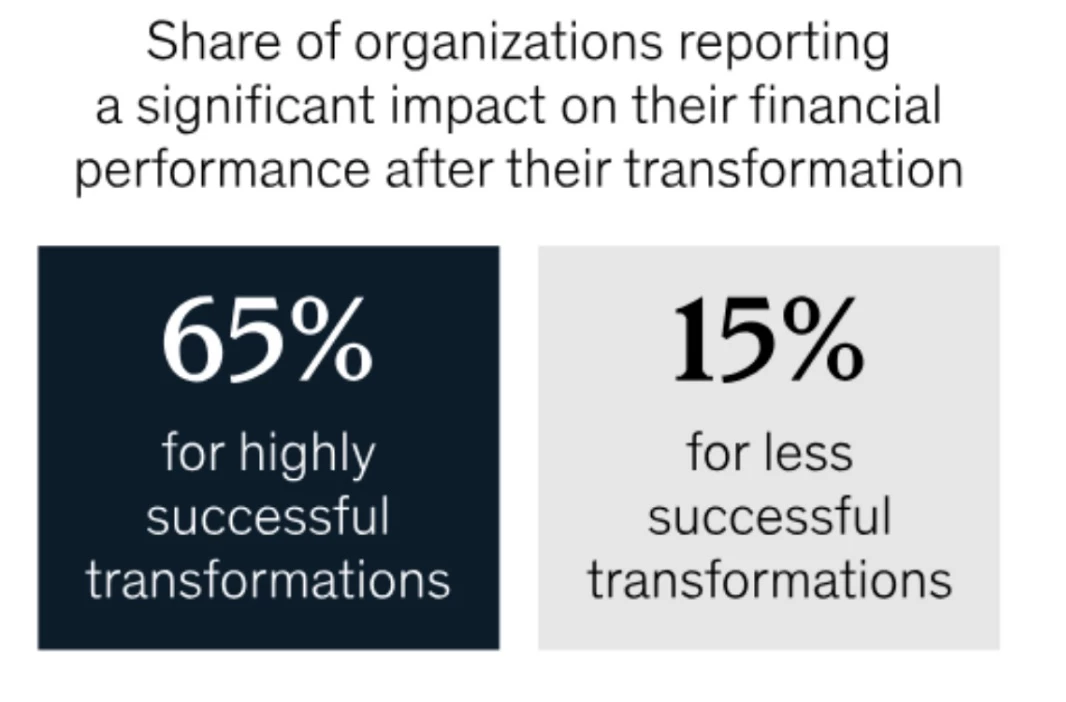
With 65% of organizations reporting revenue growth after adopting agile structures, agility is proving to be a strong driver of business performance.
Likewise, agile transformations deliver roughly 30% gains in efficiency, customer satisfaction, and operational performance, making agility a competitive necessity, not a nice-to-have, McKinsey research adds.
But agility means more than moving quickly.
It requires strategy that evolves, cultures that adapt, and brand systems that connect deeply with both employees and customers.
That’s especially true in an era where change is constant, expectations are rising, and emotional connection often trumps pure awareness.
I spoke with Jenifer Lehker, senior partner for design at Lippincott, about what it really takes to build and sustain a successful brand in 2025.
She shares why the best brands treat strategy as a living conversation, how internal engagement drives external impact, and how to move from “one-and-done” branding to ongoing transformation.

Who Is Jenifer Lehker?
Jenifer Lehker is a senior partner for design at Lippincott, where she’s spent over 20 years leading brand transformations for Fortune 500 companies and mission-driven nonprofits. Her work blends strategic clarity with creative depth, helping brands become more agile, authentic, and culturally embedded. She began her career at studios like Design Edge and Catapult Thinking, and completed executive education at Yale School of Management.
Invest in Long-Term Brand Relationships to Maximize Impact
The most effective brand transformations rarely end at launch.
While it’s tempting to measure success by initial rollout metrics or campaign buzz, the real value often emerges in the months and years that follow.
That’s because brand work isn’t just about what a company says; it’s about how that message is internalized and carried forward through actions, experiences, and culture.
The deeper a brand is embedded into operations and the employee mindset, the more consistent and meaningful it becomes across every touchpoint.
Jenifer has seen this firsthand in long-standing collaborations with companies like Bank of America and State Street.
“We might start with a brand transformation, but many times the work that is most felt by customers and clients happens in the years to follow, as you extend the brand deeper into the experience,” she says.
Enduring partnerships also build trust, which allows for more strategic creativity and evolution over time, not just execution.
That same philosophy applies to nonprofit work, where brand clarity directly supports mission visibility and impact.
“Those projects are so meaningful as we’re able to help great teams amplify their mission.”
Treat Brand Strategy as a Living System
Many companies still approach branding as a fixed project: redesign the logo, refresh the guidelines, and move on.
But in 2025, static brand systems quickly become outdated… or worse, irrelevant.
An effective brand strategy is a living framework designed to evolve with shifting customer expectations, business priorities, and cultural context.
That requires agility: a mindset of continuous listening, learning, and adapting.
Unfortunately, too many organizations still cling to rigid consistency at the expense of relevance.
“One of the biggest mistakes companies make is treating brand as a one-and-done exercise — a fixed set of guidelines locked in place and rarely revisited. In today’s fast-moving world, this approach feels outdated and inflexible,” Jenifer says.
Agile branding must be internalized across the organization, where culture and employee engagement play a central role.
If employees don’t understand or believe in the brand, customers won’t either.
“Brand transformation isn’t just an external exercise; it’s a cultural movement that requires employees to feel genuinely connected and empowered,” she adds.
The strongest brands adapt without losing coherence because they’re anchored in clear principles rather than fixed templates.
That flexibility, combined with internal commitment, makes it easier to maintain brand momentum over time.
Build Brands People Choose Instinctively
To rise above the noise, companies must earn a deeper level of loyalty: emotional relevance.
The most successful brands aren’t just known; they’re chosen, trusted, and sought out again and again.
Jenifer explains that true brand affinity is rooted in the everyday decisions people make.
“We interact with a myriad of brands every day. But for each of us, only a few brands have real meaning. They’re the ones that we seek out, care about, consult with, open up to and are happy to be seen with.”
Lippincott refers to these as “Go-to Brands” — the ones customers instinctively turn to because they feel understood and empowered by these brands.
These brands help people unlock something new.
To become a Go-to Brand, companies must focus less on being universally liked and more on being deeply relevant to the people they serve.
That means creating brand experiences that are personal, consistent, and genuinely helpful across every touchpoint.
Turn Brand Strategy Into a Strategic Advantage During Market Shifts
When industries evolve, brands can either react or lead.
For Xcel Energy, a major utility company navigating rapid shifts in clean technology and rising energy demand, maintaining leadership required more than a refresh.
Lippincott worked with Xcel to move beyond a legacy of clean energy leadership and craft a broader, future-facing brand promise.
“Xcel Energy had long anchored its reputation and brand around leadership in the clean energy transition, but the industry was undergoing rapid change… They needed a North Star to help them stand out as the landscape evolved,” Jenifer shares.
The result was a strategic repositioning around a simple but powerful idea: Making Energy Work Better.
This new promise was a strategic platform that influenced both customer experience and operational alignment.
It signaled to the market that Xcel was ready to lead the next chapter of energy innovation, not just continue the last one.
Translating the strategy into tangible brand expression meant crafting a brand identity that reflected both the company’s forward momentum and its hardworking ethos.
“To make that concept tangible, the expression adopted a confident tone that balanced modernity to meet the needs of the future with Xcel Energy’s characteristic grit,” Jenifer adds.
Localized visuals and storytelling put customers and communities at the center, reinforcing the brand’s relevance across regions and channels.
“Placing customers at the center, we created regional assets to recognize the areas Xcel serves, paired with photography that captures people in a heroic light,” Jenifer says.
The rebrand was aimed at building pride internally and trust externally. And that’s the mark of a transformation that sticks.
Measure What Actually Moves the Brand
Too often, companies rely on surface-level metrics to gauge brand health. But these indicators rarely tell the full story.
To drive meaningful growth, leaders need to understand not just what people know about their brand, but how they feel and what they experience.
Tools like Brand Aperture®, a diagnostic developed by Lippincott, are designed to help uncover those emotional and experiential dimensions.
Instead of focusing solely on visibility, it assesses how well a brand is connecting across areas that directly influence loyalty, influence, and long-term value.
“It works by measuring the brand across multiple dimensions that matter most to business success — beyond traditional metrics like awareness or market share,” Jenifer explains.
That kind of lens can help reveal critical disconnects. For example, high familiarity but low trust, or a compelling promise that’s not consistently delivered.
Ultimately, going beyond the usual numbers allows brands to spot where they’re falling short and take informed, strategic steps to close the gap.
Show Up Like a Strategic Partner
The best agency-client relationships are collaborative, grounded in trust, and built on shared ambition.
But too often, partners stop at execution instead of leaning in with real strategic value.
When that happens, brands miss out on the deeper insights and foresight that drive long-term growth.
Without strategic input, agencies become vendors and opportunities to truly move the needle get lost in the day-to-day shuffle.
To become indispensable, agencies need to think beyond deliverables and start thinking like insiders.
That starts with doing the work before the work.“Work to deeply understand their business — what’s happening in the industry, what are they talking about?” Jenifer advises.
It’s not enough to wait for the creative brief. Top partners come prepared with insight, curiosity, and fluency in the client's world.
That means reading the company’s annual report, scanning executive social feeds, and understanding not just what the company does, but what it prioritizes.
“Ahead of working with the client and getting access to materials, read the annual report and company leader social media to understand what the business prioritizes and pick up on the brand’s culture,” she adds.
This kind of proactive alignment allows agencies to offer more relevant ideas, challenge thinking in a productive way, and earn a seat at the table when strategic decisions are made.
Build Something Only Your Brand Can Own
The most resonant brands build distinct, ownable expressions rooted in who they are and what they stand for.
“The shift I’m glad to see is a return to authenticity — having a meaningful brand expression that only that brand can pull off (an anti-trend really),” Jenifer says.
Too many brands fell into the trap of neutral minimalism, stripping away visual equity in pursuit of modernity.
But today’s audiences want brands with character, not just polish.
“When fashion brands were shifting away from long-standing, highly unique logotypes in favor of neutral type, they were throwing out equity and character,” Jenifer adds.
The key is distinctiveness, and that takes courage, clarity, and craft. Every touchpoint should reinforce a singular story.
That’s how brands make sure they look unmistakably like themselves.
Brand Success is Built Over Time
Great branding isn’t a one-time initiative or a flashy launch moment.
It’s a living system, shaped by long-term strategy, rooted in organizational culture, and powered by deep, evolving partnerships.
The most effective brands are able to transform as the market shifts, deepen connections with every interaction, and grow stronger with time.
Whether you’re rethinking your brand for the first time or scaling a long-standing identity across new channels, the real question isn’t just what your branding looks like.
It’s how well it works, today and in the future.
Brand Transformation Investment FAQs
What does an agile brand strategy look like in practice?
An agile strategy embraces ongoing adaptation: active listening, continuous learning, and evolving brand expression in line with market and customer shifts.
How can companies better engage employees during a rebrand?
Internal engagement should begin early, with participation in research and internal launches that connect employees to the brand emotionally and culturally.
What is Brand Aperture® and why use it?
It’s a proprietary tool from Lippincott that measures emotional connection, relevance, differentiation, and delivery—surfacing performance gaps other tools miss.
Why is authenticity more important than consistency?
Authentic brands stand out and feel uniquely “them,” while rigid consistency can dilute character and lose meaning with today’s audiences.
How does emotional connection influence brand growth?
Brands that create emotional resonance become indispensable—sought after, recommended, and valued in people’s daily lives.