-author-avatar_mobile-webp.webp)
Key Takeaways:
- The wrong web hosting setup can silently hurt your business by causing slow load times, security vulnerabilities, and limited scalability.
- Managed hosting removes technical barriers so business owners can focus on growth instead of server maintenance or troubleshooting.
- Monitoring key metrics like uptime, load speed, and resource usage is essential to ensure your hosting is actually supporting your business.
A smooth online experience depends on what’s happening behind the scenes. For most businesses, that starts with web hosting.
A good web hosting service can be the foundation for a speedy, secure, and smooth experience, but if it falls short, it can severely hinder your business.
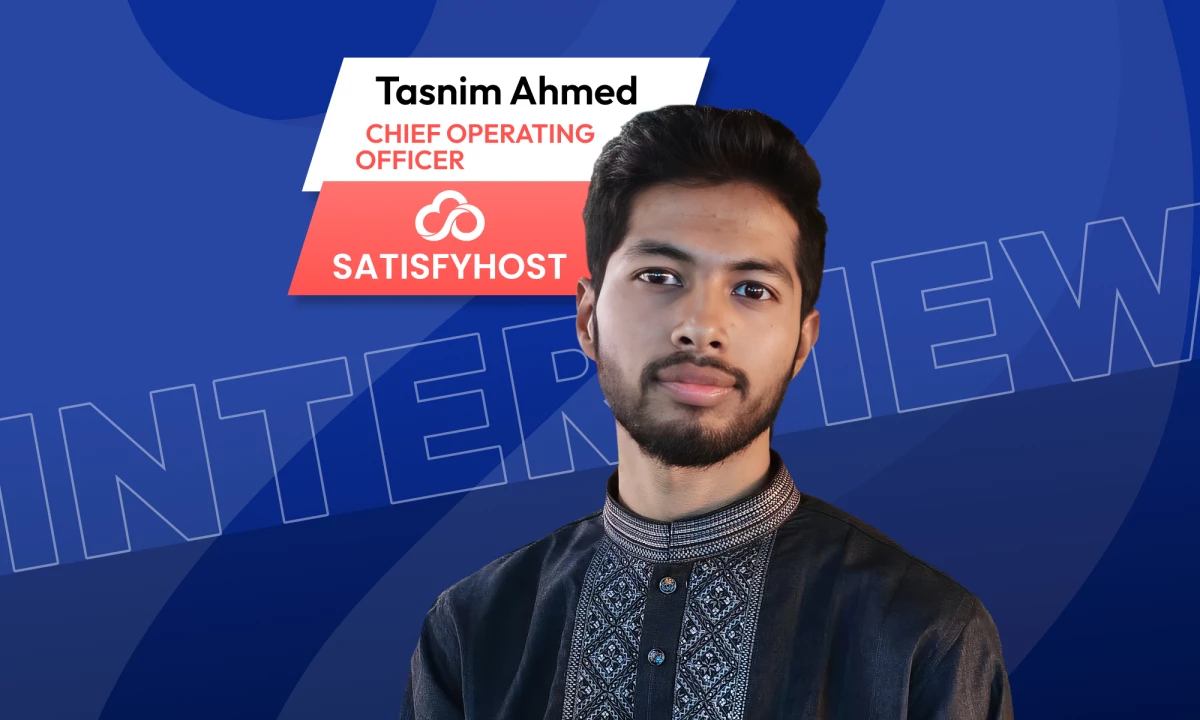
That’s something Tasnim Ahmed understands well. As Chief Operating Officer at SatisfyHost, he’s helping businesses move past common hosting issues.
Whether you’re running an agency or launching a tech product, there’s a lot of insights to take away from our interview with Tasnim.

Who is Tasnim Ahmed?
Tasnim Ahmed is the Chief Operating Officer (COO) at Satisfyhost, where he leads the company’s operational strategy and customer success initiatives. Over the years, he has specialized in building scalable hosting services, optimizing operational workflows, and developing customer-centric business strategies that focus on long-term value and client relationships.
Web Hosting Can Make or Break Your Business
When SatisfyHost came into the hosting space, Tasnim quickly noticed a pattern: businesses were being held back by underperforming, overly complex, pricey hosting platforms.
“Businesses would often face slow-loading websites and security issues like getting hacked shortly after launching their sites,” Tasnim explained.
And when they tried to upgrade, the solutions available were either too technical or prohibitively expensive, especially for startups or non-technical founders.
This inspired SatisfyHost’s to try and bridge that gap.
The company introduced performance-first, security-hardened hosting that didn’t require customers to manage servers themselves.
That included support for modern tech stacks of tools like MERN and a managed service model designed to make web hosting effective at a reasonable price.
Hosting Strategies That Prioritize Growth
From day one, SatisfyHost built its platform with speed, security, and scalability in mind.
“We carefully designed our business model to balance operational efficiency with competitive pricing.
Our goal is to provide premium hosting solutions without breaking the bank.”
A managed hosting model was key to that vision.
By handling everything from server updates to malware protection, SatisfyHost has the goal of allowing business owners to focus on growing their brand, not watching YouTube tutorials, as Tasnim puts it.
“What often happens is people go for a regular hosting plan, VPS, or a dedicated server without management support.
Since they don't have deep technical knowledge, they turn to YouTube, Google, or forums to figure things out on their own.”
One client story illustrates this impact.
A customer in Italy, frustrated after repeated hacks with a previous provider, moved one site to SatisfyHost to test the waters.
“To his amazement, the issues he’d been battling for months were handled automatically by our security systems,” said Tasnim.
Eventually, the client migrated all 30 of his websites to SatisfyHost.
Hidden Costs of Cutting Corners
Low-quality hosting might save a few dollars upfront, but Tasnim warns it often leads to far greater costs later on.
The most common trade-offs? Poor security, outdated infrastructure, and non-existent customer support.
“Many of these cheap hosting options don’t even offer automatic SSL certificates,” he notes.
Others run on outdated software that hasn’t been patched, which can be a major risk in today’s world.
Without real-time monitoring or security features, businesses are often unaware of breaches until it’s too late.
On top of that, poor planning can lead to hardware bottlenecks.
“Most of the time, the first issue businesses run into as they grow is resource limitations, especially with CPU and RAM,” Tasnim explains.
These bottlenecks can affect everything from site speed to email marketing effectiveness, severely hindering your business scaling.
Six Metrics to Keep an Eye On
According to Tasnim, one of the biggest risks is treating hosting like a static service.
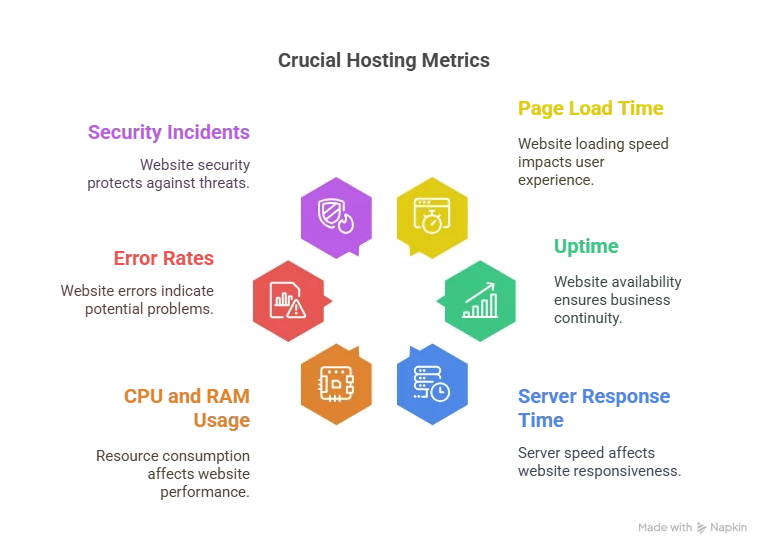
Hosting should be actively monitored and optimized to match the pace of your business, specifically with these six metrics:
- Page Load Time: A critical metric for user experience, as slow websites drive users away. Use tools like Google PageSpeed Insights or GTmetrix to track this.
- Uptime: Essential for business continuity. You should aim for 99.9% uptime or higher, and you can monitor with tools like Pingdom or UptimeRobot.
- Server Response Time: Measures how fast your server reacts to requests. It's key for both UX and SEO and should ideally be kept under 200ms.
- CPU and RAM Usage: Indicates if your site is using more resources than your hosting plan allows. Overuse can cause slowdowns or outages.
- Error Rates: Watch for HTTP errors, especially 500-series issues and broken links. These are signs of functionality problems and should be resolved immediately.
- Security Incidents: Track malware infections or breach attempts. A spike in attacks often signals vulnerabilities in your hosting setup.
By tracking the right metrics, businesses can make smarter decisions before problems surface.
“Our goal is to take care of the technical side so they can stay focused on growing their business with peace of mind,” he said.
Trends and Influences Shaping Hosting’s Future
The next phase of hosting is already taking shape, and it’s being shaped by demand for speed, automation, and sustainability.
“Edge computing will become increasingly important.
It brings content closer to users, which is critical for real-time applications,” Tasnim suggested.
Serverless and microservices architectures are also on the rise, and hosting providers must adapt with flexible, scalable environments.
SatisfyHost is also watching trends in AI automation, green hosting, and 5G integration.
These developments will redefine how infrastructure supports business needs, from faster page loads to energy efficiency and sustainability.
Don’t Underestimate Hosting
Too often, hosting is treated as a basic utility rather than a critical business decision, but as Tasnim makes clear, the infrastructure behind your website needs to be taken seriously.
“Hosting should evolve with your business.
If the foundation isn’t built for performance, security, and adaptability, everything on top of it is at risk,” he concluded.
For growing companies, the real danger isn’t overspending on infrastructure.
It’s realizing too late that your hosting has quietly been limiting your potential.
-author-avatar-webp.webp)