
Key Findings on Immersive Marketing ROI
- Start with strategy. A clear business goal before launch ensures immersive experiences deliver measurable ROI, not just engagement.
- Gamification drives results. Takeaway Reality’s VR activation drew 800+ participants and delivered a 240% ROI in just three months.
- Intent beats impressions. Tracking behaviors like time spent and repeat visits reveals high-intent leads often missed by vanity metrics.
Immersive technologies are no longer fringe experiments.
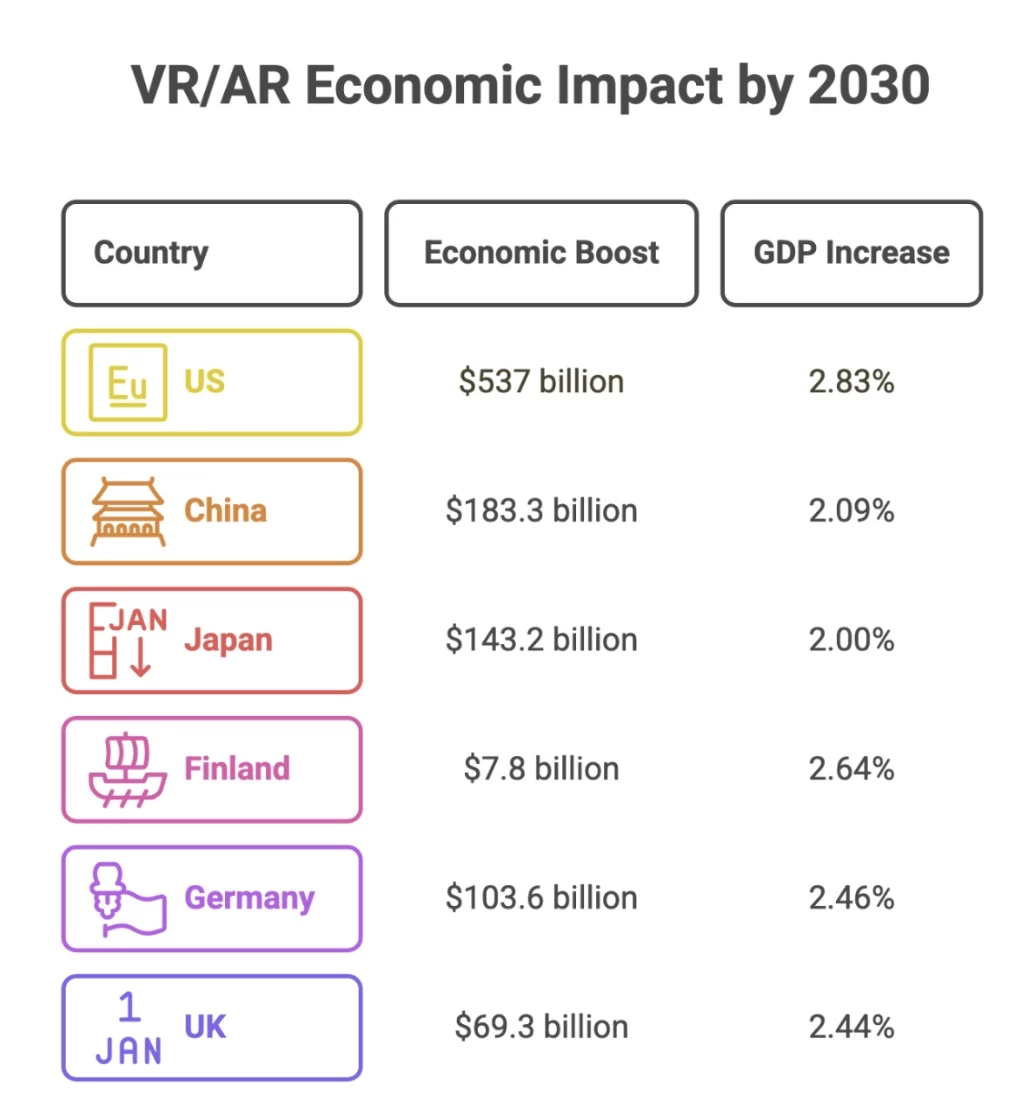
The VR/AR market is projected to boost the global economy by $1.5 trillion by 2030, driven by productivity, training, and customer experience gains, according to PwC’s Seeing Is Believing report.
Editor’s Note: This is a sponsored article created in partnership with Takeaway Reality.
But as interest grows, so does the need for accountability.
Many AR/VR activations still fall into the trap of being “cool” instead of a step towards achieving campaign goals.
That’s where a strategy-first approach makes the difference, focusing on presence and performance.
Quick listen: How strategy-led AR/VR campaigns drive real ROI — in under 2 minutes.
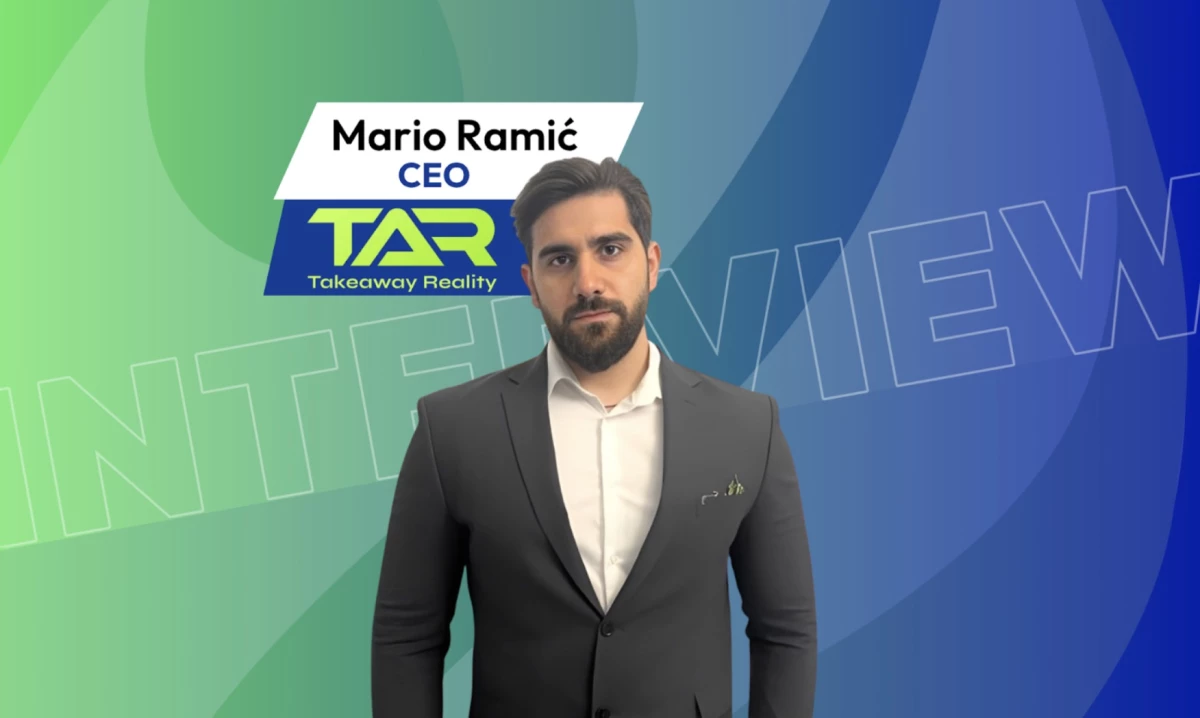
In a DesignRush interview with Mario Ramić, CEO of UK-based consulting and development agency Takeaway Reality, he shared how his team helps brands ground immersive tech in real business goals.
Here are six proven strategies they use to design immersive experiences that deliver real ROI, and what marketers can take away.

About Mario Ramić
Mario Ramić is the founder and CEO of Takeaway Reality, an AR/VR consulting and development agency based in London. Since founding the company in 2020, he has led immersive projects for Microsoft, Ford, FFIND, and others. He is also Director of Research Development at FFIND and a Fellow of the Sigma Squared Society.
1. Design for ROI, Not Just Immersion
Immersive projects that start with aesthetics instead of strategy often struggle to prove their value.
Before any AR/VR experience is developed, Takeaway Reality works with clients to identify a single business goal like capturing qualified leads, improving customer education, or creating repeatable sales tools.
This upfront clarity ensures the experience is designed for impact, not just engagement.
As Mario explains, the goal is always tied to solving a specific problem or seizing a real opportunity.
“We prioritize what problem or opportunity the company is trying to solve or exploit,” he says. “This is the reason behind our many partnerships — we always focus on the value.”
Clear intent from the beginning makes it easier to define ROI benchmarks and shape the creative direction accordingly.
2. Turn Engagement Into Revenue with Gamified Immersion
Interactive incentives can turn passive attendees into motivated participants.
At a recent trade show, Takeaway Reality designed a VR experience where visitors spun a virtual wheel to win scented candles.
Some of the scents were exclusive to those who completed the experience.
The activation combined physical rewards with digital follow-up.
After participating, users scanned a QR code to visualize their candle in AR, extending the brand touchpoint. Within five hours, the booth ran out of all 1,000 candles.
“We ordered 1000 customized scented candles... 500 vanilla [for all participants], the other 500 split equally by 100 units each of special scents that you can only get by playing our VR experience,” Mario says.
With over 800 participants and several leads turning into recurring clients, the campaign achieved a 240% ROI in just three months.
This highlights how gamification can deliver both engagement and business results.
3. Measure What Moves the Funnel
Foot traffic and surface-level engagement can be misleading.
To understand what’s truly working, Takeaway Reality measures behaviors that suggest genuine interest, such as who visits specifically for the immersive experience or how long users interact.
In one project, simplifying the experience led to fewer sign-ups overall, but those who did opt in were more likely to convert.
“This reduced the total number of sign-ups, but the sign-ups had a much higher intention to buy and led to more conversions,” Mario says.
Focusing on intent-based metrics helps teams identify which experiences are attracting qualified leads and which need refinement.
4. Use AI to Scale Relevance and Results
AI can amplify immersive campaigns by tailoring content and reducing manual effort.
Takeaway Reality integrates AI into virtual assistants, localization tools, and its analytics platform, Rexee, to help brands understand how users engage across touchpoints.
These features not only make experiences more relevant but also give marketers deeper performance insights.
“We are able to create lifelike AI avatars for users to chat with as well as analyse usage data at a very deep level,” Mario explains.
When used strategically, AI becomes a force multiplier, not just a flashy add-on.
5. Double Down on Gamification and AI for Long-Term Value
Despite their effectiveness, tools like AI and gamification are still underutilized in immersive marketing.
Mario believes these proven methods deserve more attention than they often receive:
“The combination of AI and AR/VR is what should get marketing people much more excited than it does,” he says. “It is still worth emphasizing that it is one of the most powerful marketing techniques.”
These tactics drive participation, personalization, and performance when tied to clear business goals, making them key to repeatable success.
6. Grounding Innovation in Strategy
Immersive technologies have the power to transform how brands connect with audiences, but only when they’re designed with purpose.
From trade show gamification to AI-powered personalization, Takeaway Reality’s work shows that measurable outcomes start with strategic intent.
As spatial computing becomes more mainstream, marketers will need to prove not just that their AR/VR experiences are engaging, but that they’re effective.
The future of immersive isn’t about chasing the next visual wow. It’s about aligning technology with real business value.