
AI-powered marketing and sales are moving toward a model in which software can do more than surface customer information for an employee to act on.
That's the idea behind HubSpot's launch of Agent Hub and Agent Builder, which give businesses a way to manage and build AI agents across marketing, sales, and service.
The new platform allows agents to work with existing customer context and business data while carrying out tasks across customer-facing functions.
Rather than simply helping employees find information, these systems are now capable of using that information to make decisions and take action.
This shift matters because automation is becoming more and more dependent on the quality of the information behind it.
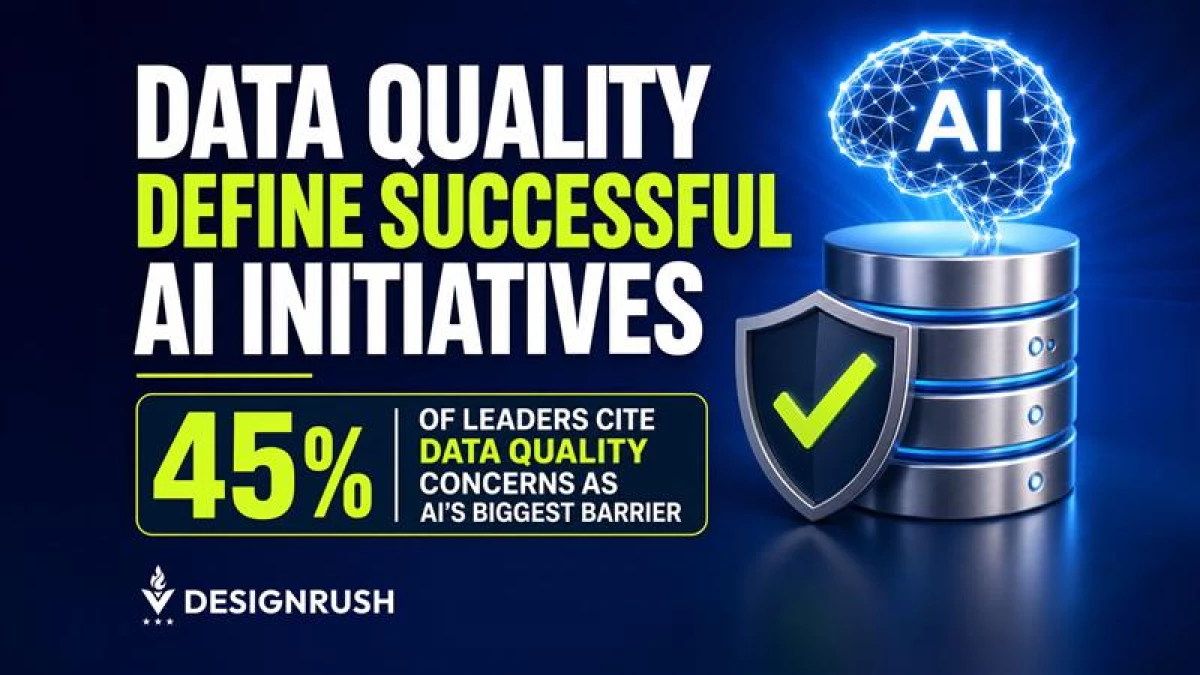
In fact, 45% of business leaders say data quality and accuracy concerns are a leading barrier to scaling AI initiatives, per an IBM report.
After all, an agent can identify a prospect or respond to a customer, but it can't turn an outdated phone number into a current one or infer a missing organizational relationship with certainty.
For Peter Long, CEO of MCH Strategic Data, that makes data quality a much more consequential part of the AI conversation.
"AI amplifies whatever data it is given, which is why reliable data should come before automation," he says.
"If the underlying organizational and contact data is incomplete, outdated, or inaccurate, the system automates those weaknesses just as efficiently as it would the right information."
And while HubSpot's Agent Hub demonstrates where customer intelligence is heading, the usefulness of that intelligence still depends on whether businesses can trust the quality of data.
Understand Why AI Raises the Stakes for Data Quality
Bad data has always been a headache for marketing and sales teams, but the popularity of using AI tools and systems changes the scale of the problem.
When employees make decisions manually, an inaccurate record might lead to one bad call or one poorly targeted campaign.
But an AI system can use that same record to spread errors across prospecting, segmentation, engagement, and follow-up before anyone notices a problem.
That creates several ways for weak data to undermine AI-powered activity:
- Outdated contacts can produce irrelevant outreach. AI agent may contact someone who has changed roles, making well-designed campaigns appear careless.
- Incorrect company information can distort targeting. Outdated information can cause agents to prioritize accounts that don’t fit the intended audience.
- Missing information can limit context. An agent cannot reliably personalize an interaction around information that does not exist in the underlying record.
This is why Long and his team at MCH Strategic Data emphasize the role of data quality in all their projects.
"If an agent is expected to make decisions about which prospects deserve attention, which customers need follow-up, or what message should be delivered next, the organization needs confidence in the information those decisions are based on," he says.
"The sophistication of the model doesn't remove that requirement. In many cases, it makes the requirement more urgent."
Build a Reliable Data Foundation for AI-Powered Marketing
Given all this, organizations adopting AI-powered marketing and sales tools need to look at the data layer alongside the AI layer.
To do this, they should ask whether the data they feed into their AI system accurately represents the organizations and people the business is trying to reach.
That requires attention in several areas:
1. Keep organizational data accurate
AI systems need a current understanding of the organizations they are being asked to target or engage.
Businesses should regularly maintain information such as:
- Company names and locations
- Industries and business classifications
- Organizational relationships
- Company size and other relevant firmographic details
- Changes in business status or structure
They should also identify duplicate, outdated, and conflicting records before those inconsistencies become inputs to automated workflows.
This is particularly important in industries like healthcare or education, where a small error can affect how an entire account is prioritized.
2. Keep contact data complete
Organizational information tells an AI system what a company is. Contact data helps establish who within that organization matters.
Businesses should verify professional roles and contact information while updating records when people change positions or move between organizations.
Critical gaps should also be addressed rather than allowing an AI system to fill them through assumptions.
3. Make data quality an ongoing process
Organizations should establish recurring processes for auditing, correcting, and enriching records. AI-driven campaigns should also be monitored for patterns that could indicate problems underneath the automation.
For example, an unusual increase in bounced emails, irrelevant prospects, or outreach to people in the wrong roles may point to a data problem rather than a problem with the AI itself.
This is where MCH Strategic Data's role becomes particularly relevant.
Its organizational and contact data give businesses access to information designed to support more accurate marketing and sales operations.
Data Quality Is The Foundation of AI Strategy
HubSpot's Agent Hub reflects a broader transition in customer intelligence. AI systems are moving closer to the point where they can independently carry out work across marketing, sales, and service.
That makes the old separation between technology strategy and data management increasingly difficult to justify.
That's why businesses evaluating an AI agent should ask questions about their data at the same time.
- Is the organizational data current enough to support targeting and segmentation?
- Are contact records accurate enough for automated engagement?
- Can the business identify and correct bad information quickly?
- Are different systems working from consistent customer records?
- Can performance problems be traced back to underlying data when necessary?
These questions may sound less exciting than choosing the latest AI agent, but these questions are vital when determining whether that agent produces useful results.