
Key Takeaways:
- Women leaders are driving AI innovation, breaking barriers, fostering inclusivity, and creating opportunities for underrepresented businesses.
- AI is transforming customer interactions by automating engagement, enhancing personalization, and enabling businesses to operate 24/7.
- Creative opportunities are expanding with AI, requiring businesses to balance innovation with brand consistency.
AI is driving a seismic shift in customer interactions and consumer research.
About 80% of customer service and support organizations are expected to adopt generative AI this year.
Gartner predicts a major impact on customer experience — 38% of surveyed leaders can see gen AI improving customer experience and retention.
Much like the internet in the '90s, this seismic shift in customer interactions and consumer research is reshaping business — but at an even faster pace and greater scale.
At the forefront of this change are female pioneers using AI to push new boundaries and reshape what's possible.
AI as the New Front Line in Business
Businesses today face a new reality: AI is becoming the first touchpoint for customer interaction.
-content-large-webp.webp "Ljubov Ovtsinnikova, CEO and co-founder of Newo.ai")
According to Ljubov Ovtsinnikova, CEO and co-founder of Newo.ai, implementing AI agents that handle calls, chats, and emails can improve customer interactions and streamline operations seamlessly.
“Think about how websites revolutionized business visibility in the '90s — we're seeing a similar shift today with AI agents becoming the new front line of customer interaction.
Businesses today are fighting for customer attention in an increasingly noisy digital world. Customers expect instant responses on their preferred channels, whether that's at 3 PM or 3 AM.”
The shift isn’t just about efficiency — it’s about improving engagement, making personalization scalable, and meeting consumers where they are in previously impossible ways.
Brittany Wray, the VP of Product at AudienceX, discusses with DesignRush the latest trends in digital advertising, including AI-driven predictive analytics and privacy-first data science:
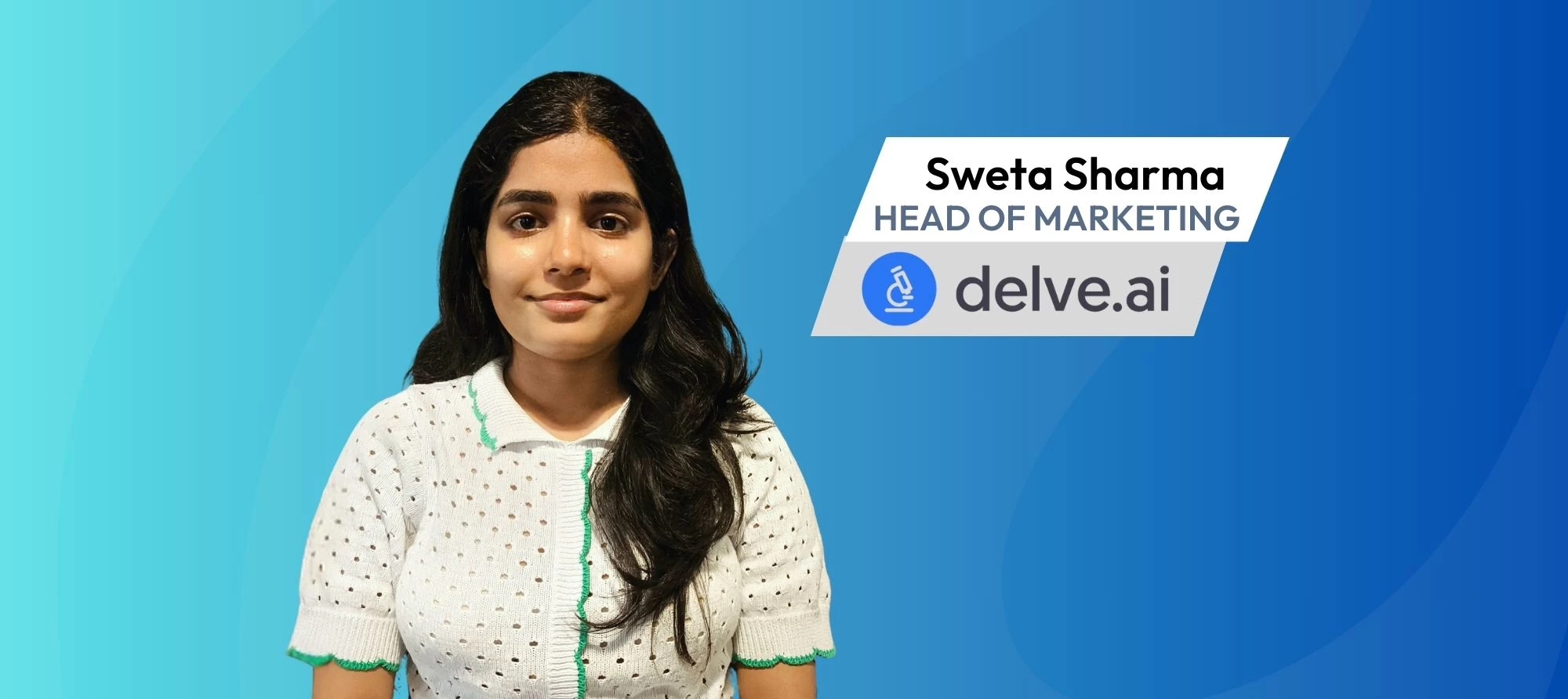
But AI’s influence goes beyond customer experience. It’s also changing how decisions are made, says Sweta Sharma, head of marketing at Delve AI:
“Developing personas the old-school way is expensive and time-consuming because it involves lots of research. The small sample sizes and qualitative data often lead to personal biases and stereotypes.”.
“AI technologies can spot consumer behavioral patterns and psychographic attributes that the human eye cannot, reducing the biases and inaccuracies associated with traditional personas.”
The takeaway? AI is transforming strategies by making them more intelligent, efficient, and inclusive, driving innovation across industries.
Unleashing Creativity and Navigating Branding Challenges
AI isn’t limited to data and automation either. On the other hand, it is opening new creative possibilities.

Sarah Houghton, senior manager of marketing and communications for Sony Electronics' Personal Entertainment division, says she is excited about the possibilities of AI and digital production transforming the way people experience art.
“Coming from a B2B background, I was eager to apply AI-driven marketing strategies on a larger scale. What I've learned is that programmatic engagement relies on trusting data and using traditional methods like audience segmentation and product-centric messaging.
I believe these technologies will continue to improve how music and other forms of art are consumed and appreciated on a global scale.”
However, as Michelle Berryman, executive creative director at Hero Digital points out, the challenges lie in finding “the sweet spot between creativity, strategy, and stuff that gets results.”.

“One of the biggest challenges for brands who are present on multiple digital platforms is making sure those experiences seamlessly convey a brand’s overall identity and messaging.
It calls for intense attention to detail when designing these touchpoints to ensure that the branding remains clear and consistent, while minimizing friction for the user as much as possible.”
Breaking Barriers and Driving Inclusion
While AI is reshaping creativity and business strategies, it’s also addressing long-standing barriers.

AI is helping create opportunities where once there were limitations. Sisters Becca and Jenna, founders of Peanut Butter Creative, highlight a critical gap:
“Statistically, women-owned businesses receive less funding and generate less revenue than other businesses and we wanted to help change that by working with women to grow their businesses through strategic brand design, website development, and marketing initiatives.”
Katharine Warner, marketing director at Three Brothers Wineries & Estates, believes that embracing diversity fuels creativity, encourages new ideas, and promotes inclusivity.
By welcoming different perspectives and experiences, the brand drives innovation and fosters greater understanding.

“Embracing diversity enhances our adaptability, learning, and growth, ultimately enriching our shared human experience.
We strive to build a team that not only embodies our ‘brotherhood’ philosophy but also lives it, resulting in a customer experience that we're proud to offer.”

As Gali Erez, general manager and Head of Wix Studio, puts it:
“People feel empowered by all the technology that is going on, and their expectations keep getting bigger and bigger for what they want to be able to achieve.
I think it's the decade of auto deduction, like learning by yourself and being able to kind of grab a bunch of tools to become kind of this superpower when human.”
AI is more than just a shift — it’s changing how business and creativity evolve. The leaders adopting AI now are not just adjusting, they’re driving what comes next.
Women’s Day 2025 is a time to celebrate progress while driving meaningful change for the future. If these leaders are any indication, AI’s impact on business and creativity is only beginning.