
Open Ecosystem Strategy: Key Findings
- Generosity builds real growth by helping brands earn trust, expand reach, and stay relevant long term
- Open systems scale better when users can contribute, innovate, and shape the ecosystem themselves
- AI makes trust the differentiator as intelligence becomes commoditized and value shifts to participation and meaning
In 2025, the future belongs to brands that give more than they take.
Yet many brands still default to hoarding knowledge, gating value, and over-optimizing for short-term clicks.
Tim O’Reilly, founder and CEO of O’Reilly Media, has long seen the future before it arrives.
From coining "Web 2.0" to shaping the open-source movement, he’s championed the idea that generosity is a great strategy.
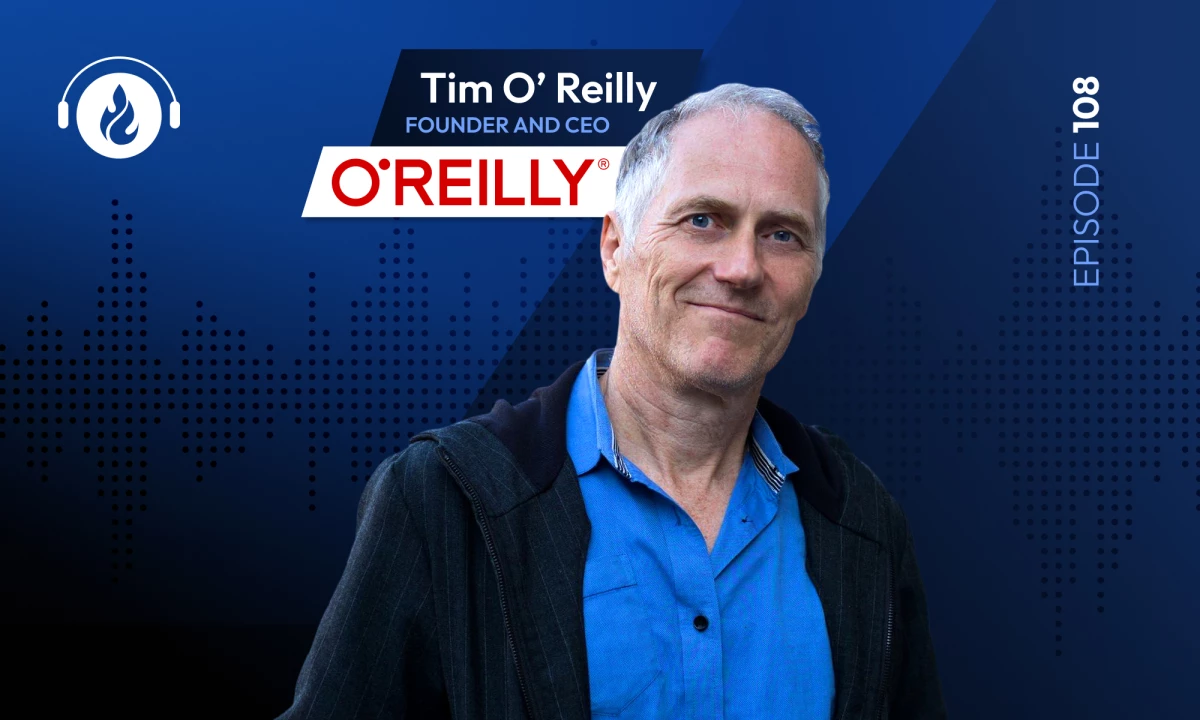
In Episode 108 of the DesignRush Podcast, O’ Reilly shares why business leaders must embrace an "architecture of participation," and how giving away high-value ideas can outperform traditional marketing.
Listen to the full episode now on YouTube, Spotify, or Apple Podcasts.
3 Principles That Turn Open Source Thinking Into Growth Strategy
Forward-thinking companies are rewriting how value gets created. Here’s how.
Principle 1: Create More Value Than You Capture
O'Reilly’s golden rule of business: give more than you take.
"We create more value than we capture" became O’Reilly Media’s internal mantra after early internet billionaires credited his books for their success.
Meanwhile, he made just $35 per copy.
This mindset shifts marketing from "me first" to user-first.
It's not about pushing the product. It's about serving insight, education, and trust.
Principle 2: Build an Architecture of Participation
Systems that scale sustainably are designed for collaboration.
Open-source projects like Linux, Apache, and even Wikipedia thrived not just because they were free, but because they were extensible. They invited contribution.
Open source isn’t about licenses. It’s about design. Systems that invite participation win.
O’ Reilly cites brands like HubSpot as modern examples of this: sharing frameworks and marketing playbooks that audiences can use freely.
Principle 3: Generosity as a Strategic Advantage
Generosity signals confidence, creates trust, and drives community-led growth.
O’ Reilly compares the cultural mindset of Larry Wall (creator of Perl) to Bill Gates. While Gates monetized his code, Wall gave his away to give back to the community that helped him.
"Generosity and low barriers to entry create innovation,” he says.
Today, that same dynamic is playing out in AI. Companies that hoard models may gain short-term advantage, but open architectures are likely to win long-term.
Why Open Thinking Beats Blitzscaling
In an era dominated by blitz scaling and market consolidation, open thinking is a counterweight to premature optimization.
"People are trying to lock in market power before the market has figured out what good looks like,” O’ Reilly says.
Just as Microsoft’s closed architecture lost ground to the participatory Web, today’s dominant AI players may be displaced by more open, decentralized models.
It’s a repeat of what O’ Reilly calls the "law of conservation of attractive profits:" when one layer becomes commodified, value shifts to a new frontier.

About Tim O'Reilly
Founder and CEO, O’Reilly Media
Tim O’Reilly is a pioneering tech publisher, investor, and trendspotter known for popularizing open source, Web 2.0, and "the architecture of participation."
Through O’Reilly Media and OATV, he’s helped shape modern computing by amplifying the innovators shaping it. Tim continues to write and speak globally on AI, platform economies, and ethical tech leadership.
The Future Belongs to the Generous
At the end of the day, people don’t remember the brands that hoarded knowledge or chased clicks. They remember the ones that showed up, shared openly, and built something worth being part of.
Generosity is how you build trust, spark new ideas, and stay relevant when the rules keep changing.
The future is wide open. The question is simple: will you close the door, or invite people in?
Watch on YouTube or listen on Spotify and Apple Podcasts.