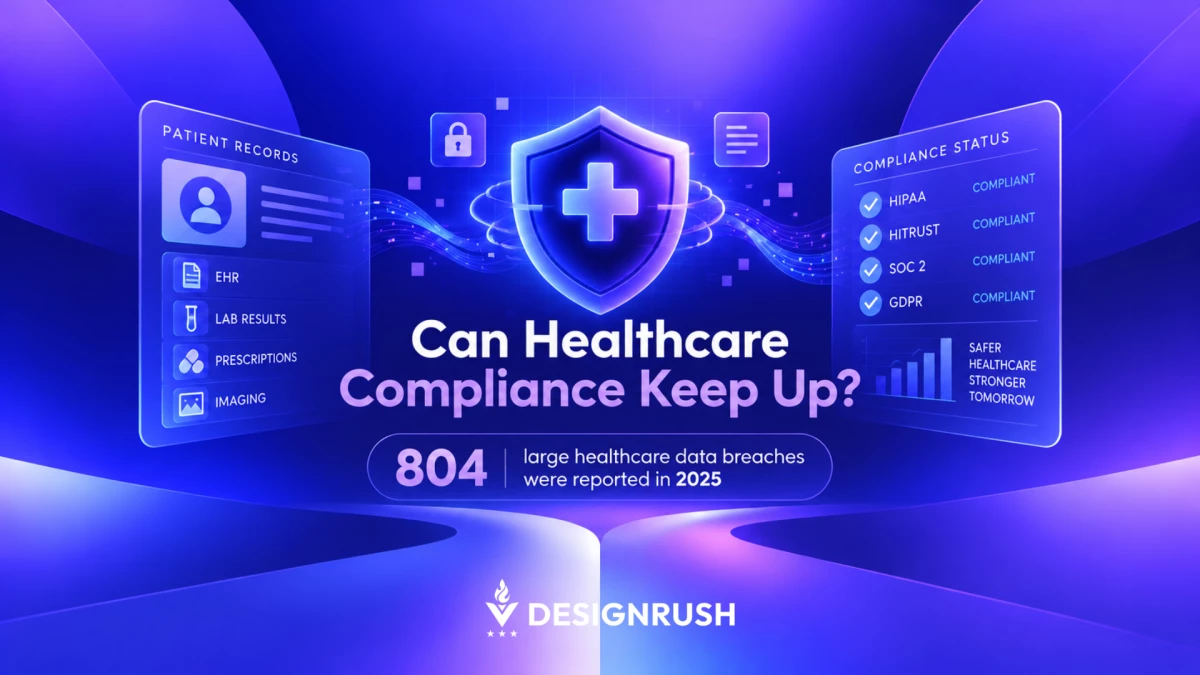

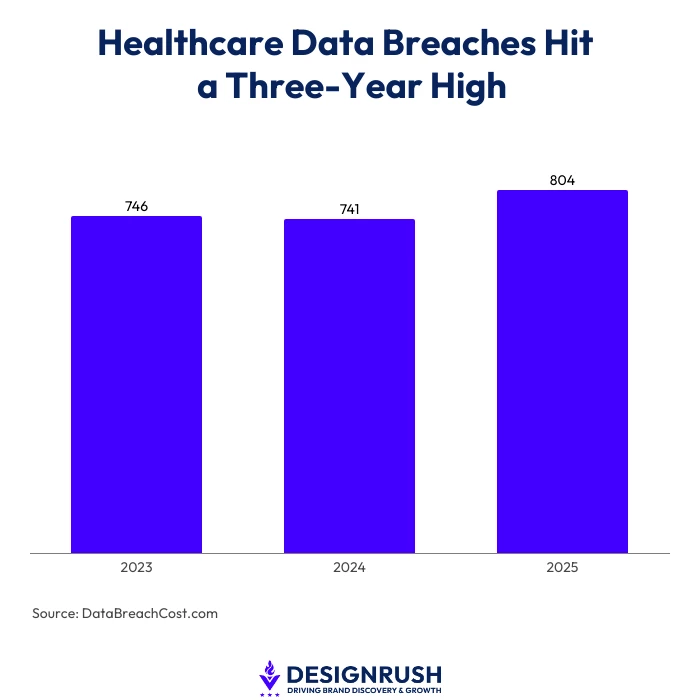
Healthcare organizations reported 804 data breaches affecting 500 or more people in 2025, up from 741 in 2024 and 746 in 2023.
Those 2025 filings listed about 140.6 million people as affected, according to data compiled from the HHS Office for Civil Rights breach portal cited by DataBreachCost.
A reported breach, however, does not automatically establish a HIPAA violation.
But it does arrive in an environment where vendors change, employees gain or lose access, software gets updated, and new systems are connected throughout the year.
HHS expects risk analysis under the HIPAA Security Rule to keep pace with those changes.
Its guidance describes risk analysis as an ongoing process and says organizations should conduct continuous risk analysis to determine when security measures need updating.
Suffescom Solutions works directly on that part of healthcare software, building systems with role-based access, encryption, audit logging, and activity monitoring.
Those controls give CEO Gurpreet Singh Walia a practical view of what compliance teams have to keep track of after a system goes live.
"A compliance review gives you a picture of the organization at that point in time," Walia says.
"Then a vendor changes, permissions change, a new system gets connected, or guidance gets updated. Continuous monitoring can help teams see those changes sooner and work out what they actually affect."
Why Continuous HIPAA Compliance Monitoring Matters
HHS does not require every organization to conduct risk analysis on the same schedule.
Frequency depends on factors including its size, complexity, capabilities, and environment. The obligation, however, does not end once a review is complete.
A new cloud service can change where protected health information is stored. A vendor may begin handling data differently. Staff permissions can change as people join teams, leave them, or take on new roles.
Policies and controls then have to stay aligned with what the systems are actually doing.
HHS also requires regulated entities to consider electronic protected health information wherever it is created, received, maintained, or transmitted, including data handled outside the organization.
For Walia, the advantage of continuous monitoring is getting those changes in front of the right people while they are still recent.
"If a permission changes or a control stops matching the policy, you want the team looking at it then, not months later," he says.
"The agent can bring the mismatch forward with the evidence attached. But the compliance team still decides whether it is actually a problem and what needs to happen next."
How AI Agents Support HIPAA Compliance Monitoring
A Compliance Monitoring Agent could compare regulatory guidance with the policies, access settings, vendor records, system logs, and audit documentation a healthcare organization already maintains.
If guidance changes, the AI agent could identify which policies or controls refer to that requirement.
If a written policy no longer matches what access records or system logs show, it could send the discrepancy to the appropriate team for review.
That approach depends on having records detailed enough to compare.
In one healthcare project, Suffescom Solutions implemented audit logging that records who accessed patient data, when the access happened, which record was viewed, and what action was taken.
Walia sees the strongest use for AI in the repetitive work of checking information held in different places.
"A lot of the work is checking whether what the policy says still matches what is actually happening," he says.
"AI can keep watching those pieces and bring the exceptions to the right person instead of waiting for somebody to find them manually."
He says three responsibilities should remain with people:
1. Assess context
Compliance teams decide whether an alert represents a meaningful issue in the organization’s actual environment.
2. Choose the response
Legal, security, compliance, and operational leaders decide whether remediation is needed and what that response should involve.
3. Own the record
Decisions, exceptions, and corrective actions need documented owners and an audit trail.
HHS leaves regulated entities to choose risk-management measures that are reasonable and appropriate for their own circumstances. There is no single method that guarantees Security Rule compliance.
The monitoring agent would also become part of the environment being governed. Its permissions, access to data, sources, logs, and automated actions would need to be reviewable as well.
"You need to be able to trace why the system raised something," Walia says.
"A person should be able to see the requirement, the evidence, and the change that triggered the alert. If the system can’t show that, it becomes much harder to rely on it in a compliance process."
Can Healthcare Compliance Keep Up Between Audits?
Finding more discrepancies will not automatically make compliance easier.
A monitoring system can catch changes quickly and still create more work if every alert arrives with the same urgency.
However, useful monitoring should give teams enough context to decide what needs attention now, what can wait, and who owns the next step.
That makes alert quality, traceability, and ownership as important as the monitoring itself.
For healthcare leaders, it may be time to ask a harder question. How much compliance risk builds up between something changing and somebody noticing?