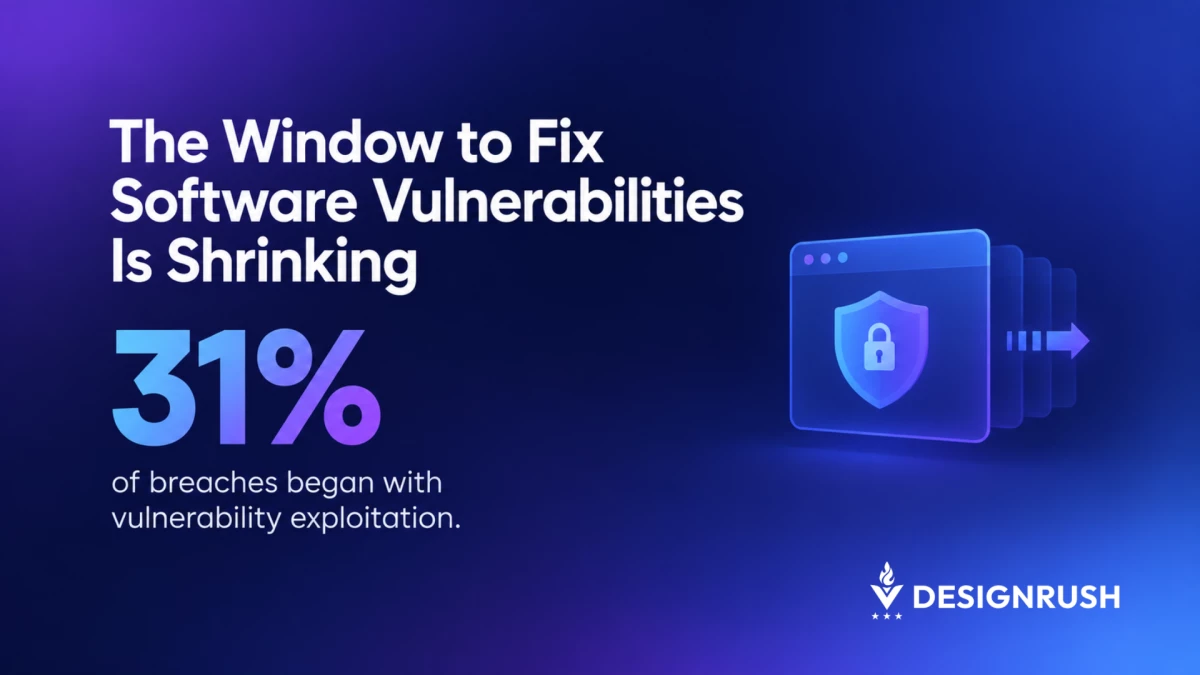

Vulnerability exploitation was the initial access vector in 31% of breaches, according to Verizon’s 2026 Data Breach Investigations Report.
Verizon also found that AI is helping attackers compress the time needed to exploit known vulnerabilities from months to hours.
Cybersecurity agencies from the Five Eyes intelligence alliance recently issued a similar warning, stating that frontier AI could change offensive and defensive cyber capabilities within months.
They urged organizations to reduce unnecessary exposure, patch vulnerabilities faster, strengthen access controls, and build security into software development from the start.
That shorter response window is affecting how Customer Paradigm approaches software security before and after launch.
The agency’s Founder, Jeff Finkelstein, says that teams can no longer treat security as a single check before software goes live.
“AI changes the amount of time you have to react,” he says.
“If the same technology that helps developers find a weakness can help an attacker find it too, security has to be part of the build and continue after the software goes live.”
Why Software Vulnerabilities Are Being Exploited Faster
Attacks exploiting public-facing applications rose 44% year over year in 2025, according to IBM’s 2026 X-Force Threat Intelligence Index.
Of the vulnerabilities X-Force tracked, 56% could be exploited without authentication, giving attackers a route into exposed systems without first compromising an account.
AI-assisted tools can reduce the time needed to examine a vulnerability and test whether it can be exploited.
Development teams need to determine quickly whether their software is affected and what needs fixing.
“Once a serious vulnerability is public, the safest assumption is that somebody is already testing it,” Finkelstein says.
Al Jazeera examines how AI is giving cyber attackers new tools to identify targets and accelerate attacks:
How AI-Assisted Code Review Finds Vulnerabilities Earlier
Customer Paradigm uses AI-assisted code review to examine code for potential security issues before software reaches production.
That puts more of the security work inside development, while changes can still be made before the application reaches users.
AI can surface suspicious code and areas that deserve closer inspection.
“You can use AI to look across far more code than one person could review manually in the same amount of time,” Finkelstein adds.
“But somebody still has to understand whether the finding matters in the real application and what the right fix actually is.”
GitHub demonstrates how AI-assisted code scanning can identify security vulnerabilities and suggest fixes during development:
Why Application Security Needs Continuous Monitoring
A security review at launch captures the software at one point in time.
Customer Paradigm pairs development work with ongoing vulnerability monitoring to watch for security issues after applications go live.
“Passing a security review at launch tells you what was true that day,” Finkelstein explains.
“A dependency can change, a configuration can change, or a new vulnerability can appear tomorrow. That’s why the monitoring has to continue.”
Dynatrace demonstrates how continuous application monitoring can detect and assess vulnerabilities in software running in production:
What to Test in a Cybersecurity Incident Response Plan
Before an incident, teams need to test the path from detection to action.
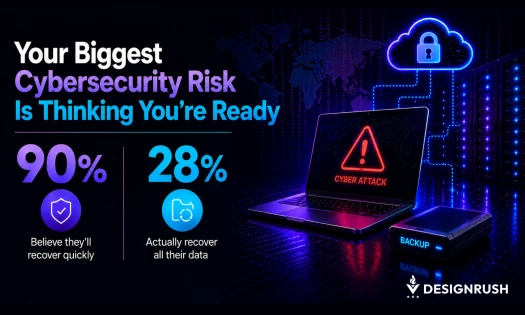
For example, 90% of organizations were confident they could recover within their defined recovery time objectives, per Veeam’s 2026 Data Trust and Resilience Report.
Yet, only 28% of ransomware victims fully recovered all affected data.

Teams should know who receives a critical alert, who can approve immediate action, how quickly developers can assess affected code, and how a compromised service can be isolated or restored.
“An alert needs an owner. Someone has to get notified, understand what they’re looking at, have the authority to act, and know how to isolate or restore the system if they need to,” Finkelstein says.
An alerting system, recovery target, or written plan only goes so far if nobody has tested who acts and how quickly.
So, as a business leader, ask yourself this.
If a critical vulnerability appeared in your systems tonight, would you know who gets the alert, who has the authority to act, and how quickly your team could contain it?